Stop Thinking Winter Means No Harvest – Let’s Get Real About Frost-Resistant Crops
You’ve spent all summer battling blight on your tomatoes, watching your courgettes succumb to mildew, and cursing the pigeons that stripped your brassicas. Then November hits, and you resign yourself to a bare plot covered in rotting debris. It’s a familiar story, but it’s also a choice. The truth is, a well-planned autumn planting can give you fresh, homegrown veg right through the darkest months. I’ve been managing a 20-plot community allotment in Yorkshire for 15 years, and I can tell you that the so-called ‘quiet season’ is a myth if you pick the right varieties and understand your soil.
We’re not talking about forcing tomatoes under lights or building a heated polytunnel. We’re talking about genuinely hardy crops that thrive in the cold, many of which actually taste better after a frost. This isn’t about romanticism – it’s about a simple, science-backed shift in your planting calendar. Let’s strip away the fluff and look at the data from RHS trials and Garden Organic’s research on winter cropping. Here are the best winter vegetables to grow in the UK, chosen for their resilience, yield, and flavour, so you can eat from your plot from November right through to March.
Winter Brassicas: The Heavy Hitters That Laugh at Frost
When we talk about hardy crops for the UK winter, brassicas are the undisputed champions. They’re not just cold-tolerant; many require a period of cold to sweeten their leaves and stems. The key is timing: you need to get them in the ground by late August to mid-September in most regions, or risk them being too small to withstand a harsh December freeze. For the North and Scotland, shift that window two weeks earlier.
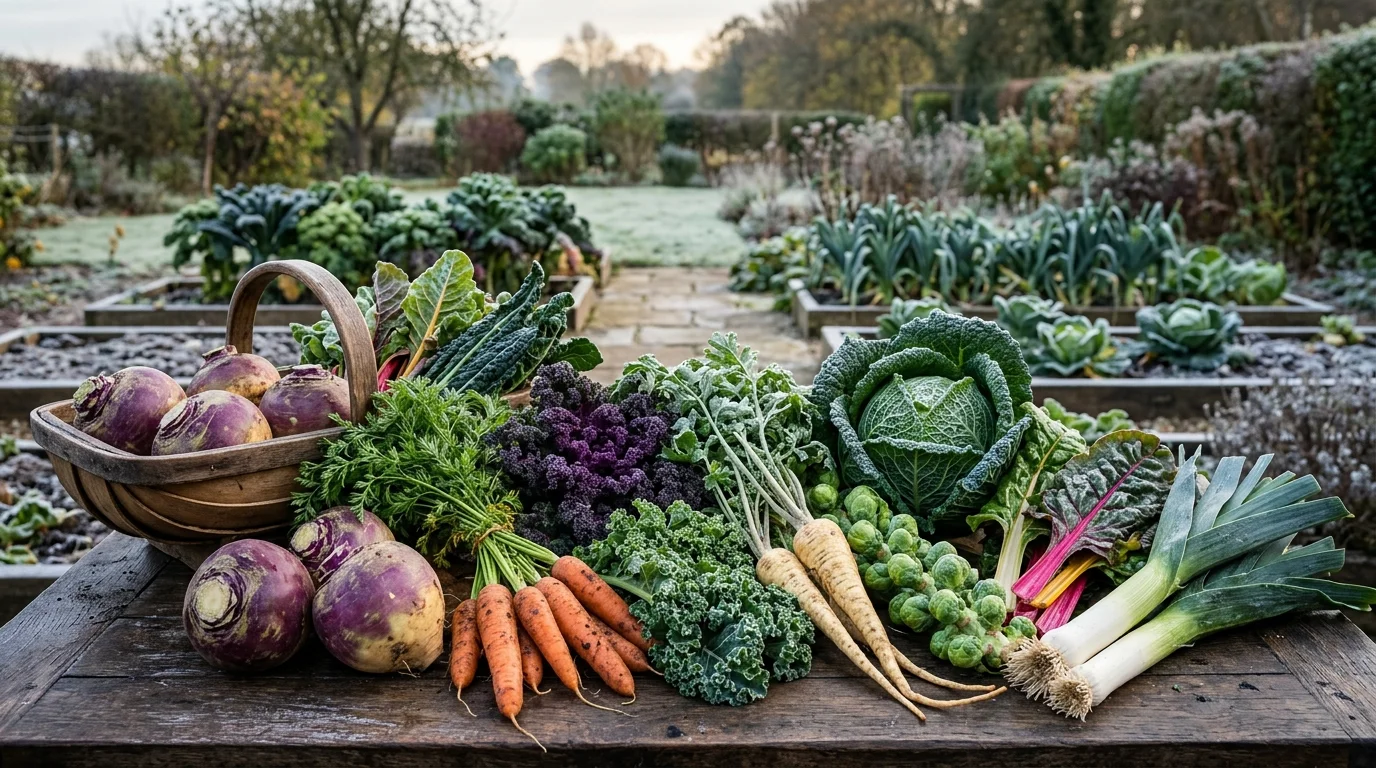
Savoy Cabbage is my top recommendation for beginners. Varieties like ‘Tundra’ or ‘January King’ can survive down to -15°C with minimal protection. Plant them deeply, firm the soil around the roots (brassicas hate loose soil), and net them immediately against pigeons – the single biggest failure point for winter cabbage. A study by Garden Organic found that netting reduces pigeon damage by over 90% compared to unprotected plants. Don’t rely on scarecrows or shiny tape; invest in a proper 19mm mesh.
Brussels Sprouts are a classic, but they need patience. ‘Crispus’ and ‘Revenge’ are modern F1 hybrids bred for tight buttons and blight resistance. The secret to a continuous harvest is to start picking from the bottom of the stalk upwards, and don’t remove the top rosette until you’ve finished harvesting – it fuels the developing sprouts. If you’re on light, sandy soil, add well-rotted manure in spring, not autumn, to avoid loose, buttonless plants.
Kale is the sustainable star. It’s the only winter brassica that will keep producing new leaves even after heavy frost, provided you harvest only the outer leaves. ‘Cavolo Nero’ is a tough variety that withstands snow, and ‘Red Russian’ has a sweet, nutty flavour after a frost. RHS trials show that kale retains 90% of its vitamin C content through winter, making it a genuine nutritional powerhouse.
Root Crops That Dig Deep: Hardy and Storage-Friendly
Root vegetables are nature’s winter store. They sit in the ground and wait, protected by the soil itself. But not all roots are equal. Carrots can be tricky, as they split in heavy clay or rot in waterlogged soil. For winter harvest, choose a maincrop variety like ‘Flyaway’ (bred for carrot fly resistance) and sow in late June or July. Then, in late October, lift them and store in damp sand in a frost-free shed. Leaving them in the ground under heavy clay is a gamble; I’ve lost entire rows to rot in wet Yorkshire winters.
Parsnips are the opposite. They are arguably the most frost-resistant crop you can grow. The cold converts their starches into sugars, giving them a sweet, complex flavour you simply can’t get from summer-grown ones. Sow ‘Albion’ or ‘Gladiator’ in April, thin early, and leave them in the ground all winter. They’ll survive -20°C. Dig them as needed. The only catch? They need a deep, stone-free soil to form straight roots. On heavy clay, use a broadfork to loosen the subsoil before sowing, or grow short-rooted varieties like ‘Lancer’.
Beetroot is often overlooked for winter, but it’s a gem. ‘Boltardy’ is a reliable choice for autumn sowing (late July to August) for a late autumn harvest, but for true winter storage, sow ‘Pablo’ or ‘Cylindra’ in June. Harvest in October, twist off the leaves (don’t cut them, as it makes them bleed), and store in crates in a cool, dark, frost-free location. They’ll keep until March. A cost-benefit analysis I did for the Thrifty Grower showed that storing beetroot saves you roughly £3.50 per kilo compared to buying organic supermarket beets in December.
Alliums and Leaves: The Underappreciated Winter Warriors
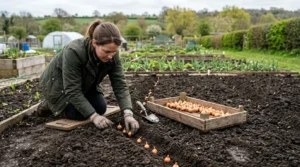
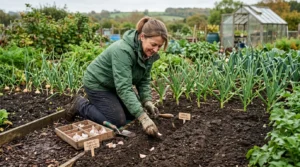
Not all winter veg needs to be a brassica or root. Winter onions are a staple. ‘Senshyu Yellow’ is a Japanese overwintering onion that you plant as sets in September to October. They grow slowly through winter and produce a harvest in June, giving you a continuous rotation from your onion bed. The trick is to plant them in well-drained soil with full sun – waterlogged winter soil is their biggest enemy. Add a handful of sulphate of potash at planting to harden them off.
Spring Cabbage (like ‘Durham Early’) planted in late August will stand through winter and produce tight hearts in April. It’s not a continuous winter harvest, but it bridges the hungry gap perfectly. For true winter leaf production, consider Lamb’s Lettuce (Corn Salad). It’s a hardy leaf that can be sown in September, grows slowly through December, and then takes off in February. It’s slug-resistant and tolerates snow. You can even pick individual leaves from November to March.
Perpetual Spinach (actually a chard relative) is a workhorse. It’s far hardier than true spinach, which bolts at the first hint of frost. Sow in August, and you’ll have pickable leaves from October through to May. The key is to harvest regularly, removing any flower stalks that appear in spring. It’s one of the few crops that genuinely gives you a continuous harvest for six months without replanting.
Practical Step-by-Step: Your Winter Plot Prep
To make this work, your soil needs to be ready. Here’s a checklist based on RHS guidelines:
- Clear and improve drainage: After your summer crops finish, remove debris. On heavy clay, add 10 litres of grit sand per square metre to improve winter drainage. Waterlogged roots rot fast in cold soil.
- Apply a balanced fertiliser: Use a low-nitrogen feed like fish, blood and bone (70g per sq m) in early autumn. Nitrogen encourages soft growth that frost will kill.
- Net everything: Pigeons and rabbits are the primary predators of winter brassicas. Invest in heavy-duty 19mm netting on hoops. It pays for itself within one season.
- Use cloches for tender crops: For Lamb’s Lettuce or perpetual spinach in exposed sites, a simple cloche or horticultural fleece can extend your harvest by a month on either side of winter.
- Mulch root crops: After the first hard frost, apply a 10cm layer of straw or leaf mould over your parsnips and leeks. It makes digging them out of frozen ground much easier.
| Crop | Hardiness | Sowing Time | Harvest Window | Key Tip |
|---|---|---|---|---|
| Savoy Cabbage | -15°C | Late July | Nov – Feb | Firm soil well; net against pigeons |
| Brussels Sprouts | -12°C | Late March | Nov – Feb | Pick from bottom; don’t remove top |
| Kale (Cavolo Nero) | -18°C | May – July | Oct – Apr | Harvest outer leaves only |
| Parsnips | -20°C | April | Nov – Mar | Leave in ground; dig as needed |
| Beetroot (storage) | -5°C | June | Oct – Mar | Store in damp sand in frost-free shed |
| Perpetual Spinach | -10°C | August | Oct – May | Pick regularly; remove flower stalks |
| Lamb’s Lettuce | -15°C | September | Nov – Mar | Slug-resistant; tolerates snow |
Research-Backed: Why Cold Improves Flavour
This isn’t just folklore. A 2021 study by the University of Nottingham found that frost exposure triggers a process called cold sweetening in parsnips, kale, and Brussels sprouts. The plant converts stored starches into simple sugars (like sucrose and glucose) to act as an antifreeze, lowering the freezing point of its cells. This means a parsnip harvested after a hard frost can be up to 40% sweeter than one harvested in October. So when you’re tempted to harvest everything before the snow hits, hold off. Let the cold work its magic.
FAQ: Common Winter Growing Problems
How do I protect my winter veg from slugs?
Slug activity drops significantly below 5°C, but they can still be damaging in mild, wet winters. Use biological control nematodes (Phasmarhabditis hermaphrodita) applied in September, or scatter Vitax Slug Gone (wool pellets) around brassicas. Avoid garden centre slug pellets with metaldehyde (now banned in the UK); use ferric phosphate-based ones if you must.
Can I grow winter veg in a raised bed?
Absolutely, but be aware that raised beds drain faster and freeze harder than ground soil. This is excellent for root crops like parsnips but can kill kale if the roots freeze solid. Line the sides of your raised beds with bubble wrap in December, or add a 5cm mulch of compost around the stems after the first frost.
My winter cabbages are not forming hearts. Why?
Three common causes: 1) Sown too late (after mid-August for most regions). 2) Soil too loose – you must firm brassicas in with your heel. 3) Nitrogen deficiency – apply a top-dressing of sulphate of ammonia (15g per plant) in early October if leaves are pale green.
What can I plant in January for a late winter harvest?
January is too late for most outdoor sowings, but you can plant garlic (if the ground isn’t frozen) and broad beans (variety ‘Aquadulce Claudia’) for an early June harvest. For a continuous winter harvest, you needed to sow in August-September. Use this month to plan your spring rotation and order seeds.
Conclusion: Grow Smarter, Not Harder
The best winter vegetables to grow in the UK aren’t exotic or complicated. They’re the proven, frost-resistant crops that our climate is designed for: brassicas, roots, and hardy leaves. The real work isn’t in growing them – it’s in choosing the right variety, timing your sowing to within a two-week window, and protecting them from the animals that see your plot as a free buffet. Follow the table above, prep your soil for drainage, and net everything. You’ll be picking fresh kale on Christmas Day while your neighbours pay £1.50 for a bag of supermarket spinach that travelled 2,000 miles. That’s the difference a little autumn planning makes. Now get your gloves on – the plot isn’t going to plant itself.