You’ve Babying Your Cabbages for Weeks. Then the Leaves Wilt Under a Summer Sun. Dig Down, and the Roots Look Like a Witch’s Hands. That’s Clubroot. Here’s How to Stop It.
Let me be blunt: if you grow brassicas (cabbages, cauliflowers, kale, Brussels sprouts, swede, turnips, even radishes) on the same spot for more than a few years, you will meet clubroot. It’s a soil-borne pathogen called Plasmodiophora brassicae, a slimy, parasitic protozoan that sits in the soil for up to 20 years, waiting for a host. It infects the root hairs, causing massive, distorted swellings that block water and nutrient uptake. Your plant starves to death slowly, leaves turning yellow, then blueish-red, before collapsing. It’s heartbreaking—and entirely preventable if you know the science.
I’ve seen it destroy entire beds on our Yorkshire allotment. One plotter lost 80% of his Brussel sprout crop two years running before he came to me. The fix wasn’t magic—it was soil pH management, rotation discipline, and a few gritty tricks. Here’s your action plan.
First, Diagnose It Properly. Don’t Confuse It with Root Knot Nematodes or Swede Midge.
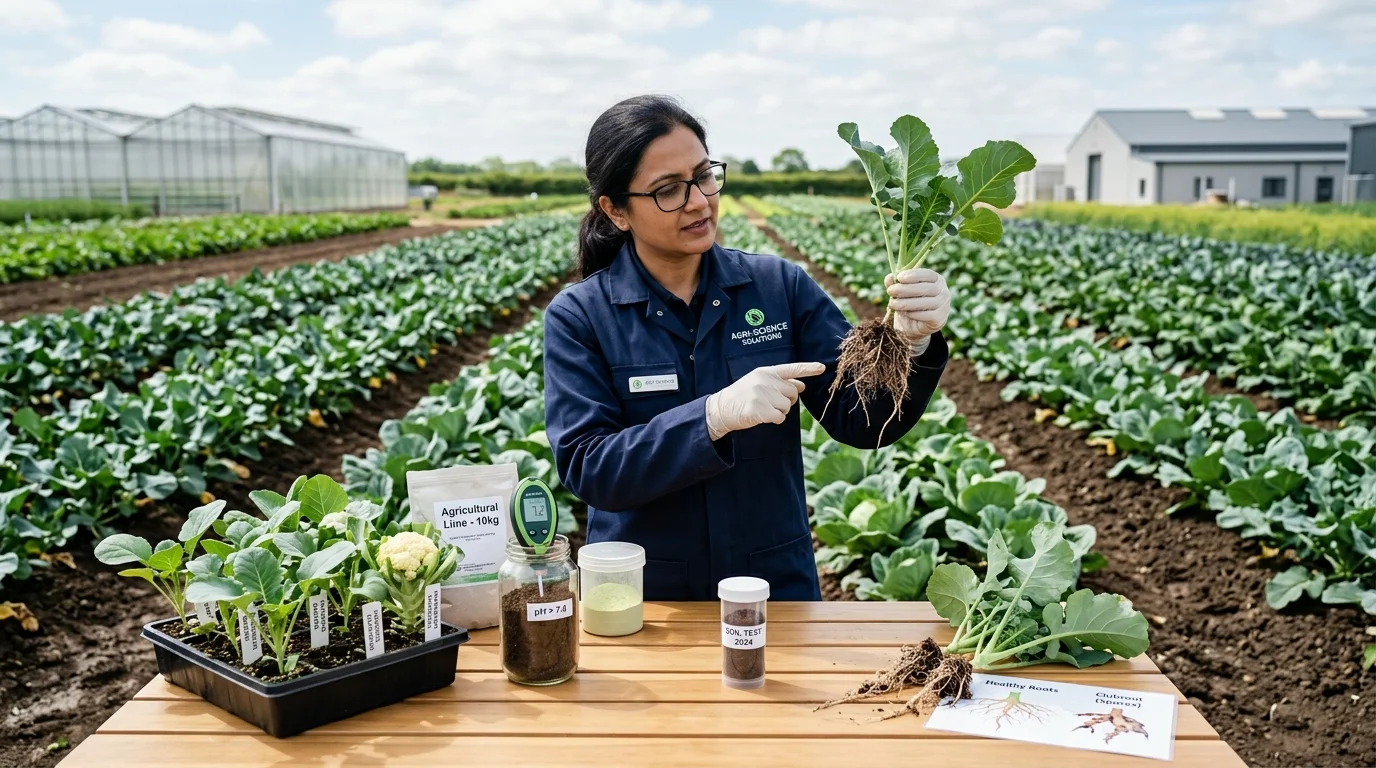
Clubroot’s calling card is radically distorted, club-like swellings on the main root and lateral roots. They look like fat, lumpy fingers or a knotted fist. If you pull up an infected plant, the roots will be brittle and rot quickly. By contrast, root knot nematodes cause small, bead-like galls, not massive clubs. Swede midge causes a swollen, hollow stem, not root distortions. Clubroot is the only one that makes the taproot look like a cartoon cave club.
The disease is worst in acidic, waterlogged soil (pH below 6.8). The spores germinate best in warm, damp conditions (15-25°C), so you’ll notice symptoms in June to August after a wet spring. Once you see the foliage wilting in hot spells, the roots are already destroyed.
Your First Weapon: Soil pH Management. Lime Treatment Isn’t Optional.
Clubroot spores thrive in acidic soil. Raising the pH to 7.2 or above creates a hostile environment. This is where lime treatment comes in—but you need to do it right.
Step 1: Test your soil pH. Use a reliable kit (I recommend RHS Soil Test Kit or a cheap digital meter from Amazon). Test at least four spots across your brassica bed.
Step 2: Calculate lime dose. For a typical allotment plot (10m x 10m), if your pH is 5.5, you’ll need around 500g per square metre of garden lime (calcium carbonate). If it’s 6.0, half that. Aim for pH 7.2-7.5. Do not exceed pH 8.0—you’ll lock up micronutrients like iron and cause chlorosis.
Step 3: Apply in autumn or winter. Lime takes months to react. Sprinkle evenly, then water in lightly. Don’t dig it in deeply—the spores live in the top 15cm of soil.
Step 4: Maintain with annual top-ups. Every autumn, test and add lime if needed. On heavy clay (like ours), pH drops quickly due to organic matter breakdown.
| Soil pH | Clubroot Risk | Lime Needed (per sq m) | Best Timing |
|---|---|---|---|
| Below 6.0 | Very High | 400-600g | Autumn |
| 6.0 – 6.8 | Moderate | 200-400g | Autumn or Winter |
| 6.8 – 7.5 | Low | None, or 100g if dropping | Test annually |
| Above 7.5 | Minimal | None needed | Monitor |
Second Weapon: Rotation and Quarantine. Yes, You Need a 5-Year Plan.
Clubroot spores can survive in soil for 15-20 years without a host. That means you cannot grow brassicas on that bed for at least 5 years—ideally 7—after an infection. This is non-negotiable.
Create a rotation diagram. Divide your plot into 4-5 sections. Brassicas occupy one section for one year, then don’t return for 4-5 years. Intercrop with alliums (onions, garlic—these suppress spore germination), legumes (peas, beans—fix nitrogen), and root vegetables (carrots, parsnips—break up soil). Never follow brassicas with more brassicas. That includes “minor” brassicas like radish, turnip, and swede.
If you have a small plot and can’t rotate, consider growing brassicas in large containers (50L+) filled with fresh, sterile compost. This is a valid workaround for urban plotters. Use a mix of 40% peat-free multipurpose, 40% loam-based compost (like John Innes No.3), and 20% sharp sand for drainage. Add 1 tablespoon of lime per bucket to maintain pH.
Third Weapon: Resistant Varieties and Biological Seed Treatments.
No brassica is 100% resistant to clubroot, but some are remarkably tolerant. Look for “Clubroot Resistant” (CR) varieties. For cabbages, try ‘Kilaxy’ F1 (a pointed spring cabbage) or ‘Clapton’ F1 (a round autumn cabbage). For cauliflowers, ‘Claret’ F1 is excellent. For Brussels sprouts, ‘Cascade’ F1 is a reliable choice. For swede, ‘Marian’ and ‘Invitation’ are market-leaders.
But here’s a trick most home gardeners don’t know: biological seed treatments using Trichoderma asperellum (a beneficial fungus) can colonise root surfaces and outcompete clubroot spores. Products like Blight-Spray? No—use Trianum-G (a commercial biocontrol available online). Dust seeds with the powder before sowing. It won’t cure an established infection, but it gives young plants a fighting chance in lightly infested soil.
Fourth Weapon: Hygiene and Drainage.
Clubroot spores spread through infected compost, tools, boots, and water runoff. Never compost infected roots—even hot composting (60°C+) may not kill all spores. Instead, bag them and put them in the green bin (commercial composting reaches higher temperatures). Alternatively, burn them.
Improve drainage. Spores need free water to swim to roots. If your clay soil puddles after rain, dig in 10cm of sharp sand and grit across the bed. Raise the bed by 15-20cm with mounded soil. Better drainage doesn’t just help clubroot—it stops your cabbages from rotting in winter.
Clean tools. Dip your spade and trowel in a 10% bleach solution (1 part bleach to 9 parts water) or a household disinfectant like Jeyes Fluid (diluted per label) between beds. This is tedious, but one infected tool can contaminate an entire plot.
Fifth Weapon: Bait Crops and Solarisation (Advanced).
If you have a small area with low-level clubroot (patchy symptoms, not total collapse), you can try a technique called bait cropping. Sow a quick-maturing brassica like Chinese cabbage ‘One Kilo SB’ or radish ‘Saxa’. Let them grow for 6-8 weeks, then pull them up before they show any clubroot symptoms. The idea is that spores germinate, infect the roots, but you remove the host before the pathogen can multiply. This reduces spore load by up to 70% in one season. Do this two years in a row.
Soil solarisation works in sunny summers (like July 2022). After removing infected plants, water the soil, cover with clear plastic (0.1mm thickness) for 4-6 weeks, and weigh down edges. The trapped heat kills many soil pathogens. It’s not 100% effective for clubroot (spores are heat-tolerant), but it reduces levels and kills weed seeds.
How to Recognise Clubroot Early (Before It Destroys Your Crop)
Don’t wait for wilting. Check for early signs 4-6 weeks after planting.
- Stunted growth. Your kale looks half the size of a healthy plant of the same age.
- Purplish leaf edges. Sign of phosphorus deficiency caused by root damage.
- Leaves that wilt in midday sun but recover by evening. The roots can’t keep up with water demand.
- Distorted root swellings visible when you gently fork around the base. Don’t uproot the whole plant—just feel with your fingers.
If you spot these, immediately apply a high-potash liquid feed (like tomato feed) to support root function, and drench the soil with a biological control containing Bacillus subtilis (e.g., RootGrow Super Mush? No—use Serenade Garden). This won’t cure clubroot, but it can slow progression and help you salvage a partial harvest.
The Ultimate Clubroot Prevention Checklist (For Your Shed Door)
Before you plant brassicas next season, run through this list:
- Test soil pH. Is it above 7.0? Yes? Proceed. No? Add lime now.
- Check your rotation. Have you grown brassicas here in the last 5 years? If yes, choose another bed.
- Improve drainage. Does water sit on the surface for more than 2 hours after rain? Add grit.
- Choose resistant varieties. Order ‘Kilaxy’ cabbage or ‘Claret’ cauliflower.
- Treat seeds. Dust with Trichoderma powder (e.g., Trianum-G).
- Sterilise tools. Dip in bleach solution before touching the brassica bed.
- Space plants widely. 45-60cm apart for cabbages—airflow reduces humidity around roots.
- Water at soil level. Avoid overhead watering which splashes spores onto healthy plants.
- Pull and remove ANY suspicious plants immediately. Bag them, don’t compost them.
- After harvest, remove all roots. Don’t leave any brassica root debris in the soil.
Frequently Asked Questions About Clubroot Prevention
Can I use wood ash instead of lime?
Wood ash contains potassium and calcium, but it’s less predictable than garden lime. It raises pH but can also provide high potassium levels that may imbalance other nutrients. Use it as a supplement, not a replacement for lime treatment. Apply at 100g per sq m max.
Will adding manure make clubroot worse?
Fresh manure can lower soil pH (especially horse manure), which encourages clubroot. Always use well-rotted manure (at least 6 months old) and test pH annually. Better yet, use composted green waste.
Is clubroot the same as ‘Finger and Toe’ in swedes?
Yes—‘Finger and Toe’ is the colloquial name for clubroot in swedes and turnips. The roots become misshapen, not the swollen clubs you see on cabbages. Same pathogen, same prevention.
Can I grow brassicas in the same bed if I replace the soil?
Technically yes, but practically impractical. You’d need to remove the top 30cm of soil (spores can be deeper) and replace with fresh, sterile soil. For a 2m x 3m bed, that’s 1.8 cubic metres—about £300 worth. Container growing is cheaper.
How do I know if my soil is still infected after 5 years?
Plant a ‘bait’ crop of Chinese cabbage or turnip. Grow for 8 weeks, then carefully lift and inspect roots. If you see any club swellings, the soil is still infective. Repeat the cycle: raise pH, improve drainage, and wait another 3 years.
Can clubroot affect my fruit trees or flowers?
No—clubroot only attacks plants in the Brassicaceae family (the mustard family). It will not affect apple trees, roses, tomatoes, or beans. However, some common weeds like shepherd’s purse and wild radish can host it. Keep your plot weeded.
Are there any fungicides that work?
In the UK, no amateur-use fungicides are approved for clubroot control. The commercial product ‘Fubol Gold’ (metalaxyl-M) is for professional growers only. Stick to biological controls and cultural methods.
One Final Thought from The Plot Doctor
Clubroot is the boogeyman of the brassica bed, but it’s a boogeyman you can outsmart. The single biggest mistake I see is ignoring soil pH. I had a plotter who’d been liming his bed for three years but never tested—his pH was still 6.2 because he used too little. Check. Then check again.
You don’t need to become a soil scientist. You need a £10 pH meter, a bag of lime, a rotation plan stuck to your shed door, and the patience to wait. Those first perfect, homegrown cabbages—crisp, blight-free, with a clean white root—are worth every gritty step.
Now go test your pH. Your future sprouts will thank you.