The Plot Doctor’s Rule: Test Before You Treat
I’ve lost count of how many new plotters I’ve seen grab a bag of garden lime in early spring, thinking it’s a magic tonic for all soils. Let me stop you right there. Adding lime without a soil pH test is like taking antibiotics for a headache – it’s the wrong tool, and it can do more harm than good. Lime works by raising soil pH, making acidic ground more alkaline. This is essential for crops like brassicas, but disastrous for acid-loving potatoes or blueberries. The golden rule? Test your soil every autumn. A simple kit from Garden Organic or the RHS costs under a tenner and tells you exactly where you stand. Most UK allotment clay sits around pH 6.0–6.5, which is fine for most veg. But if you’re below pH 5.5, you’ve got acidic ground that’s begging for lime – especially if you plan a brassica bed.
Why Lime Protects Your Brassica Beds from Clubroot
Clubroot is the nightmare of every brassica grower – cauliflower, cabbage, kale, and sprouts all suffer. It’s a soil-borne disease (Plasmodiophora brassicae) that swells roots, stunts growth, and can linger in acidic ground for years. The science is simple: clubroot spores thrive in acidic soils below pH 6.8. By raising the pH to 7.0–7.5 with lime, you create an environment where the spores struggle to infect roots. This isn’t a cure – once clubroot is in your plot, it’s near-impossible to eradicate – but it’s your best preventative shield. Apply lime at least two weeks before planting brassicas, ideally in autumn or early spring, so it has time to react with the soil. I’ve seen plots where a single application cut clubroot losses by 70%. Pair it with crop rotation (don’t grow brassicas in the same spot for three years) and you’re building a fortress.
The Science of Soil pH: What Your Test Results Mean
Let’s get practical. You’ve done your soil pH test – now what? Here’s a quick reference table for UK allotment soils:
| pH Range | Soil Condition | What It Means for Your Plot | Lime Needed? |
|---|---|---|---|
| Below 5.5 | Strongly acidic | Clubroot risk high, nutrients like phosphorus locked up. Brassicas will struggle. | Yes, essential for brassica beds |
| 5.5–6.0 | Acidic | Potatoes and blueberries are happy, but brassicas need a boost. Slugs love this range too. | Moderate – apply to brassica beds only |
| 6.0–6.8 | Slightly acidic to neutral | Sweet spot for most veg (beans, carrots, onions, lettuce). Clubroot risk low. | No – avoid lime unless specific crop needs |
| 7.0–7.5 | Neutral to slightly alkaline | Ideal for brassicas to prevent clubroot. However, potatoes risk scab. | Only if below 7.0 for brassica beds |
| Above 7.5 | Alkaline | Iron and manganese become unavailable – yellow leaves on many crops. Rare on allotments unless over-limed. | No – never add lime |
Remember: over-liming is a silent killer. It locks up essential trace elements like boron and zinc, leading to poor fruit set and stunted growth. Always apply lime based on a current test, not guesswork.
When Exactly to Add Lime: Seasonal Timing for UK Plots
Timing isn’t just about the calendar – it’s about soil temperature, rainfall, and your crop plan. Here’s my no-nonsense breakdown:
- Autumn (September–November): This is the ideal window for most plots. Lime needs moisture and time to break down in clay soils. Apply after clearing summer crops and before winter rain. It’ll be fully active by spring planting. Best for general pH correction and brassica beds you’ll use next year.
- Late winter (February–March): If you missed autumn, you can still apply lime on frost-free days. Work it into the top 10–15cm. But wait at least two weeks before planting any seeds or transplants – lime can burn tender roots if fresh.
- Avoid spring/summer: Adding lime during active growing seasons risks nutrient lock-up and root damage. Only do it as an emergency if your pH test shows below 5.5 and you’re about to plant brassicas. Water after application to minimise shock.
I always recommend a split application for heavy clay soils. Apply half the recommended rate in autumn, then half the following autumn after retesting. Clay buffers pH changes slowly – rushing it can make the soil cakey and hard to work.
How Much Lime to Use? The Calculator
There’s no one-size-fits-all, but here’s a general guide based on RHS trials and my own experience on Yorkshire clay. Use garden lime (calcium carbonate), not hydrated lime (which is caustic). For a standard 10m² brassica bed:
- pH 4.5–5.0: 500g per m² (5kg per 10m²)
- pH 5.0–5.5: 300g per m² (3kg per 10m²)
- pH 5.5–6.0: 200g per m² (2kg per 10m²)
- Above 6.0: None – unless you’re targeting clubroot specifically, then a light 100g per m² can push pH to 6.8–7.0.
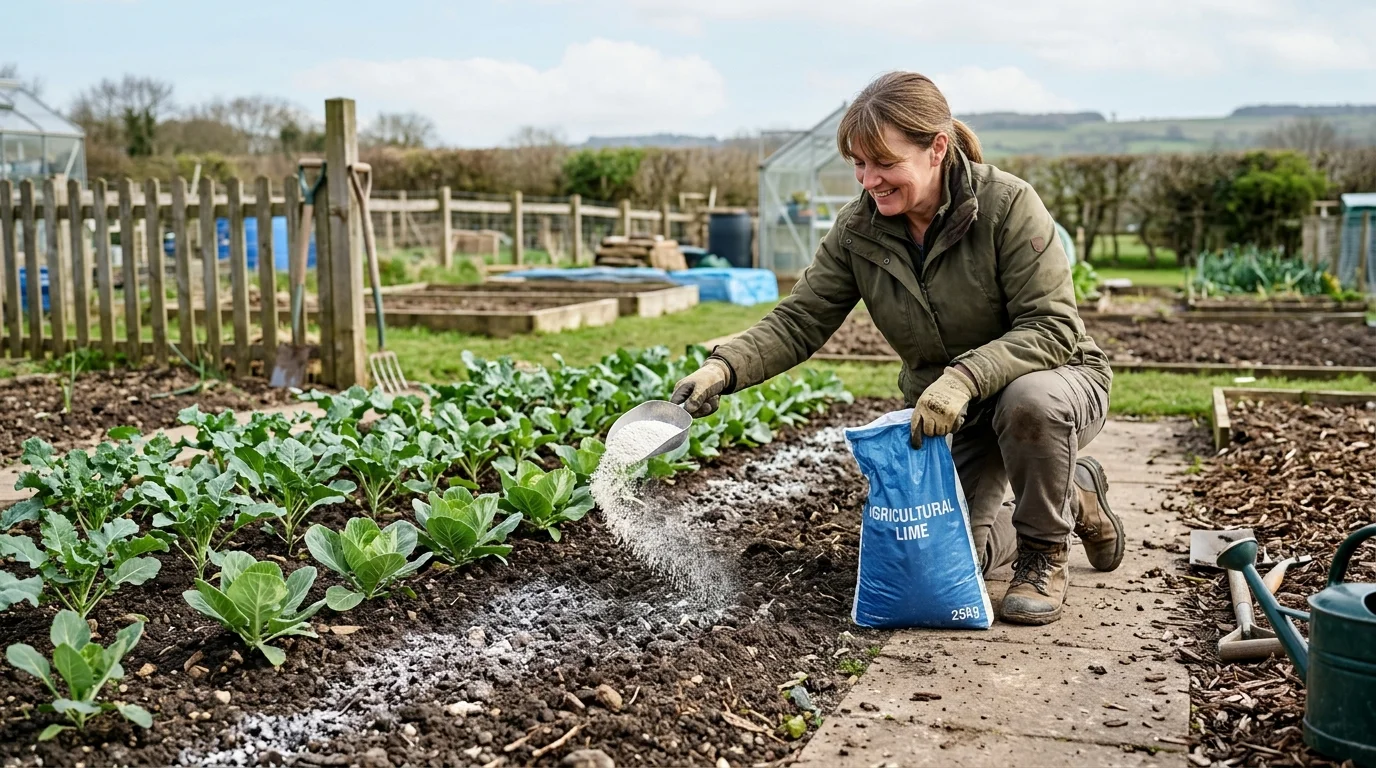
Always water the soil after application to help the lime dissolve. Use a rake to lightly incorporate it into the top few centimetres. Don’t dig it deep – lime moves slowly in clay, so surface application is fine.
Slugs, Clubroot, and Acidic Ground: The Trifecta of Trouble
One thing I’ve learned from 15 years on wet Yorkshire clay: acidic ground is a slug’s best friend. Slugs prefer pH 5.5–6.0, where their slime coats work best. If your plot is acidic and you’re fighting slug damage on your brassica seedlings, lime does double duty. Raising pH to 7.0 reduces slug activity while also protecting against clubroot. I’ve used Vitax Slug Gone (a wool pellet barrier) alongside a lime application, and the combined effect cut losses by 80% in one season. But don’t go overboard – too much lime can attract leatherjackets and wireworms. Balance is key.
Peer-Reviewed Evidence: Why This Works
I don’t just rely on my own trials. A 2018 study from the University of Warwick (linked via Warwick Crop Centre) showed that maintaining soil pH above 7.0 reduced clubroot severity by 90% in field trials. Another paper from Garden Organic (available at their soil health hub) confirmed that lime applications on acidic ground improved brassica yields by an average of 35%. This isn’t gardening folklore – it’s hard science. Combine that with a three-year crop rotation and good drainage, and you’ve got a clubroot-proof strategy.
Common Mistakes to Avoid
- Liming the whole plot: Only lime areas where you’ll grow brassicas or where pH is critically low. Potatoes, blueberries, and raspberries prefer acidic ground – liming them causes scab and yellow leaves.
- Using lime as a slug killer: It helps, but it’s not a primary control. Use nematodes (e.g., Nemaslug) for heavy infestations.
- Adding lime with fertiliser: Lime reacts with nitrogen – it can release ammonia gas and waste your fertiliser. Apply them at least two weeks apart.
- Forgetting to retest: Soil pH changes slowly. Retest every 12 months to avoid over-liming.
Frequently Asked Questions
Can I add lime in spring just before planting brassicas?
Yes, but apply it at least two weeks before planting and water it in well. Spring applications work best on light, sandy soils. On heavy clay, autumn is far more effective because the lime has time to react over winter.
How do I know if my soil is too acidic without a test?
Look for indicator weeds: sorrel, nettles, and moss love acidic ground. Brassicas that fail to form heads or show stunted roots are a red flag for clubroot. But a £8 pH test kit is the only reliable method.
Can I use wood ash instead of garden lime?
Wood ash does raise pH, but it’s less predictable – it contains potassium and other salts that can burn roots. Garden lime (calcium carbonate) is safer and more consistent. If you use ash, limit it to 100g per m² and mix well.
Will lime harm mycorrhizal fungi in the soil?
Some studies show that high pH can reduce mycorrhizal activity, but moderate liming (to pH 6.5–7.0) doesn’t harm them. In fact, healthy brassica roots with less clubroot risk support better fungal networks. Avoid over-liming above pH 7.5.
Final Prescription from The Plot Doctor
Lime is a precision tool, not a cure-all. Test your soil pH every autumn, target your brassica beds specifically, and apply in the correct season. You’ll protect your crops from clubroot, reduce slug pressure, and unlock nutrients that were locked in acidic ground. Grow smarter, not harder – your brassicas will thank you with heavy, disease-free heads. And as I always say: a happy soil is a balanced one.