Let’s talk muck. Specifically, the black gold that turns your clay-heavy plot from a brick-making factory into a crumbly, productive haven. You’ve heard it a thousand times: ‘Get manure on your plot.’ But the wrong manure – or worse, contaminated manure – can poison your soil for years. I’ve seen plotters lose entire potato and tomato crops to aminopyralid residues. It’s heartbreaking. So let’s strip away the romanticism and get clinical about the best manure for allotment vegetable beds.
Why your soil is begging for organic matter
Before we dive into the muck pile, let’s recap the science. Most UK allotments sit on heavy clay or thin, sandy loam. Both extremes suffer the same problem: a lack of stable organic matter. Clay locks up nutrients and waterlogs in winter; sand drains so fast your plants starve. Well-rotted manure is the universal corrective. It feeds the soil food web – bacteria, fungi, earthworms – which in turn unlocks nutrients for your veg. It improves water retention in sand and drainage in clay. But the key word is well-rotted. Fresh manure burns roots, releases ammonia, and can carry pathogens. A good rule of thumb? If it still smells like a stable, it’s not ready. It should smell earthy, like a damp forest floor.
Horse manure: The plotter’s staple, but buyer beware
For most of us, horse manure is the most accessible and cost-effective option. It’s widely available from local stables, riding schools, and even some council recycling centres. Nutritionally, it’s a decent balanced feed – roughly 0.5-0.3-0.5 NPK, plus trace elements. But it’s also the primary vector for the herbicide aminopyralid.
The aminopyralid nightmare (and how to dodge it)
Aminopyralid is a synthetic auxin herbicide used on pastures to kill broadleaf weeds like thistles and docks. It passes straight through the horse’s gut and remains active in the dung. Once on your plot, it persists in soil and compost for up to two years. The symptoms are unmistakable: tomato, pea, and bean leaves curl downwards into a ‘corkscrew’ shape, stems twist, and fruit fails to set. Potatoes may show distorted tubers. I’ve lost a full row of runner beans this way – it’s devastating.
Here is your checklist to avoid contamination:
1. Know your source. Ask the stable owner directly: ‘Has the hay or straw used for bedding been treated with a herbicide containing aminopyralid, clopyralid, or picloram?’ If they don’t know, walk away.
2. Do the ‘Pea Test’ (bioassay). Before spreading a load on your beds, fill a 10-litre pot half-and-half with the manure and peat-free compost. Plant three or four pea seeds. Water them. Wait 14 days. If the leaves show any cupping, twisting, or stunting, do not use that manure. Return it to the source.
3. Source with certification. Some commercial suppliers now test for aminopyralid. Look for bags labelled ‘herbicide-free’ or check with suppliers like Original Organics for certified sources.
If you’re caught with contaminated manure, your only option is removal. You can’t compost it away – the molecule is too stable. You must physically strip the top 6 inches of contaminated soil, or wait two years and test again. Prevention is exponentially cheaper than the cure.
Farmyard manure: The slow-burn champion
If you can get it, well-rotted farmyard manure (a mix of cattle, pig, and poultry litter) is often superior for deep soil conditioning. Cattle manure is colder (less nitrogen) but adds bulk fibre that persists in clay. Poultry manure is ‘hot’ – high in nitrogen – and should be composted for at least six months before use. My preference for heavy clay is a 70:30 mix of cattle and horse manure, stacked for a full 12 months. The texture should be like moist, dark breadcrumbs.
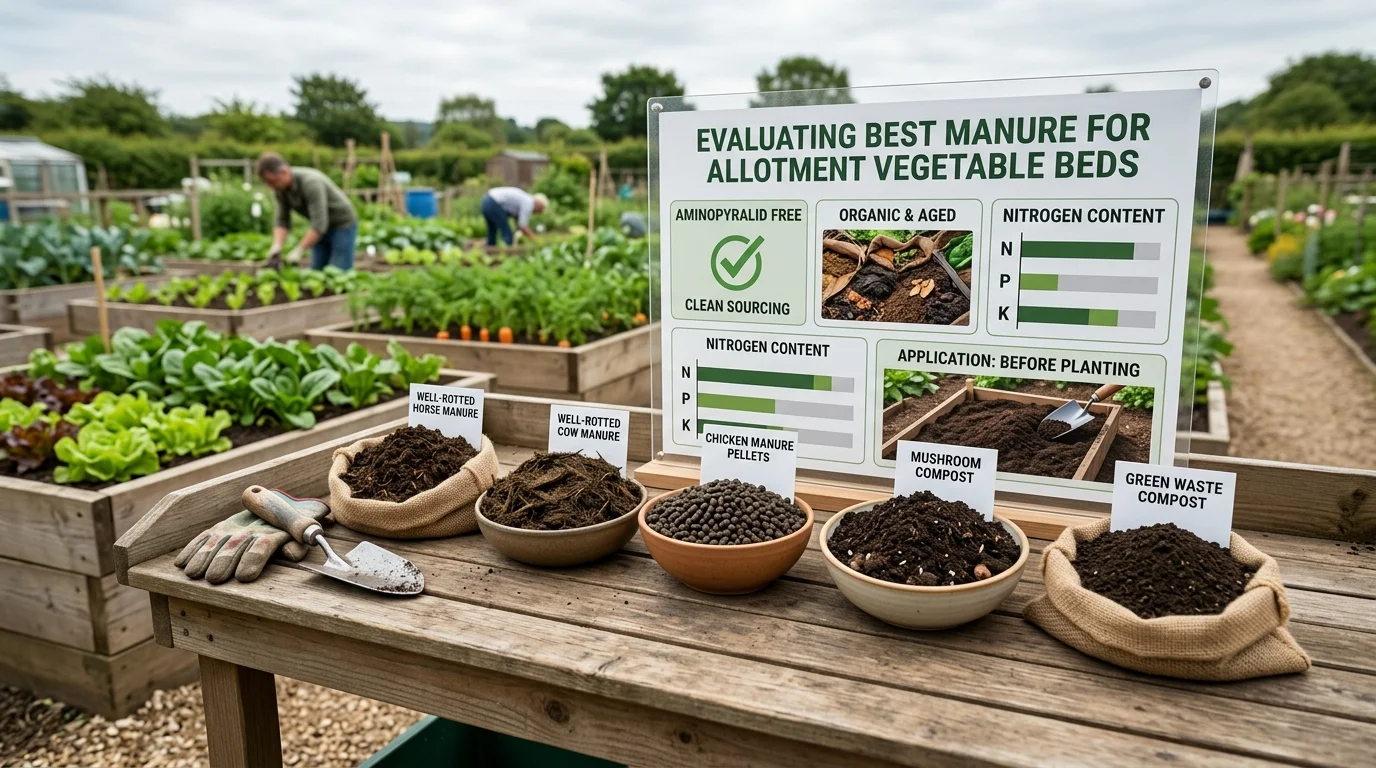
Manure comparison table for UK allotments
Use this table to match the right muck to your soil type and crop needs.
| Manure Type | N-P-K Profile | Best For | Time to Rot | Risk of Aminopyralid? |
|---|---|---|---|---|
| Horse manure (with bedding) | 0.5-0.3-0.5 | General soil improvement, hungry crops (brassicas, squash) | 6-9 months | High (if hay treated) |
| Farmyard (cattle) | 0.4-0.2-0.5 | Heavy clays, long-term conditioning | 12 months | Low (cattle less likely to graze treated pasture) |
| Poultry (pelleted) | 4-2-1 | Quick nitrogen boost for leafy greens, brassicas | Commercially processed | Very low |
| Sheep manure | 0.7-0.3-0.9 | Light sandy soils, top-dressing | 6 months | Low |
| Green manure (e.g., field beans) | Variable | No-dig beds, overwintering cover | Dig in at 8-12 weeks | None |
How much manure do you actually need?
The RHS recommends a 5-7 cm (2-3 inch) layer of well-rotted manure every 2-3 years for a no-dig system. For a dug bed, incorporate one full wheelbarrow (approx. 75 litres) per 10 square metres. Over-application leads to nutrient runoff and lush, disease-prone growth. Less is more with muck.
Applying manure: Autumn vs. Spring
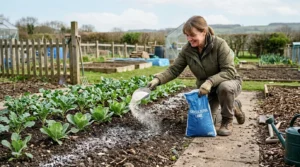
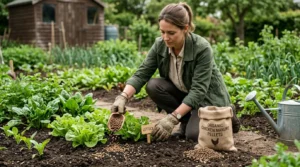
The traditional advice is to manure in autumn so winter rain washes it in. But for best manure for allotment vegetable beds, I prefer late winter (February) on no-dig beds. Why? Heavy rain leaches soluble nitrogen from autumn-applied manure before spring crops need it. By applying in late winter, you keep the nitrogen in the root zone. Spread a 3 cm layer over your beds, cover with cardboard or black plastic if heavy rain is forecast, and plant into it from April.
The case for ‘home-grown’ manure: Green manures
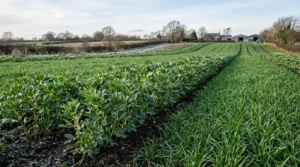
If you can’t source safe animal manure, grow your own. Green manures like Hungarian grazing rye, field beans, or phacelia are the ultimate ‘no-buy’ solution. They add organic matter in situ, prevent winter soil erosion, and some (like clover) fix atmospheric nitrogen. For a clay plot, I recommend overwintering with a mix of 60% rye and 40% vetch. Dig it in (or chop and drop for no-dig) six weeks before planting. It’s light, free of weedkiller, and builds structure beautifully.
Common mistakes with manure (and how to avoid them)
- Mistake 1: Using fresh manure. It burns roots and may contain viable weed seeds. Always stack and rot for minimum 6 months.
- Mistake 2: Ignoring the bedding. Manure mixed with wood shavings (not straw) takes longer to break down and can temporarily lock up nitrogen as the wood decomposes. Straw bedding is better for veg plots.
- Mistake 3: Forgetting to pH test. Manure can slightly acidify soil over time. Test your pH every two years and lime if below 6.0 for brassicas.
- Mistake 4: Assuming ‘organic’ means safe. Aminopyralid is approved for use in organic pasture management. ‘Organic’ certification applies to the horse’s feed, not the absence of herbicides in hay.
Where to source manure safely in the UK
- Local stables: Best for cost (often free), but do the pea test. Ask about hay source.
- Municipal recycling centres: Some offer ‘soil improver’ made from green waste. It’s low-nutrient but safe and weed-free. Check if it contains PAS 100 certification.
- Online marketplaces (Facebook Marketplace, Freecycle): Convenient, but high risk. Insist on a trial bag first.
- Garden centres and suppliers: Brands like Evergreen Organic sell bagged, tested manure. It costs more but saves the headache of contamination.
Final thought: Your soil is a living bank account
Manure is the deposit. But like any investment, you need to check the fine print. The best manure for allotment vegetable beds is one that is well-rotted, tested for aminopyralid, and matched to your soil type. Don’t be swayed by the word ‘free’ – contaminated muck will cost you a season’s harvest. Do the pea test, ask the hard questions, and your plot will pay you back in spades.
FAQ: Manure for Allotments
Q: Can I use manure from a riding school if they don’t know about herbicides?
A: No. If they can’t confirm the hay/straw is untreated, assume it’s contaminated. Do the pea test before accepting any load.
Q: How long does it take for aminopyralid to degrade?
A: In soil, 18-24 months. In a compost heap, the same. Heat doesn’t break it down. Only dilution or physical removal works.
Q: Is mushroom compost a good alternative?
A: It’s fine as a mulch for established beds, but it’s alkaline (high in chalk) and low in nitrogen. Not a direct substitute for manure.
Q: Can I use manure on a no-dig plot?
A: Absolutely. In fact, no-dig benefits enormously from a 3 cm annual topdressing of well-rotted manure. Just don’t dig it in.