You’ve finally got the keys to your plot. Now, open your wallet.
Let’s be honest: the dream of a cheap, self-sufficient allotment is what gets most of us through the winter seed catalogues. You picture a summer of free veg, a larder stuffed with chutney, and a smug sense of victory over the supermarket. Then the first bill arrives, and you realise that ‘free’ veg costs more than Waitrose organic.
I’ve been there. When I took on my first plot in Leeds, I budgeted for the council rent—and ignored the water standpipe fee, the association membership, the compulsory shed insurance, and the fact that my clay soil needed £60 worth of green manure seed just to breathe again. So, how much does a UK allotment cost per year? The honest answer is: it depends, but you need a number that includes the hidden fees or you’ll be caught out.
Let’s strip away the romanticism and get to the numbers.
The baseline: council rent and statutory rates
Under the Allotments Act 1922 (yes, it’s that old), local authorities have a duty to provide allotments. But the price you pay varies wildly depending on where you live.
The national average for a standard 10-rod plot (about 250 square metres) runs between £40 and £100 per year for council-managed sites. However, in London and the South East, you can easily see £150–£250. In rural areas of Yorkshire or the North East, some councils still charge as low as £25.
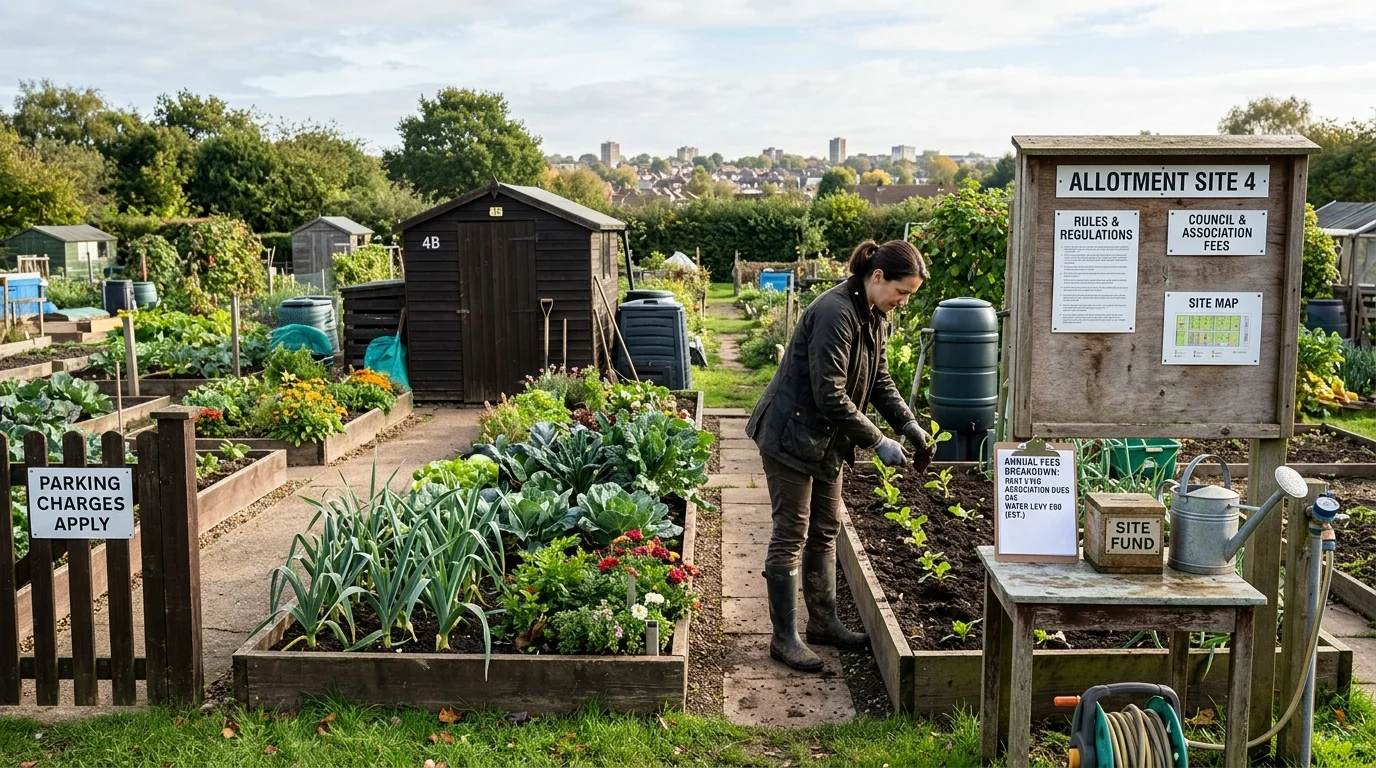
Here is the first hidden fee: council rent does not always include water. Many councils now bill water separately, often as a flat annual fee of £20–£50, regardless of how much you actually use. Some sites on metered supplies charge per cubic metre. If you are on a standpipe with a key, you may need to buy a key fob (another £10–£15 one-off).
Key tip: When you ask “how much does a UK allotment cost per year?”, do not stop at the rent figure. Ask the secretary: “Is water included in that price, or is it a separate bill?” That single question can save you a shock bill in August.
Allotment association fees – the unavoidable extra
If your site is run by an allotment association (a self-managed group that leases the land from the council), you will pay two sets of fees: one to the council, and one to the association. This is the most common hidden cost new plotters miss.
Association fees typically cover:
- Site maintenance (mowing paths, hedge trimming, gate repairs)
- Communal tools and mowers
- Insurance (public liability for the site)
- Social events, compost bins, and manure deliveries
Expect to pay £15–£40 per year on top of your council rent. Some associations also charge a one-off joining fee of £10–£25. It sounds small, but it adds up—and if you don’t pay it, you can be evicted.
I’ve seen plotters rage at this, but honestly, a well-run association is worth ten times the fee. They organise bulk manure drops, negotiate better water rates, and chase the council when your gate lock breaks. Pay it with grace.
The mandatory shed tax – insurance and structures
Here is a fee nobody talks about: compulsory liability insurance. Many councils and associations now require you to have public liability insurance for your plot, typically up to £2 million cover. This is not optional.
The cheapest way is through the National Allotment Society (NAS) membership, which costs about £28 per year for individual membership and includes £10 million public liability cover. Alternatively, you can add it to your home insurance, but check the small print—most home policies exclude allotments.
Then there is the shed. You do not need one, but if you want a shed, most sites require it to be a specific size, colour, and material (e.g., dark green, timber, max 6×4 feet). And you will need planning permission from the site secretary. A cheap shed costs £150. A metal shed that won’t rot? £300. Add a floor, a padlock, and a roof felt kit, and you are at £400 before you’ve grown a radish.
Water bills – the summer sting
Let’s talk about the rain butt conundrum. In theory, you can collect free rainwater. In reality, a dry June means your butts are empty, and you’re forced to pay for mains water.
On metered sites, a typical 10-rod plot can use £30–£60 worth of water per growing season, depending on rainfall. Non-metered sites charge a flat rate, often £20–£40. Some councils have started installing water meters on allotments to recoup costs, and I expect this trend to spread.
Savvy move: Install a 200-litre water butt (about £30–£40) and a rain diverter. Connect two butts in series. In a normal UK summer, two linked butts can reduce your mains water use by 60%. Your wallet and your soil will thank you.
Hidden costs table – the real annual picture
Let me lay it out in a format that’s easier to scan. This is based on a typical 10-rod plot in a regional city (e.g., Leeds, Bristol, Manchester) with an association.
| Cost Category | Typical Annual Cost (£) | Notes |
|---|---|---|
| Council rent (10 rods) | £50–£100 | Varies by region; London can be 2-3x higher |
| Water fee (flat rate or meter) | £25–£60 | Metered sites cost more in dry summers |
| Association membership fee | £20–£40 | Covers insurance, maintenance, communal costs |
| NAS or individual insurance | £28 | Essential; council may require proof |
| Compost / manure / green manure | £30–£60 | First year will be higher if soil is poor |
| Seeds and plants | £20–£50 | Can reduce via seed swaps and saving |
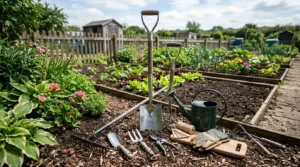
| Tools (initial and replacements) | £30–£80 per year | Spade, fork, hoe, gloves, string |
| Shed or storage (one-off cost) | £150–£400 | Divide over 5 years: £30–£80/year |
| Total estimated annual cost | £203–£468 | First year may be £400–£600 with shed |
That total—£200 to nearly £500 per year—does not include the cost of your own labour or travel to the site. If you drive, add fuel costs.
How to cut costs without cutting corners
I’ve run a 20-plot community allotment for 15 years. Here are the three money-saving strategies I recommend to every new plotter.
1. Join the National Allotment Society (NAS). For £28 a year, you get insurance, a discount at Dobies and Suttons seeds, and access to legal advice if your council tries to hike your rent illegally. It pays for itself in one seed order.
2. Bulk buy with your association. A single tonne bag of well-rotted horse manure costs about £40–£60 delivered. Split it between 4 plotters, and you pay £10–£15 each. Same for seed potatoes, onion sets, and compost. Your association secretary can organise a group order.
3. Go no-dig from year one. I know this sounds like an eco-warrior cliché, but it saves you money. No-dig means you don’t buy rotavators, you don’t waste money on expensive soil conditioners, and you suppress weeds with cardboard and compost. The Royal Horticultural Society trials at Wisley have shown that no-dig plots yield the same or better crops as dug plots, with lower input costs. Source: [RHS No-Dig Research](https://www.rhs.org.uk/soil-composts-mulches/no-dig-gardening).
4. Water smart, not hard. Use seep hoses (about £15–£20) connected to a water butt. They waste far less water than overhead sprinklers. In dry spells, water once deeply per week rather than daily—this encourages deep root growth and reduces your water bill.
What about ‘free’ allotments and waiting list fees?
Some councils offer discounted rents for pensioners, unwaged plotters, or community groups. Always ask. For example, Leeds City Council offers a 50% reduction for over-65s and those on certain benefits.
But here is a hidden fee that makes me angry: waiting list charges. A few councils now charge a £10–£20 non-refundable fee just to be added to the waiting list. This is a recent trend, and it is not universal, but it exists. Always check the council’s allotment policy before you apply.
The bottom line: is it worth it?
Financially, it depends on your yield. A well-managed 10-rod plot can produce about £500–£800 worth of vegetables per year (based on supermarket prices). If you factor in the costs above, you can break even or even save money—but only if you avoid the hidden fees.
More importantly, the value is not just monetary. It’s the taste of a home-grown tomato, the mental health benefits of digging soil, and the community that shares seeds and stories. But you cannot enjoy any of that if you get a surprise water bill that wipes out your budget.
So, when you ask how much does a UK allotment cost per year, remember: the rent is only the start. Ask about water, association fees, insurance, and shed rules before you sign. Grow smarter, not harder—and keep your wallet as healthy as your soil.
Frequently Asked Questions: Allotment Costs in the UK
Q: Do all councils charge the same for allotment rent?
A: No. Council rents vary hugely. The national average is around £60–£80 for a standard 10-rod plot, but London councils often charge £150–£300. Always check your local council’s website for their exact fee scale.
Q: Is water usually included in the allotment rent?
A: Not always. Many councils charge a separate flat water fee of £20–£50 per year. Some metered sites charge based on usage, which can be higher in dry summers. Always confirm with your site secretary before you take on a plot.
Q: What is an allotment association fee, and do I have to pay it?
A: An allotment association fee covers site maintenance, insurance, and communal costs. If your site is self-managed, you typically must pay this fee (usually £15–£40 per year) on top of your council rent to keep your plot.
Q: Can I save money by not buying insurance?
A: No. Most councils and associations now require you to have public liability insurance (usually £2–10 million cover). The cheapest option is to join the National Allotment Society for about £28 per year, which includes the cover.
Q: What are the most common hidden allotment costs?
A: The main ones are: separate water bills, association membership fees, compulsory insurance, shed costs (if you want one), and the cost of improving poor soil (compost, manure, green manure seeds). Expect to spend an extra £100–£200 on top of the rent in your first year.