“My Blueberry Bush Looked Brilliant in April. By July, It Was a Yellow, Crispy Mess.”
I see it every year. A new plotter, full of optimism, plants a blueberry bush straight into their allotment soil. They water it, they mulch it, they talk to it. And within a few weeks, the leaves turn a sickly yellow between the veins, the edges go brown and crispy, and the few berries that form are small and sour. It’s heartbreaking.
Here’s the brutal truth: your allotment soil is killing your blueberries.
Most UK allotment soil sits between pH 6.5 and 7.5. Blueberries need a pH of 4.5 to 5.5. They are calcifuges – literally ‘chalk-fleeing’ plants. They cannot access iron in alkaline soil. It’s like locking the nutrient door and throwing away the key. The yellowing you see is chlorosis – an iron deficiency. It won’t get better with more feed. It only gets worse.
The solution? Stop fighting your soil and grow blueberries in pots. It’s not a compromise. It’s the smartest, most reliable way to get a bucketload of sweet, plump berries on a UK plot. Let me show you exactly how to do it.
Why Container Growing is the Only Reliable Method for UK Allotments
You might think, ‘I’ll just dig in loads of ericaceous compost and hope for the best.’ I’ve tried it. We all have. The problem is your underlying alkaline soil and hard water will slowly neutralise any acid you add. Within one growing season, your pH creeps back up, and the chlorosis returns. It’s a losing battle.
Containers give you total control. You control the soil, the water, and the drainage. This is non-negotiable for success with growing blueberries in pots UK. A blueberry’s root system is shallow and fibrous. It loves a tight, well-defined space where the acidity is constant.
Think of it this way: You wouldn’t plant a cactus in a bog. Don’t plant a blueberry in alkaline clay.
The Three Non-Negotiables for Container Blueberries
Ignore these three rules, and you will fail. Follow them, and you’ll be making crumble by August.
1. The Perfect Potting Mix
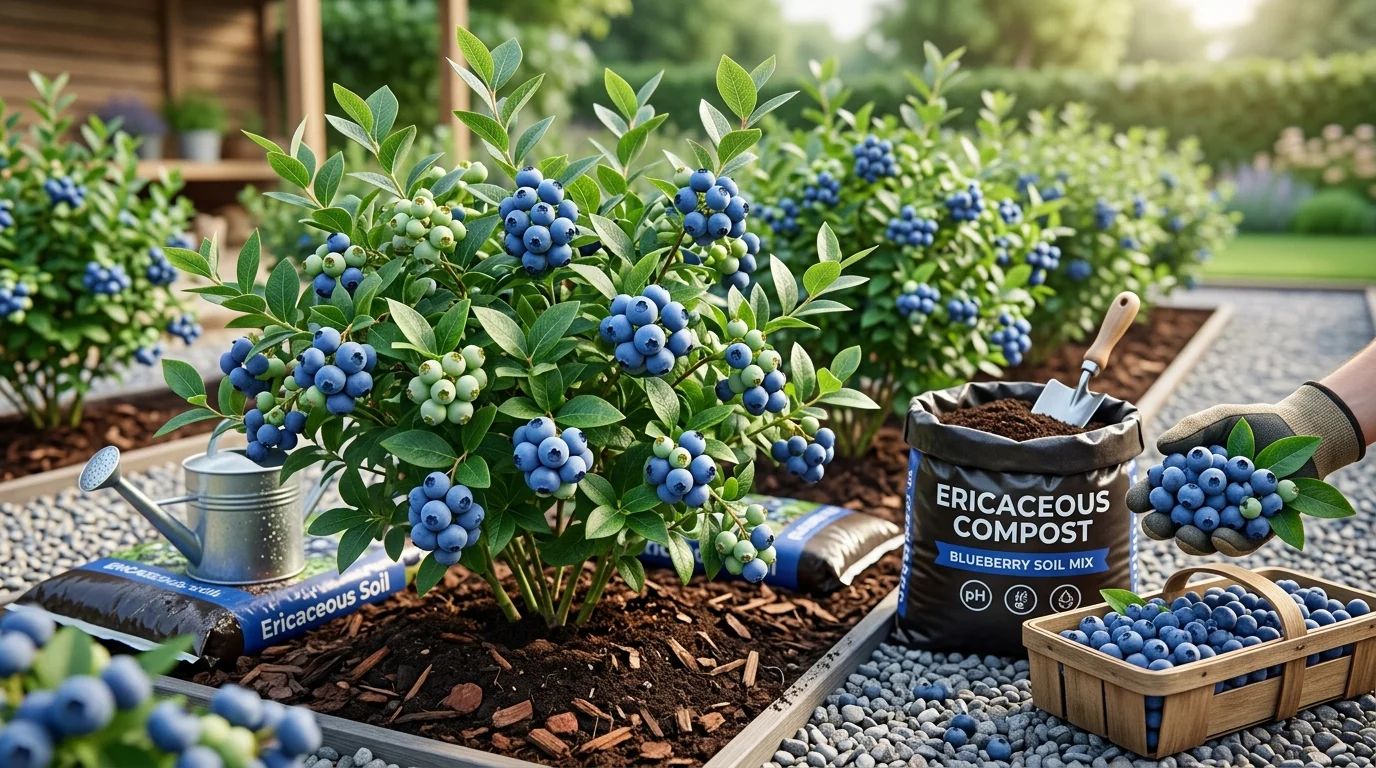
Standard multi-purpose compost is a death sentence. It’s pH neutral. You must use ericaceous compost. This is formulated to be acidic. My go-to is a peat-free ericaceous compost from a reputable brand like Sylvagrow or Melcourt. It has the right structure for drainage and moisture retention.
2. The Watering Rule That Saves Lives
This is where most people trip up. Your tap water in most of the UK is ‘hard’ – high in calcium carbonate. Every time you water with tap water, you push the pH of your compost upwards. Over a season, you can undo all your hard work.
You must use rainwater. I collect it in a dedicated water butt next to my greenhouse. If we have a dry spell and your butt runs dry, buy distilled or deionised water from a car shop (it’s cheap). Never use tap water for more than an emergency top-up.
3. The Pot and Position
A 12-inch (30cm) pot is the minimum for one bush. A 16-inch (40cm) pot is better. Terracotta dries out too fast. Use a glazed ceramic pot or a thick plastic one. Blueberries hate sitting in soggy roots, so ensure plenty of drainage holes. Place the pot in full sun for the sweetest berries – they need at least 6 hours daily. A south or west-facing spot is ideal.
Which Blueberry Varieties Actually Work in UK Pots?
Not all blueberries are created equal. The key is choosing the right ‘type’. You need a variety that is compact, self-fertile, and has a low ‘chill requirement’ (hours of winter cold needed to set fruit). UK winters are usually fine.
Here are the three I recommend to every plotter:
| Variety | Best For | Key Feature |
|---|---|---|
| ‘Sunshine Blue’ | Small spaces, beginners | Dwarf habit (1m tall), very high yields, excellent flavour. Self-fertile. |
| ‘Top Hat’ | Patio containers, limited space | Truly dwarf (30-60cm), perfect for the smallest pot. Decorative white flowers. |
| ‘Bluecrop’ | High yields, reliability | Classic variety. Upright growth, heavy cropping, and good disease resistance. |
Pro tip: Even though many are ‘self-fertile’, planting two different varieties nearby (even in separate pots) will massively increase your fruit set. A single bush is fine, but two bushes = double the berries.
Step-by-Step: Planting Your Blueberry Container
Here is the exact process I use on my own plot. Follow it to the letter.
- Pot Prep: Place a layer of crocks (broken pot pieces) or gravel at the bottom of your pot for drainage. Do not use ‘potting grit’ that contains limestone – it’s alkaline.
- Fill with Ericaceous Compost: Fill the pot about a third full. Use a specific peat-free ericaceous mix. Do not add any garden soil or manure.
- Plant at the Right Depth: Gently remove the bush from its nursery pot. Tease out the roots if they are circling. Plant it so the top of the root ball is level with the compost surface. Burying the stem leads to rot.
- Water In: Use rainwater. Give it a thorough soak until water runs from the bottom. This settles the compost.
- Top-Dress with Sulphur (Optional but Brilliant): Sprinkle a teaspoon of sulphate of iron or flowers of sulphur on the surface. This gently lowers the pH over the season. Re-apply each spring.
- Mulch: Cover the compost surface with a 2-inch layer of ericaceous bark chippings or pine needles. This keeps the roots cool, retains moisture, and slowly adds acidity.
Maintenance: Keeping the Acid High and the Plants Happy
Blueberries are not high-maintenance, but they are specific.
Feeding: Use a liquid feed designed for ericaceous plants. I use Vitax Ericaceous Liquid Feed or a seaweed-based feed. Feed every two weeks from April to August. Never use general-purpose fertiliser – it’s often high in lime.
Watering: As above – rainwater only. Check the pot daily in summer. Stick your finger in an inch. If it’s dry, water. Don’t let it dry out completely – the buds will drop.
Pruning: In late winter (February/March), remove any dead, diseased, or crossing branches. On established bushes, cut out one or two of the oldest (thickest, greyest) canes at the base each year. This encourages new, fruit-bearing wood.
Winter Care: Blueberries are hardy to -20°C. In a pot, the roots are more exposed. In a hard frost, wrap the pot in bubble wrap or hessian, or move it to a sheltered spot against a wall.
Slugs, Birds, and the End of the Line
Birds are your biggest enemy. A blackbird can strip a bush in an hour once the berries start to colour. You must net the pot. Use a lightweight fruit cage netting or a simple bamboo frame covered in netting. I use Enviresist anti-bird netting – it’s tough and UV-stable.
Slugs can be an issue on the lower branches. Keep the pot clear of surrounding weeds. A ring of Vitax Slug Gone (wool pellets) around the base of the pot is a good deterrent.
The Final Reality Check: You will get a small crop in year one and two. By year three, a single ‘Sunshine Blue’ bush can yield a kilo of fruit. That’s enough for breakfast bowls, crumbles, and a batch of jam. And the taste? It makes supermarket blueberries taste like wet cardboard.
So, stop trying to bend your plot soil to your will. It won’t happen. Embrace the pot. Use the right compost and the right water. You’ll be rewarded with the single easiest, most reliable crop of summer fruit on your plot.
Now go get yourself a blueberry bush. And a water butt.
Frequently Asked Questions About Growing Blueberries in Pots UK
Q: Can I use a grow bag instead of a pot?
A: I don’t recommend it. Grow bags dry out very quickly in hot weather, and blueberries hate that. A rigid pot holds moisture and temperature much more steadily.
Q: My leaves are turning red, not yellow. Is that bad?
A: Red leaves in autumn are normal – it’s a sign of healthy dormancy. But if leaves turn red in summer, it often indicates a phosphorus deficiency or cold stress from a cold snap. Check your feeding and pot position.
Q: Do I need to repot my blueberry every year?
A: No. Every 2-3 years, gently remove the bush, trim off a third of the root ball, and repot into fresh ericaceous compost in the same pot (or go up one size). This prevents the roots from becoming a tangled mess.
Q: Can I use vinegar to acidify my tap water?
A: Some people do, but it’s a very short-term fix and the concentration is hard to get right. Too much can burn the roots. Sticking to rainwater or distilled water is far safer and more reliable.