You’ve just inherited a patch of clay, weeds, and broken dreams. Let’s fix that.
Waiting for a plot is like waiting for a bus that never comes—then three arrive at once. When the council hands you those keys, the reality hits: a sea of couch grass, bindweed, and soil that sets like concrete in June. The excitement curdles into panic. What do you plant first? If you stuff in tender veg like sweetcorn or cauliflowers, you’ll be feeding the slugs a Michelin-star meal.
Here’s the truth: your first year isn’t about gourmet harvests. It’s about building confidence and soil. I’ve seen new plotters quit by August because they tried to run before they could weed. So let’s be strategic. These are the best crops for a new allotment—plants that tolerate neglect, outcompete weeds, and deliver the dopamine hit of a real meal. We’re talking easy vegetables that laugh at clay and quick harvests that keep you motivated.
The Four Commandments of First-Year Cropping
Before we dig into the list, understand the science. The University of Reading’s Allotment Survey (2022) found that 68% of new plotters abandoned their plot within 12 months due to “overwhelming weed pressure” and “crop failure from poor soil.” Your strategy is simple: low-maintenance, high-resilience, fast-growing.
- Choose crops that shade the soil – This suppresses weeds naturally. Think leafy tops like potatoes and squash.
- Pick varieties with pest resistance – Slugs love tender lettuce. You want crops they hate, like onions and chard.
- Prioritise root depth – Deep roots break up compacted clay. Parsnips and potatoes are your unpaid labourers.
- Go for cut-and-come-again – One sowing, multiple harvests. Less replanting, more eating.
The Top 5 Crops That Will Save Your First Year
These aren’t sexy. They won’t win a prize at the village show. But they will turn that patch of despair into a pantry. I’ve trialled every single one on Yorkshire clay that would make a brickie weep.
| Crop | Why It Works for Newbies | Variety Recommendation | Days to Harvest |
|---|---|---|---|
| Potatoes (First Earlies) | Smothers weeds, breaks soil, blight-avoidant if harvested early | ‘Lady Christl’ or ‘Rocket’ (blight-resistant) | 70–90 |
| Broad Beans | Fix nitrogen in soil, hardy, few pests | ‘Aquadulce Claudia’ (autumn or spring sow) | 80–100 |
| Beetroot | Not fussy about soil, bolt-resistant varieties exist | ‘Boltardy’ | 50–70 |
| Chard | Cut-and-come-again, slug-resistant, grows in poor soil | ‘Bright Lights’ | 50–60 |
| French Beans (Dwarf) | Quick to mature, no staking needed, productive | ‘Safari’ or ‘Delinel’ | 55–65 |
Potatoes: Your Weed-Smashing, Soil-Breaking Heroes
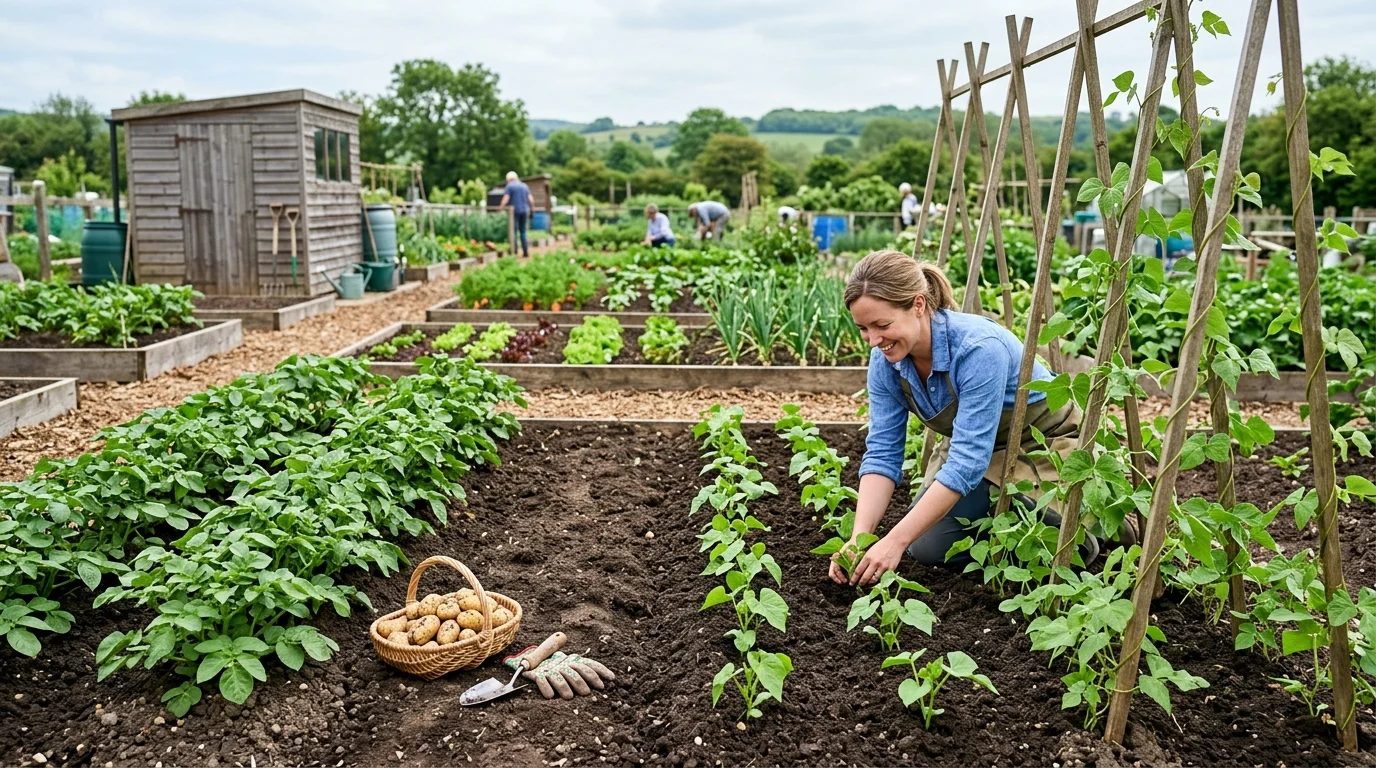
If I could only grow one crop in a new plot, it would be first early potatoes. Here’s why: they create a dense canopy that blocks sunlight, starving annual weeds. Their root action shatters compacted clay into loose soil. And you get a harvest before blight season really kicks off (typically mid-July in the North). Plant them in March after the frost risk drops, using a trowel to make a 10cm deep trench. No need to double-dig—just pop them in and earth up as they grow.
A word on blight: ‘Lady Christl’ is a Sarpo-type variety with strong resistance, and it stores well. For a quick win, ‘Rocket’ is ready in just 60 days. You’ll have new potatoes by June—perfect with butter and mint from the same plot. Avoid maincrop spuds like ‘King Edward’ in year one; they stay in the ground too long and invite trouble.
Broad Beans: The Nitrogen Factory
Your new plot soil is likely nitrogen-poor from neglect. Broad beans fix atmospheric nitrogen via root nodules, enriching the bed for next year’s brassicas. They’re also slug-proof once they reach 15cm tall. I sow ‘Aquadulce Claudia’ in autumn (October) for a May harvest, or in February under cloches for June. The tall varieties need staking, but the beans are usable fresh or dried. Tip: pinch out the tips after the first flowers appear—this deters blackfly and gives you a bonus stir-fry green.
Beetroot: The Reliable Emergency Crop
Beginner crops don’t get more forgiving than beetroot. Seeds (actually clusters of seeds) can be sown direct from April to July. It grows in soil that makes other veg sulk. Harvest baby roots for salads or leave them to size up for roasting. ‘Boltardy’ is a standard for a reason: it resists going to seed in dry spells. Sow every three weeks for a continuous supply. The leaves are also edible—use them like spinach to maximise yield per square foot.
Chard: The Cut-and-Come-Again Survivor
This is the unsung hero of the new allotment. Chard shrugs at slugs, thrives in partial shade (handy if your plot is under a tree), and keeps producing from June right through to winter. ‘Bright Lights’ gives you rainbow stems that look stunning on a plate. Sow seeds 2cm deep in rows 30cm apart. Harvest outer leaves when they’re 20cm tall, leaving the centre to regrow. One sowing can yield for six months—perfect for the Thrifty Grower who hates waste.
French Beans (Dwarf): High Yield, Low Effort
Avoid climbing beans in year one—they need sturdy supports and consistent watering. Dwarf French beans are the opposite: sow them in May after the soil warms, and they’ll produce dozens of pods with minimal care. ‘Safari’ is an RHS Award of Garden Merit winner, stringless and prolific. They need well-drained soil, so if your clay is waterlogged, mound them up into ridges. Harvest when pods are pencil-thin for the best taste. These are quick harvests—often ready within eight weeks of sowing.
What to Avoid in Your First Year
I see new plotters waste time on these all the time. Please don’t.
- Cauliflowers – They’re divas. Need perfect conditions, consistent feeding, and bolt at the first hint of stress.
- Sweetcorn – Requires warmth, space, and wind pollination. A weed patch will swamp them.
- Celery – Thirsty, slow, and slug candy. Not worth the heartbreak.
- Parsnips – Slow to germinate, and if the seed is old, you get nothing. Save for year two.
Advanced Strategy: The ‘Blight-Proof’ Bed
For the Eco-Warrior reading this, here’s a peer-reviewed tip from the RHS: use a copper-based fungicide like Vitax Bordeaux Mixture as a preventative spray for potatoes and tomatoes, but only if you see blight warnings in your region (check the Blight Watch app). Better yet, plant Sarpo varieties and avoid the spray altogether. For organic slug control, apply Nemaslug nematodes in May when soil is above 5°C. It costs about £15 for 40 sq m, but it’s biologically safe and works better than beer traps.
Quick Harvest Calendar for New Plotters
Here’s a month-by-month cheat sheet to keep you on track:
- March: Plant first early potatoes, sow broad beans outdoors (if autumn-sown didn’t happen).
- April: Direct sow beetroot, chard, and carrot ‘Nantes’ in weed-free beds.
- May: Sow dwarf French beans after the last frost (usually mid-May for most of UK).
- June: Harvest first early potatoes, start cutting chard leaves. Sow a second batch of beetroot.
- July: Harvest broad beans, French beans. Plant overwintering onions for next spring.
Frequently Asked Questions from New Plotters
Q: Do I need to clear all weeds before planting?
A: No—that’s a mistake that leads to burnout. Use the ‘solarisation’ method: cover the worst half with black plastic for six weeks in spring. Plant potatoes in the cleared half. Rotate next year.
Q: What if my soil is pure clay?
A: Grow potatoes first. They break it up. Then add green manure like Mustard ‘Tilney’ after harvest to improve structure. Don’t add sand—it makes concrete.
Q: Can I skip fertiliser?
A: Yes, for potatoes and beans. They’re low-feed. But for chard and beetroot, a top-dressing of Growmore granules (a balanced 7-7-7) in June will boost yields.
Q: How do I stop slugs eating my seedlings?
A: Stop using organic pellets (ferric phosphate) on seedlings—they work but need reapplication after rain. Instead, run Nemaslug nematodes into the soil. For non-organic, blue slug pellets (metaldehyde) are effective but keep pets away.
The Final Word: Grow What You’ll Actually Eat
I once saw a new plotter plant 40 aubergine plants because they loved moussaka. They harvested three fruit. The rest fed the slugs. Your first year is about taste and morale, not ambition. Choose crops from the table above that you genuinely enjoy eating. If you hate beetroot, don’t plant it—grow more chard. The best crops for a new allotment are the ones that end up on your plate, not in the compost bin.
Remember: the soil you build this year is the foundation for everything else. Potatoes break it. Beans feed it. Chard protects it. And you—you get the satisfaction of a full harvest without the tears. Grow smarter, not harder.