Stop Dreaming, Start Digging: Your No-Nonsense Guide to Applying for a UK Allotment
You’ve seen the neighbour’s gluts of courgettes. You’ve watched the Instagram reels of perfectly aligned leeks. But every time you think about getting your own plot, you hit a wall of council websites, cryptic waiting lists, and the nagging fear that you’ll be 87 by the time you get a key. I’ve been there. I spent three years on a waiting list myself, and when I finally got my first half-plot, it was a bramble-infested swamp. But here’s the truth: the application process is simpler than you think if you know the right steps. Let’s strip away the bureaucracy and get you onto the soil.
Step 1: Find Your Local Allotment – The Detective Work
The first mistake new plotters make is assuming there’s one central ‘allotment office’ for the whole country. There isn’t. Allotment provision is managed at the local level, usually by your district or parish council. Your first task is to identify who runs the plots in your postcode. Start by visiting your local council’s website and searching for ‘allotments’. You’ll often find a page listing sites, contact details, and application forms.
However, many plots are managed by independent local allotment societies. These societies lease the land from the council but handle applications, rents, and rules themselves. A quick Google search for “[Your Town/City] allotment society” will often yield better, more current information than the council website. For example, the National Allotment Society (NAS) website has a useful ‘Find an Allotment’ tool – it’s a goldmine for locating both council-run and society-run sites across the UK. Check them out at nsalg.org.uk.
Step 2: The Application Form – What They Actually Want to Know
Once you’ve identified your target site, you’ll need to apply. Most councils use an online form or a downloadable PDF. Here’s the inside scoop: they aren’t testing your gardening knowledge. They are primarily confirming your residency and willingness to follow basic rules. Typical questions include:
– Your full name, address, and proof of residency (e.g., council tax bill).
– Your contact details (email is critical for updates).
– Whether you want a full plot (approx. 250 sq metres) or a half-plot (125 sq metres).
– A declaration that you’ll abide by the tenancy agreement (no sheds without permission, no commercial selling, etc.).
Pro tip from The Plot Doctor: If the form asks about gardening experience, be honest. A ‘new plotter’ is often prioritised over someone with five plots elsewhere, as councils want to encourage newcomers. Don’t oversell yourself – they just want to know you’ll actually work the land.
Step 3: The Waiting List – The Reality Check (and How to Beat It)
Let’s talk about the elephant in the compost heap: waiting lists. In popular urban areas like London, Brighton, or Bristol, lists can stretch 3–5 years. In rural areas or less pressured towns, you might get a plot in months. Here’s the data from the recent RHS Allotment Survey: average wait times in England are 18 months, but 30% of plotters waited less than 6 months.
Your strategy to speed things up:
1. Apply to multiple sites. Don’t just put your name down for the one closest to home. A 15-minute drive can cut your wait by years.
2. Consider a half-plot. Many new plotters overestimate their capacity. Half-plots turn over faster because they’re easier to manage.
3. Check for ‘interim’ plots. Some societies offer a temporary plot on a less desirable patch (e.g., overgrown) at a reduced rent while you wait for a prime one. It’s a win-win: you start growing, and they get the land cleared.
Below is a typical waiting list comparison from UK council data. Use this to gauge what you might face:
| Location Type | Average Wait Time | Where to Check |
|---|---|---|
| Large City (e.g., Manchester, Leeds) | 2–4 years | Council website + local allotment society |
| Commuter Town (e.g., Reading, York) | 12–24 months | Parish council or NAS listing |
| Rural Village (e.g., North Yorkshire) | 3–6 months | Village hall noticeboard or local Facebook group |
| New Development (with allotment provision) | 0–3 months (spaces often available) | Housing developer or site manager |
Step 4: Contacting the Council – The Human Touch
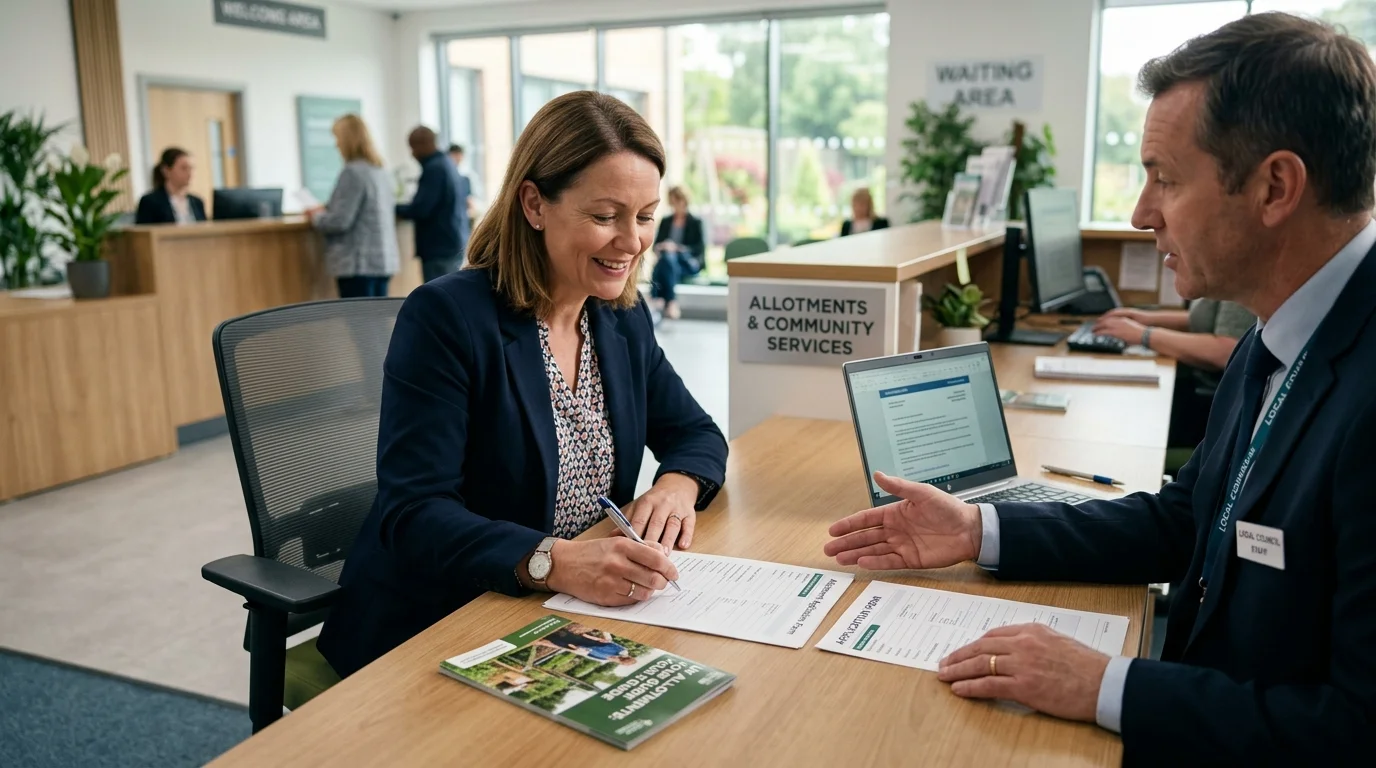
Don’t rely solely on online forms. A polite email or phone call to the council’s allotment officer (if they have one) can reveal hidden opportunities. I’ve seen plotters get a plot within weeks because they called to ask about a site that was ‘full’ online – turns out three plotters had just handed in their keys. Be direct but friendly. Ask:
– “Are there any plots available now, even if they’re rough?”
– “Is there a separate list for half-plots?”
– “Do you have a policy on sub-letting or shared plots?”
Councils are understaffed. A quick, clear email that makes their job easier (e.g., “I’ve already read the tenancy agreement and I’m ready to start”) puts you at the top of the mental queue.
Step 5: When You Get the Call – The 14-Day Rule
You’ll get a call or email offering you a plot. Here’s the catch: you usually have 14 days to accept and pay the first year’s rent (typically £40–£120 per year for a full plot). If you don’t respond, the offer goes to the next person. Don’t panic-buy tools yet. Accept the offer, pay the fee (often via BACS), and arrange a site visit. At the visit, check:
– Water supply: Is there a tap nearby? Is it turned on year-round?
– Soil quality: Is it heavy clay (like most of Yorkshire) or sandy? (Ask to dig a small test hole.)
– Boundaries: Are the paths clear? Is there any dispute over neighbouring plot lines?
If the plot is a jungle, negotiate. Some councils offer a discounted first year’s rent if you’re taking on a neglected plot. I’ve negotiated a 50% reduction for clearing couch grass – it’s worth asking.
Frequently Asked Questions
I’m on a waiting list. Can I speed it up by joining an allotment society?
Yes. Societies often have their own lists that move faster than the council’s, and membership (usually £5–£10/year) shows commitment. Some societies even offer ‘mentor plots’ where you share a half-plot with an experienced grower first.
What if I don’t have a council allotment near me?
Look for private community gardens, church-owned land, or ‘landshare’ schemes. The charity Garden Organic runs a Master Composter programme that sometimes connects you with local growing spaces. You can also approach a local farmer – many rent small patches for £50/year if you approach them politely.
Do I need insurance for a council allotment?
Most council tenancies include public liability insurance in your rent. But check the small print. If you’re in a society-run site, you may need separate cover – the NAS offers affordable insurance for members.
Can I lose my plot if I don’t use it?
Absolutely. Most councils enforce a ‘cultivation clause’ – you must have at least 75% of the plot under active cultivation by the end of the first growing season. If it’s weeds by June, expect a warning letter, then eviction. Don’t overcommit.
Your Allotment Action Plan – Now Go Do It
So, to recap the no-nonsense path:
1. Find your local council or society using NAS or a simple web search.
2. Apply in writing (online or by email) – include your name, address, and preference for half or full plot.
3. Get on multiple lists – don’t put all your potatoes in one basket.
4. Follow up politely after 3 months if you haven’t heard back.
5. Say yes immediately when offered a plot, even if it’s rough.
The allotment dream isn’t about waiting – it’s about action. I’ve seen plotters transform a bramble pit into a productive garden in one season. The hardest part is starting the process. Go fill out that form today. Your first harvest of homegrown spuds is waiting for you.