Let’s be honest: buying raised bed kits is a mug’s game.
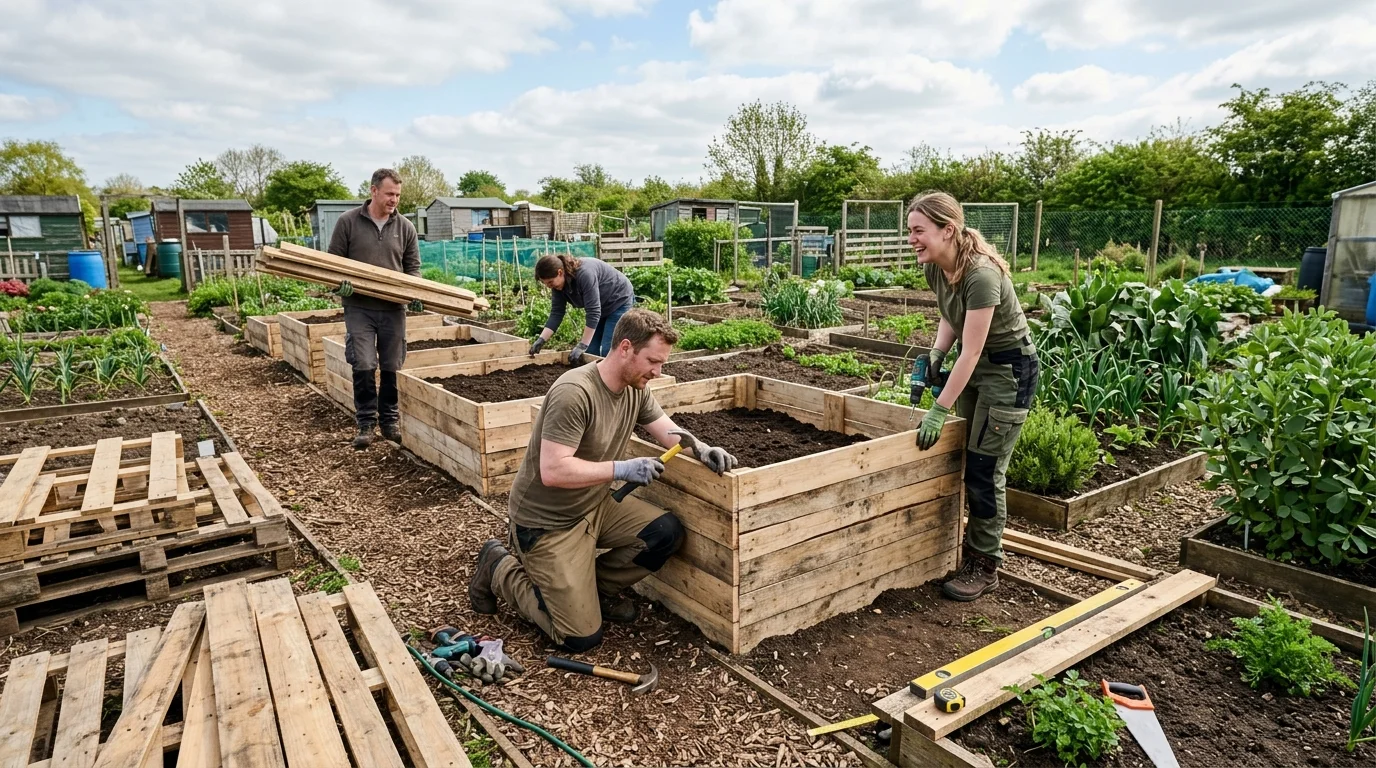
You’ve cleared your plot, stared at that clay soil that sets like concrete in July and turns to glue in November, and realised you need raised beds. The garden centre wants £50 for a flimsy timber kit that’ll rot in two years. That’s money better spent on seed potatoes. The fix? Build cheap raised beds on an allotment using free pallet wood. I’ve done it on my 20-plot site in Yorkshire, and I’ve helped dozens of new plotters do the same. It’s not just about saving cash—it’s about building beds that last, drain properly, and give you that extra degree of soil warmth in a cold spring.
Why pallet wood works (and why some pallets are a no-go)
The beauty of pallets is availability. Every industrial estate, builder’s merchant, and pet shop has stacks of them, often free for the taking. But you need to be selective. Not all pallet wood is created equal. The standard Euro pallet (1200mm x 800mm) yields roughly 6-8 metres of usable 100mm-wide plank. That’s enough for a small bed. But the real game-changer is the heavy-duty pallets used for bricks or bags of cement. These have thicker, 22mm+ planks that won’t bow when filled with wet soil.
Critical safety check: Look for the HT stamp (heat treated). Avoid pallets marked MB (methyl bromide fumigation). MB-treated wood is illegal in the UK for gardening use because it leaches chemicals into your soil. Stick to HT—it’s just kiln-dried, safe as houses. Also, avoid pallets that have been used for chemical drums or oil. If it smells of anything other than wood, bin it.
Essential bed dimensions for UK allotments
I see plotters building beds that are 4ft wide because a YouTube video said so. That’s fine for a garden border, but on a plot, you need to maximise growing space and access. Here are the dimensions I’ve tested over 15 years:
Width: Maximum 1.2m (4ft). Any wider and you can’t reach the centre to weed or harvest without stepping on the soil—which compacts it, defeating the purpose of a raised bed. The sweet spot is 90cm-1m (3ft-3ft6). You can comfortable reach across from both sides.
Length: Whatever fits your plot, but 2.4m (8ft) is a good standard. It uses two full pallet planks end-to-end.
Height: For an allotment bed over clay, minimum 20cm (8 inches). Ideally 30cm (12 inches). That gives roots enough depth for carrots, parsnips, and beans, and it lifts the crop above the worst of the slug zone.
Why height matters on clay: A 30cm bed lets you add 20cm of quality topsoil or compost on top of your existing clay. The clay underneath becomes a natural sump, holding moisture in summer but allowing drainage through the raised soil. It’s the cheat code for heavy ground.
| Bed Dimension | Ideal for UK Allotments | Why |
|---|---|---|
| Width | 90cm – 1.2m | Reach across without stepping on soil |
| Length | 2.4m (8ft) | Matches pallet plank lengths, easy to build |
| Height | 30cm (12 inches) | Good root depth, slug barrier, drainage over clay |
| Path width between beds | 45-60cm | Wheelbarrow access, no crawling |
Step-by-step: building a pallet wood raised bed for under £5
Here’s the method I’ve refined on my own plot. Total cost is usually just screws and maybe a corner bracket. Pallets are free.
Tools you’ll need: Claw hammer, crowbar (for dismantling), jigsaw or handsaw, drill/driver, tape measure, spirit level, 50mm exterior screws (decking screws are ideal), heavy-duty gloves.
Step 1: Dismantle the pallets like a surgeon. Most newcomers try to prise the planks off with brute force and snap half of them. Instead, use the crowbar to leverage the nails out from the back of the stringer block. Tap the block with the hammer to free the nail head, then pull. You’ll keep planks intact. Expect to salvage 80-90% of the wood from a good pallet.
Step 2: Cut to length. For a 2.4m x 1m bed, you need four long sides (2.4m) and four short sides (1m). You can leave the planks at natural widths (usually 100-120mm) or rip them to a consistent size. I prefer to keep them varied—it gives a rustic look and uses less waste.
Step 3: Build the frame corners. The weak point of pallet beds is the corners pulling apart under soil pressure. Fix this by overlapping the planks like a log cabin: each layer of short side sits on top of the long side planks. Pre-drill holes and use two 50mm screws per joint. For extra strength, screw a 10cm offcut of pallet wood diagonally across the inside corner—a cheap corner brace.
Step 4: Anchor to the ground. Pallet wood is light. A bed full of damp soil can bulge outwards if not secured. Drive a 30cm length of 20mm steel or wooden peg (I use old broom handles cut to size) into the ground at each corner, flush against the outside of the frame. Screw through the plank into the peg. This stops the bed shifting on clay in winter.
Step 5: Line or not? On an allotment, I rarely line the inside of a bed. The gaps between planks allow for drainage and worm access. If you’re building on a concrete base or very contaminated soil, line with landscape fabric. But on clay, let the soil connect to the ground below—it improves drainage and allows deep-rooted crops like parsnips to reach down.
How to fill your cheap raised bed without breaking the bank
The biggest mistake new plotters make is spending £100 on bags of topsoil from the garden centre. You don’t need to. Use the lasagne method:
Bottom layer (20cm): Cardboard (remove tape) and overlapping layers to suppress weeds. Then add a thick layer of half-rotted manure or green waste from your home compost bin. This will break down over the season, feeding the soil.
Middle layer (10cm): Cheap topsoil from a local landscaping supplier (I pay £25 per tonne loose load). Or use soil from the paths between your beds—just dig it out and stack it in the bed.
Top layer (15cm): Your best stuff: sieved garden compost, well-rotted manure, and a handful of organic chicken manure pellets.
Total cost to fill a 2.4m x 1m x 30cm bed: About £10-15 if you source free manure (tack shops or livery yards often give it away) and buy topsoil in bulk.
Three killer tips for longevity
Pallet wood is not treated. It will rot eventually. Here’s how to get 5-7 years out of it:
1. Stain the outside only. Use a plant-safe wood preservative like Cuprinol Garden Wood Treatment or Ronseal Ultimate Protection Decking Oil. Never treat the inside of the bed—chemicals can leach into the soil. Apply two coats to the external faces every two years.
2. Elevate the base slightly. If your soil is very wet, place a 2cm gravel layer under the bottom plank to stop it sitting in water. Just a thin line of grit along the base of the frame will double the life of the wood.
3. Replace single planks, not entire beds. When one plank rots, you can unscrew it and swap in a fresh pallet plank. No need to rebuild the whole structure.
What to grow in your free pallet beds
Because the soil warms faster in a raised bed (typically 1-2°C higher than ground level in April), you can grow crops that struggle on cold clay. My top picks:
Early carrots (variety: ‘Nantes 2’ or ‘Early Nantes’) – the loose soil prevents forking.
Dwarf French beans (‘Delinel’) – they love the warmth and don’t need staking.
Bolt-resistant lettuce (‘Salad Bowl’) – slugs struggle to climb 30cm of wood.
Potatoes in the first year of a new bed – the loose soil makes harvesting easy and breaks up clay beneath.
Avoid long-rooted crops like parsnips if your bed is only 20cm deep. They hit the clay and fork.
Frequently Asked Questions about cheap pallet raised beds
Can I use pallet wood for a deep raised bed (60cm+)? Not safely. Pallet planks are only 100-120mm wide. Stacking them beyond 30-40cm creates too much soil pressure—the sides will bow or burst. For deep beds, use scaffold boards (15mm thick) or sleepers.
How many pallets do I need for one bed? For a 2.4m x 1m x 30cm bed, you need about 3 standard Euro pallets (assuming 8 usable planks per pallet, each 1.2m long). Two pallets if you use heavy-duty ones.
Should I remove the nails first? Yes. Always dismantle completely. Leaving nails in the wood causes rust stains on your plants and risks injury when you handle the timber.
Will the wood rot faster if I water from above? Yes, but minimally. The external stain treatment is the key. Also, consider using a soaker hose or drip irrigation to keep moisture off the wood.
What’s the best position for a raised bed on an allotment? North-south orientation for even sunlight. Avoid shading from fences or sheds. Your pallet bed should get at least 6 hours of direct sun daily.
Final truth from the plot
Building cheap raised beds on an allotment from pallet wood isn’t just about saving a few quid. It’s about understanding that the bed itself is a tool. The real work goes into the soil. I’ve seen plotters spend £200 on beautiful oak beds, then fill them with rubbish compost and wonder why their carrots are stunted. I’ve also seen a bloke use half-rotted pallets, fill them with free horse manure, and win the best leeks in the show.
Start with the free wood. Spend your money on soil amendments and good seed varieties. That’s the path from new plotter to productive plotter. Now go find a pallet.