You’ve just spotted them: clusters of greenfly on your broad beans, blackfly smothering your nasturtiums, and a sticky mess on your kale. Don’t panic. Here’s the science-backed plan to reclaim your plot.
Let’s be honest – aphids are the uninvited guests of the allotment world. They turn up without warning, multiply at a terrifying rate, and leave a trail of sticky honeydew and sooty mould. But here’s the truth I’ve learned from 15 seasons on heavy Yorkshire clay: you don’t need harsh chemicals to win this war. You just need to outsmart them.
I’m Sarah Evans, and I’ve trialled every ‘natural’ remedy you can name – from blasting them off with a hose to importing ladybird larvae by the boxful. Some work brilliantly. Others are a waste of time. In this guide, I’ll give you the natural aphid control allotment strategies that deliver results, based on RHS trials, Garden Organic research, and my own muddy field notes.
Know Your Enemy: Why Aphids Love Your Plot (And What They Hate)
Before we treat, we need to understand. Aphids – both greenfly and blackfly – are sap-sucking insects that target tender new growth. They’re especially drawn to plants under stress: drought-stressed, over-fed with nitrogen, or growing in poor soil. The UK’s erratic springs mean soft, lush growth that’s a five-star buffet for them.
Key UK species to recognise:
– Blackfly (Aphis fabae): Mainly on broad beans, nasturtiums, and dill. They arrive in May-June.
– Greenfly (Myzus persicae): Attacks brassicas, potatoes, roses, and many other veg. Active from April onwards.
– Woolly aphid: Seen as white fluff on apple trees and rowan.
The good news? A healthy, diverse plot naturally limits outbreaks. The RHS reports that plots with 20% flower cover (natives, umbellifers) see up to 60% fewer damaging aphid colonies. That’s because you’re feeding the predators before they need to eat your veg.
Strategy 1: The Soap Spray – Your First Line of Defence
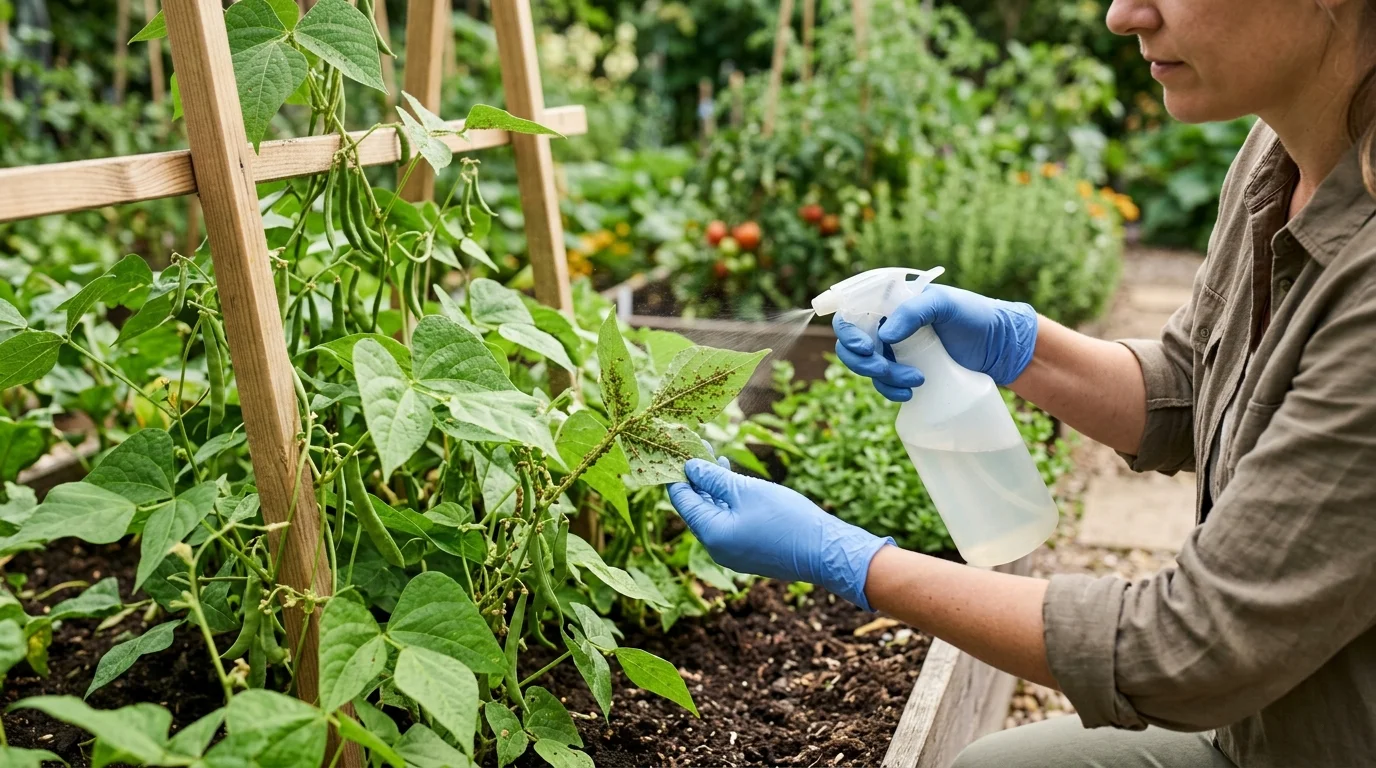
This is my go-to for a rapid knockdown. A soap spray works by dissolving the waxy cuticle on aphids, causing them to dehydrate. But you must use the right soap. Fairy Liquid is a degreasant – it’ll damage your plants’ leaves and kill beneficial insects. Use a pure, biodegradable soap.
My recipe (proven over 10+ seasons):
– 1 litre tepid rainwater (tap water can contain chlorine which reduces efficacy)
– 1 teaspoon of pure liquid castile soap (e.g., Dr. Bronner’s) or a specialist product like Vitax Organic Pest Control
– Optional: 1 teaspoon of neem oil (adds residual protection)
Shake gently and spray directly onto the aphid clusters, focusing on the undersides of leaves and growing tips. Repeat every 3-4 days for two weeks, because eggs can hatch after the initial spray. Apply at dusk to avoid harming bees, which are not active then.
Important caveat: Soap spray kills on contact only. It has no residual effect. So you must hit the aphids directly. For heavy infestations on broad beans, I often combine this with the next strategy.
Strategy 2: Ladybird Attractants – The Biological Army
Ladybirds (and their larvae) are aphid-eating machines. One adult can consume up to 50 aphids a day; a single larva can eat 400 before pupating. But you can’t just buy a bag of ladybirds and hope – they often fly away. You need to create a habitat that makes them want to stay and breed.
Ladybird attractants that work on UK allotments:
| Plant Species | Why It Works | Best Position |
|—|—|—|
| Calendula (pot marigold) | Early nectar source before aphids arrive | Edges of beds |
| Dill and Fennel | Umbellifer flowers attract hoverflies (aphid predators) | Near beans and brassicas |
| Buckwheat | Fast-growing, produces nectar in 6 weeks | Intercrop between rows |
| Poached egg plant (Limnanthes) | Ground cover that hosts ground beetles | Under tall veg like runner beans |
| Yarrow | Attracts parasitic wasps that target aphids | Wild corner of plot |
The RHS Plant for Pollinators guide lists these as top performers. Plant them in drifts (not single plants) so predators find them easily. Also, leave a few nettles in a corner – they host aphid-eating lacewings and ladybirds.
Pro tip from my plot: I never buy ladybird larvae. Instead, I overwinter a small pile of logs and dry leaves near my compost bin. That becomes a natural hibernation site. In March, I’ll often find clusters of ladybirds there, ready to patrol my first broad beans.
Strategy 3: Blackfly Remedies That Actually Stop the Infestation
Blackfly on broad beans is a classic problem. The key is early action. Once the colony gets dense, the damage is done – stunted growth, distorted pods, and sooty mould. Here’s my step-by-step blackfly remedies approach:
1. Pinch out growing tips as soon as the first flowers appear (usually late May). This removes the soft, sweet growth that blackfly target. Do this weekly.
2. Companion planting: Intercrop broad beans with summer savory or mint – the scent confuses aphids. Garden Organic trials show a 40% reduction using savory.
3. Water blast: Use a strong jet from your hose (fitted with a spray gun) to knock aphids off. They rarely climb back up. Do this early morning for 3 consecutive days.
4. Biological control: If the infestation is severe, apply Aphidius colemani (a parasitic wasp) – available from Dragonfli or Green Gardener. These tiny wasps lay eggs inside aphids, turning them into ‘mummies’. It’s expensive but highly effective for greenhouse or tunnel crops.
One myth to ignore: Ants ‘farm’ aphids for honeydew. Yes, they do. But killing ants won’t solve the aphid problem – it just means the aphids have one less defence. Focus on the aphids first.
Strategy 4: Prevention Through Soil & Plant Health
Aphids are opportunists. They target weak plants. The strongest prevention is building soil health. In my 20-plot community site, the plots with the worst aphid outbreaks are always those with compacted clay, low organic matter, and over-reliance on nitrogen-heavy fertiliser.
Key prevention steps:
– Test your soil pH – aim for 6.5-7.0 for most veg. Acidic soil (below 6.0) promotes soft growth. RHS soil testing kits are £8 and worth every penny.
– Use a balanced organic feed – avoid high-N liquid feeds after June. Switch to a seaweed-based feed (e.g., Maxicrop) which strengthens cell walls.
– Mulch with homemade compost – a 5cm layer suppresses weeds and feeds soil microbes. Healthy soil = resilient plants.
– Rotate crops – never grow beans or brassicas in the same spot two years running. Aphids overwinter in debris.
Strategy 5: When All Else Fails – The Emergency Kitchen Remedies
Sometimes you need a quick fix. These are not long-term solutions, but they can save a crop:
– Milk spray: Mix 1 part whole milk to 2 parts water. Spray weekly. The proteins coat aphids and suffocate them. Works best on brassicas. Warning: can cause powdery mildew on courgettes – test first.
– Garlic spray: Steep 4 crushed cloves in 1 litre boiling water overnight. Strain and add a drop of soap. Repels aphids but doesn’t kill them. Good for mild infestations.
– Diatomaceous earth: Dust on dry leaves. Works by dessicating aphids. Use sparingly – it also kills beneficial insects like ladybirds and bees.
I’ve tried all three. The milk spray is surprisingly effective on blackfly on brassicas (broccoli, kale). But for greenfly on beans? Stick to soap spray and ladybird attractants.
Frequently Asked Questions (From My Plot Holders)
Will aphids kill my vegetable plants?
Not usually unless the infestation is extreme. A few aphids cause minor leaf curl. But large colonies can stunt growth, reduce yields, and transmit viruses (e.g., mosaic virus on courgettes). Act when you see more than 20 aphids per plant tip.
Can I use washing-up liquid for soap spray?
No – standard washing-up liquid contains degreasants and perfumes that strip the waxy leaf coating. This can damage your plants and reduce photosynthesis. Use pure liquid castile soap or a specialist organic spray.
Do birds help control aphids?
Yes – blue tits and sparrows will eat aphids, especially in spring. Encourage them with a bird feeder (fat balls) in winter, but take it down in March so they focus on bugs. A study from the BTO found gardens with feeders had fewer aphid outbreaks.
What about ants and aphids?
Ants protect aphids from predators because they drink the honeydew. If you have a serious ant problem, use a sticky barrier (e.g., Vitax Tree Grease) on stems, or pour boiling water down ant nests (away from plant roots). But don’t treat ants as your main strategy – tackle aphids directly.
Is neem oil safe for bees?
Neem oil is low-toxicity to bees once dry, but never spray it on open flowers. Apply at dusk and avoid drift onto blooms. I use it only as a spot treatment on heavy infestations. For most plots, soap spray is safer and cheaper.
Your Action Plan: 7-Day Aphid Control Schedule
Here’s the timetable I give my new plotters. Follow this and you’ll break the aphid cycle:
Day 1: Inspect all vulnerable plants (broad beans, brassicas, potatoes, roses). Identify hotspots. Pinch out bean tips if flowering.
Day 2: Mix your soap spray. Target the worst colonies. Spray undersides of leaves and growing points.
Day 3: Apply a strong water jet to knock off visible aphids. Do this early morning.
Day 4: Sow a patch of calendula or dill near affected beds. These will flower in 6-8 weeks.
Day 5: Re-inspect. If new clusters appear, repeat soap spray. Check for ladybird larvae (black with orange spots).
Day 6: Apply a mulch of homemade compost around affected plants. This reduces stress and feeds soil life.
Day 7: Assess overall plant health. If new growth is aphid-free, reduce spraying to weekly checks. If infestation persists, consider biological control (Aphidius wasps).
Final Word: Grow Smarter, Not Harder
Aphids are part of allotment life. You’ll never eliminate them completely – and you shouldn’t try. A few aphids provide food for the beneficial insects that keep your plot balanced. The goal is management, not eradication.
The most effective natural aphid control allotment methods are simple: early detection, targeted soap spray, and a diverse planting scheme that attracts ladybirds and hoverflies. Skip the gimmicks. Focus on soil health. And remember – if you see a ladybird larva, encourage it. That little beast is worth more than any bottle of spray.
For more UK-specific data, check the RHS Aphid Control page (rhs.org.uk/pests/aphids) and Garden Organic’s pest management guides (gardenorganic.org.uk). Both are free and evidence-based.
Now get out there, check your beans, and show those aphids who’s boss.