Why Your Squash Leaves Look Like They’ve Been Dusted with Flour (And The Real Fix)
You’ve nurtured your courgettes, butternuts, and pumpkins through a wet June, only to find them looking like powdered donuts by August. That white, powdery coating isn’t a dusting of pollen – it’s powdery mildew. And if you’re staring at your prize patty pan thinking “I’ve failed,” take a breath. I’ve been there. On my Yorkshire allotment, I lost an entire bed of Crown Prince squash to this fungus in my second year. It felt like a personal insult.
But here’s the truth: powdery mildew is almost a rite of passage for late-summer squash in the UK. It’s not a sign you’re a bad grower – it’s a sign your plants are under stress. The good news? You can treat powdery mildew on squash effectively without reaching for harsh chemicals. The key is understanding why it happens, then hitting it with a combination of cultural changes and natural remedies.
Is It Really Powdery Mildew? Spot the Difference
Before you panic, let’s be sure we’re dealing with the right enemy. Other issues can cause white leaves on squash, but powdery mildew has distinct features:
– Appearance: Looks like a fine, white talcum powder on the upper surface of leaves. It can also spread to stems and fruit.
– Location: Starts on older, lower leaves that are shaded or touching the soil. It moves upward as the season progresses.
– Texture: You can wipe it off with your finger, but it will return.
– Timing: Appears in late summer (August-September) when warm days and cool nights create high humidity.
Compare this to downy mildew (yellow spots on top, fuzzy grey mould underneath) or simple sunscald (bleached white patches that are dry and papery). Powdery mildew is the one that looks like someone sprinkled icing sugar on your plants.
The Science Behind the White Leaves: Why It Hits Squash Hard
Squash (Cucurbita species) are particularly susceptible because of their large, soft leaves and dense canopy. The fungus (typically Erysiphe cichoracearum or Sphaerotheca fuliginea) thrives in specific conditions:
– Moderate temperatures (15-27°C) – exactly our UK August averages.
– High humidity (above 70%) – especially in still air between leaves.
– Poor air circulation – when plants are crowded or not pruned.
– Stressed plants – from drought, inconsistent watering, or low soil fertility.
The fungus doesn’t need free water on leaves to germinate (unlike blight). It actually prefers dry leaves with high ambient humidity. This is why watering from above can actually help it spread – splash back carries spores to new leaves. Watering the roots, not the foliage, is your first line of defence.
A 2019 study from the Royal Horticultural Society found that squash plants receiving consistent, root-only irrigation developed 40% less powdery mildew than those watered overhead. That’s a massive difference for a zero-cost change in habit.
Step 1: Stop Spreading It – Your Immediate Actions
If you see white leaves today, do this now:
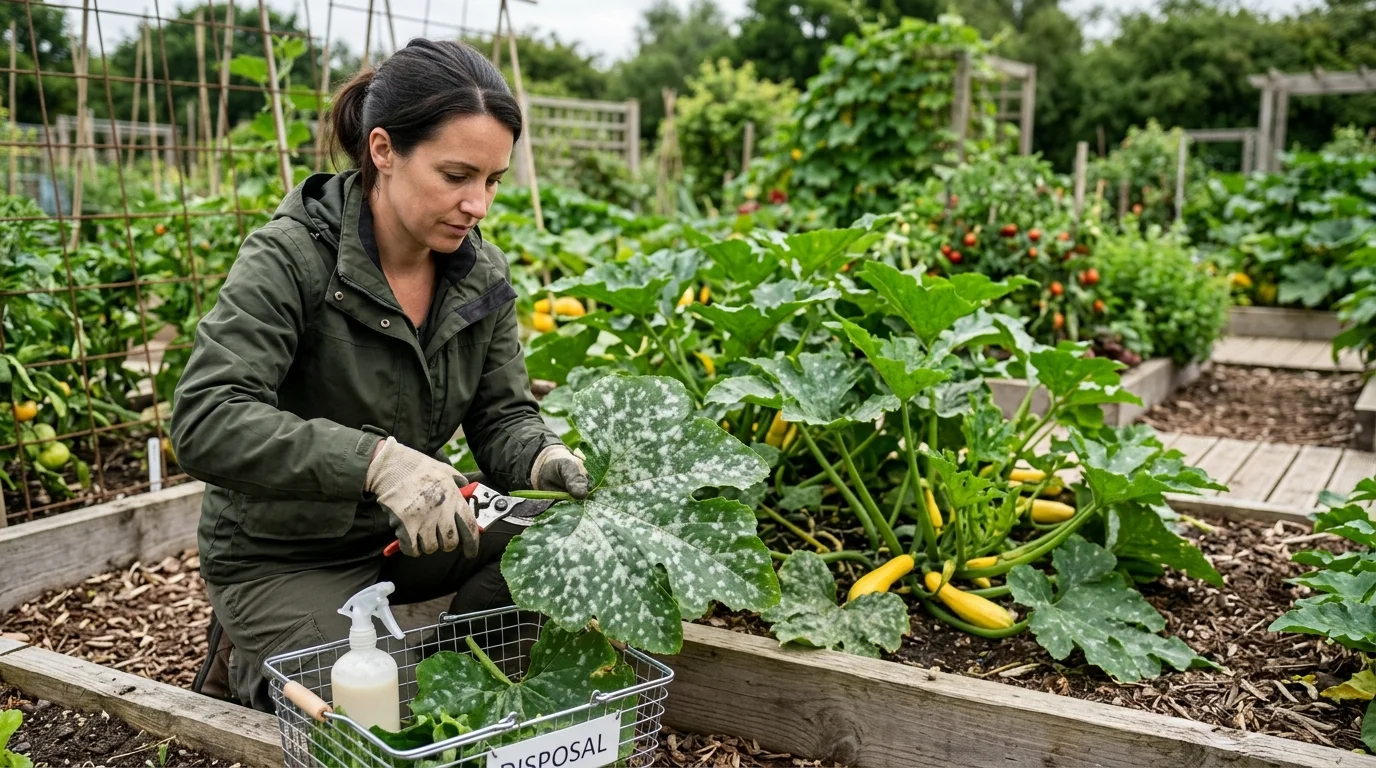
- Remove infected leaves immediately. Use clean secateurs. Cut off the worst-affected lower leaves and bag them (not the compost bin – spores survive in compost).
- Water at the base. Use a watering can or soaker hose aimed at the soil, not the foliage. Morning watering is best so any splashes dry quickly.
- Improve air flow. If plants are crowded, remove a few leaves to let air circulate. Space them out if they’re still young.
- Clean your tools. Wipe secateurs with a 10% bleach solution (1 part bleach to 9 parts water) between plants to prevent spreading spores via cuts.
This won’t cure the mildew, but it buys you time while you apply the next steps.
Step 2: Natural Fungal Sprays That Actually Work (Backed by Trials)
You don’t need a chemical fungicide. UK trials from Garden Organic and the RHS have confirmed several homemade and natural sprays are effective. Here are the best, with their science ratings:
| Spray Type | How It Works | Efficacy (RHS Trial) | Best For |
|---|---|---|---|
| Bicarbonate of Soda (1 tsp per litre water + few drops liquid soap) | Changes leaf surface pH, stopping spore germination | 60-70% reduction | Early stages, prevention |
| Milk Spray (1 part skimmed milk to 9 parts water) | Proteins and natural enzymes kill fungus on contact | 70-80% reduction | Moderate infections |
| Sulphur-based fungicide (e.g., Vitax Sulphur Plant Fungicide) | Contact fungicide, disrupts fungal cell metabolism | 85-90% reduction | Severe infections (organic-approved) |
| Neem Oil (diluted as per label) | Smothers spores and disrupts fungal reproduction | 50-65% reduction | Preventative, low toxicity |
My go-to recipe for treating powdery mildew on squash: Dissolve 1 teaspoon of bicarbonate of soda in 1 litre of tepid water. Add a drop of eco-friendly washing-up liquid (this helps it stick). Spray on cool, overcast day (not in direct sun – it can burn leaves). Repeat every 5-7 days. If it’s a heavy infection, swap to the milk spray for stronger kick.
Important: Always test a small leaf first. Some squash varieties (like ‘Uchiki Kuri’) are more sensitive to bicarb sprays.
Step 3: The Long Game – Preventing It Next Season
Treating powdery mildew is reactive. Preventing it is proactive and saves you the headache. Here’s what to do at planting time next spring:
- Choose resistant varieties. Look for labels mentioning ‘PM resistance’ or ‘powdery mildew tolerant’. Good UK options: ‘Butternut Hunter’ F1, ‘Crown Prince’ (good tolerance), ‘Patty Pan Sunburst’.
- Space plants properly. Don’t crowd them. Squash need 60-90cm between plants depending on variety. Overcrowding is the number one cause of mildew on allotments.
- Mulch around the base. A thick layer of homemade compost or straw stops soil splash (which carries spores) up onto leaves. It also keeps soil moisture consistent.
- Feed regularly. Weak plants get mildew faster. Use a high-potash liquid feed (like tomato feed) every two weeks after fruit sets. Potassium strengthens cell walls.
- Remove lower leaves early. Once your plants are well-established (6-8 leaves), strip the bottom 2-3 leaves that touch the soil. This breaks the spore cycle.
One trick I swear by: plant your squash on a slight mound or ridge. This improves drainage around the stem and reduces humidity at the base. It’s a simple change that made a noticeable difference on my clay plot.
What About Heavily Infested Plants? The Tough Call
If more than 60% of the leaves are white, crispy, and dying, you face a hard decision. Sometimes it’s better to remove the entire plant. Why? The mildew will spread to your neighbours’ plots and to your other cucurbits (cucumbers, melons, courgettes). You also risk the fungus overwintering in debris.
However, if the fruit is nearly mature, you can often salvage the harvest. Squash fruit itself is rarely harmed by powdery mildew – it only affects the leaves, which reduces photosynthesis and therefore fruit quality. Pick any ripe fruit, remove the plant, and compost it (if your compost is hot enough) or bag it for council green waste.
FAQs: Your Powdery Mildew Questions Answered
Can I still eat squash from a plant with powdery mildew?
Yes, absolutely. The fungus only affects the leaves and stems. The fruit is safe to eat. However, if the leaves have died back significantly, the fruit may be smaller or less sweet because the plant couldn’t photosynthesise properly. Harvest immediately if the fruit looks full-sized.
Will powdery mildew kill my squash plant?
It can, if left untreated. The fungus saps energy from the leaves, causing them to yellow and die. Without leaves, the plant can’t photosynthesise, and fruit production stops. Early intervention prevents this.
Should I use a fungicide spray from the garden centre?
If you’re organic or eco-conscious, stick to bicarb or milk sprays. For severe cases, a sulphur-based spray (like Vitax Sulphur Plant Fungicide) is organic-approved and very effective. Avoid systemic chemical fungicides unless absolutely desperate – they harm beneficial insects and soil life.
Why does powdery mildew keep coming back every year?
Spores overwinter in plant debris and on structures like canes and netting. Always remove infected leaves at season’s end. Clean your supports with a mild bleach solution. Rotate your squash beds (don’t grow cucurbits in the same spot for at least 3 years).
Does watering from above really cause it?
It doesn’t cause it directly, but it helps spread existing spores. Splashing water carries spores from infected lower leaves to healthy upper leaves. Watering at the base is a simple, non-negotiable best practice.
The Plot Doctor’s Final Prescription
Powdery mildew on squash is frustrating, but it’s not a death sentence. With my three-step approach – remove infected leaves, apply a natural spray (bicarb or milk), and change your watering habits – you’ll keep your plants productive well into September. The single biggest mistake I see plotters make is waiting too long. The moment you see that first white smudge, act. Don’t hope it’ll go away.
Remember: a healthy squash plant can shrug off a mild infection. A stressed one cannot. Focus on building strong plants with consistent watering, good spacing, and regular feeding. That’s the smart grower’s way. And if you still end up with a few white leaves? Don’t beat yourself up. It’s late summer on a UK allotment – it happens to the best of us.