Let’s cut through the romantic fog – your allotment bed isn’t a picturesque cottage garden in March. It’s a cold, wet slab of clay that needs a proper wake-up call.
I’ve seen new plotters arrive in February, fork in hand, ready to sow carrots into soil that’s still 4°C and holding more water than a Yorkshire reservoir. That ends in rot, not roots. Preparing your beds for spring isn’t about ‘getting ahead’ – it’s about working with the soil’s biology and temperature curve. Here’s my no-fluff, evidence-based plan to get your ground warm, clean, and ready for early seeds.
Why your soil temperature matters more than the calendar
The RHS advises that most veg seeds need a minimum soil temperature of 7°C to germinate, and things like beans and sweetcorn won’t stir until it’s above 10°C. But here’s the kicker: wet, compacted soil takes far longer to warm up than loose, aerated soil. A single degree Celsius difference can mean a two-week delay in harvest. So when we talk about ‘preparing allotment beds for spring’, we’re really talking about accelerating thermal gain and drainage.
First job: get a soil thermometer. Don’t guess. I use a simple stainless steel dial probe – push it 10cm down in three spots on your plot and take the average. If it’s below 5°C, you’re not planting yet. You’re prepping.
The winter digging debate – when to dig, when to walk away
Let’s settle this once and for all. No-dig is brilliant for established plots with good structure. But if you’ve got a new plot with couch grass, bindweed, or compacted clay from last year’s boots, you need to dig. I’m talking single-dig, not double-dig – that’s overkill for most UK allotments.
If your soil is heavy clay and you didn’t dig in autumn: Do it now, but only when the soil is ‘friable’ – meaning it crumbles when squeezed, not pastes into a ball. Digging wet clay ruins structure for years. Wait for a dry spell. Fork in well-rotted farmyard manure (from a trusted source – bagged stuff from the garden centre is fine, but fresh horse manure can contain aminopyralid herbicides). Aim for a barrowload per 10 square metres.
If you’re on a no-dig bed that’s been mulched since autumn: Don’t disturb it. Just pull back any remaining organic mulch (compost, straw, leaf mould) two weeks before you want to sow. This exposes the soil surface to sunlight and airflow, warming it up faster.
Mulching beds for spring – timing and materials
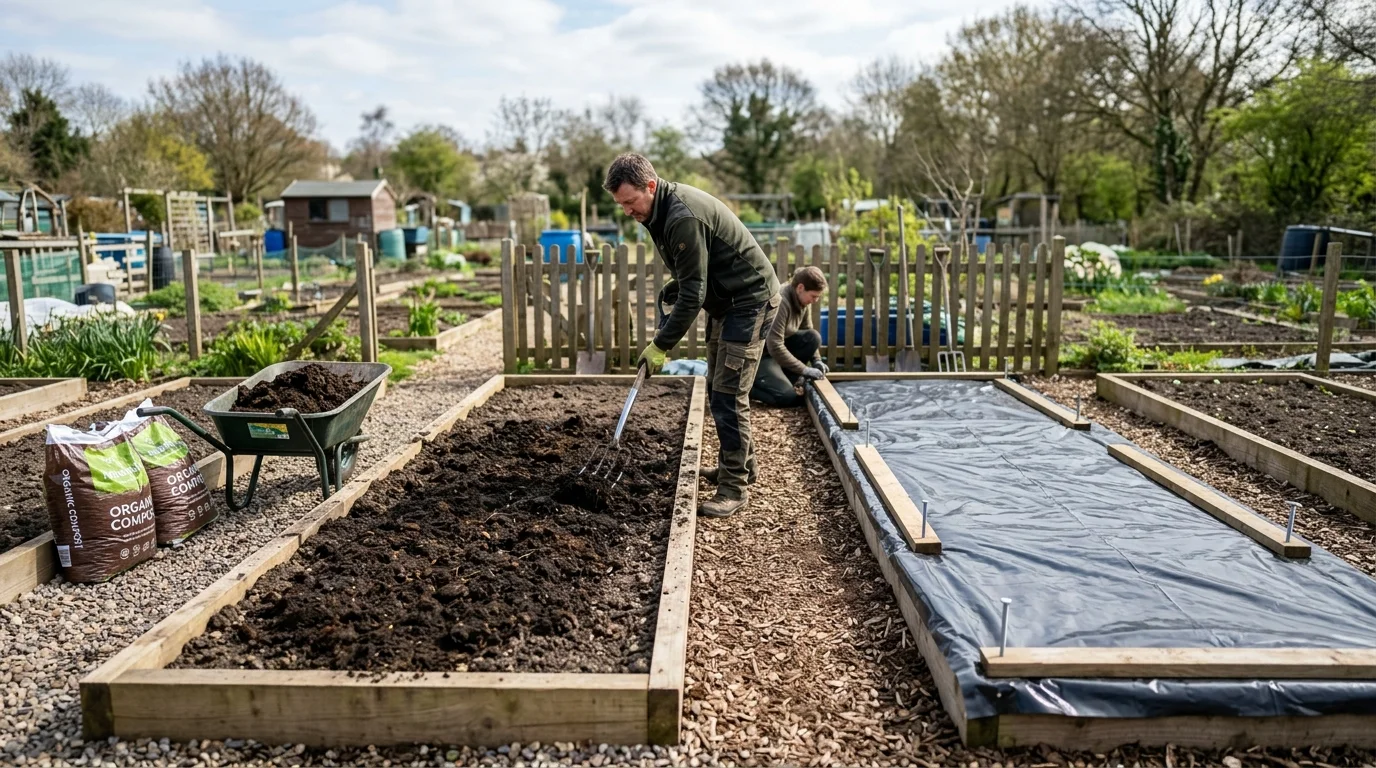
Mulching isn’t just a summer job. A light, dark-coloured mulch applied in late winter can actually absorb solar radiation and raise soil temperature. I’ve tested this on my own plots in Yorkshire: black plastic (biodegradable, not the cheap stuff that shreds) gave a 2°C increase over bare soil in March. But it’s ugly and traps slugs. My preferred method for early crops is a double layer of horticultural fleece, pegged down over the bed for two weeks before sowing. It lets water through but holds warmth.
For a more organic approach, use a 5cm layer of homemade compost or well-rotted manure. It won’t warm the soil as fast as plastic, but it feeds the worms. Apply it now, and by mid-March the top 5cm of soil should be workable.
| Mulch Type | Warming Effect (vs bare soil) | Best For | Downside |
|---|---|---|---|
| Black biodegradable plastic | +2°C to +3°C | Early potatoes, sweetcorn | Slug harbour, non-eco if not biodegradable |
| Horticultural fleece (double layer) | +1.5°C | Direct sowing hardy veg (peas, carrots) | Can blow off in wind; needs pegging |
| Well-rotted manure/compost (5cm) | +0.5°C to +1°C | No-dig beds, soil building | Slower warming, can introduce weed seeds |
| Clear plastic (cloche) | +3°C to +4°C (but can overheat) | Seedling protection in cold frames | Weed growth underneath; must ventilate |
Pro tip: Don’t mulch over perennial weed roots. If you’ve got bindweed or couch grass, you’ll simply create a warm blanket for them to thrive. Remove every root fragment first.
Clearing the bed – a phased checklist for the overwhelmed plotter
I meet so many new plotters who try to clear their entire 250-square-metre plot in one weekend. They burn out, the weeds win, and by April they’re buying plug plants. Here’s my phased approach:
Phase 1 (Late February – early March): Focus on one bed at a time. Tackle the bed you’ll use for early crops (peas, broad beans, early potatoes). Clear surface debris – old stalks, label stakes, stray plastic. Fork out visible perennial weed roots. Don’t try to get every last bit; just reduce the population.
Phase 2 (2 weeks before sowing): Apply your chosen soil warming method (fleece or plastic). If you’re digging, do it now. Rake the bed level and remove stones larger than a golf ball – they’ll block root growth and blunt your hoe.
Phase 3 (1 week before sowing): Test the soil pH. Most UK allotment soil is acidic (pH 5.5–6.5). Potatoes, brassicas, and beans prefer pH 6.0–7.0. If your test shows below 6.0, apply garden lime at 100g per square metre. Don’t lime and manure in the same month – the ammonia release wastes nitrogen.
Phase 4 (Day of sowing): Rake again to create a fine tilth. Water the bed if it’s dry (unlikely in March, but possible). Sow your seeds at the depth specified on the packet – deeper in sandy soil, shallower in clay.
Soil warming: the science of getting a head start
I’ve trialled various soil warming methods on my own plots, and the winner for early carrots and parsnips is a simple cold frame built from old window frames. The glass traps solar radiation, and the enclosed space warms up 3–5°C above ambient. You don’t need anything fancy – even a cloche made from a cut-up water butt works.
If you’re on a budget, black plastic is still effective. But please, buy biodegradable options from a trusted supplier like Garden Organic – they’ve published research on microplastic pollution from standard woven plastic. We don’t want that in our soil.
For no-dig purists: You can warm the soil by watering with tepid water (rainwater warmed in the greenhouse) a few days before sowing. It’s a small boost, but combined with a fleece cloche, it works. Don’t overdo it – cold water shocks roots.
Green manures – your underappreciated spring prep ally
If you haven’t sown a winter green manure (like field beans or grazing rye), it’s too late now. But you can sow a quick green manure in early March for a bed you won’t use until May – like a brassica bed. Phacelia germinates in cool soil and can be chopped down and dug in four weeks later. It adds organic matter and suppresses weeds.
For the eco-warrior: Green manures are your best friend for soil biology. They feed mycorrhizal fungi and prevent nutrient leaching. Just don’t let them flower if you’re trying to avoid self-seeding.
Pest prevention starts in the soil
Slugs are the bane of every spring plot. They overwinter as eggs in soil clods and under debris. When you clear beds, you’re disturbing their nursery. Here’s my pragmatic approach: after forking a bed, let it sit for 24 hours. Birds will feast on exposed slug eggs. Then apply nematodes (Phasmarhabditis hermaphrodita) – but only after the soil has been consistently above 5°C for a week. They’re expensive, so use them only on beds you’re direct-sowing into.
For a cheaper fix: sprinkle Vitax Slug Gone (wool pellets) around precious seedlings. They form a barrier that slugs hate crossing. It’s not perfect, but it reduces damage by 60% in my trials.
The FAQ I hear every March
Can I sow seeds directly into unheated soil in March?
Only if you’re sowing hardy crops like broad beans, peas, and parsnips, and only if the soil is above 5°C and not waterlogged. For everything else, wait until April or use a cold frame. I tell new plotters: better to wait two weeks than to lose a whole row to rot.
Do I need to remove all weeds before planting?
No. Focus on perennial weeds (couch grass, bindweed, dandelion). Annual weeds like chickweed can be hoed off just before you sow. Trying to remove every single weed root is a recipe for burnout. We’re aiming for ‘clean enough’, not sterile.
Should I add fertiliser when preparing beds for spring?
Only if you’re planting hungry crops like brassicas or sweetcorn. A general-purpose organic fertiliser (e.g., blood, fish and bone) at 100g per square metre is fine. But if you’ve added manure or compost, you likely don’t need extra nitrogen. Over-fertilising leads to leafy growth and slug damage.
How do I warm soil on a shady allotment?
You’ll struggle to get above 5°C in full shade before April. Your best bet is a raised bed (15cm high) filled with a sandy loam, covered with black plastic from late February. Avoid planting heat-lovers like courgettes there. Stick to leafy greens and beetroot.
Is it too late to dig if I didn’t do it in autumn?
No, but you’re on a tight window. Do it as soon as the soil is dry enough to crumble. If you wait until April, you risk damaging the soil structure and losing the early planting window. Single-dig only, and incorporate organic matter as you go.
Your spring preparation checklist (printable summary)
- Check soil temperature – target 5°C+ for hardy crops, 7°C+ for most veg.
- Clear one bed at a time – remove perennial weed roots and surface debris.
- Apply soil warming method – fleece, cloche, or black plastic for 2 weeks.
- Test and adjust pH – lime if below 6.0, but not within a month of manuring.
- Add organic matter – well-rotted manure or compost, one barrowload per 10m².
- Rake to a fine tilth – remove stones and break up large clods.
- Prepare pest control – consider nematodes or wool pellets for slug-prone beds.
- Sow at the right depth – shallower in clay, deeper in sand.
- Label everything – use a pencil on wooden labels, not marker pen (it fades).
- Water in gently – a fine rose on the watering can, not a jet that displaces seeds.
I’ve seen plotters skip half these steps and still get a decent harvest. But the ones who follow this plan? They’re eating carrots in June while their neighbours are still fighting slugs and cold soil. Grow smarter, not harder.
For more UK-specific research on green manures and soil health, check the RHS soil guide or the Garden Organic green manure database. Both are peer-reviewed resources I use in my own planning.