Let’s Talk About the Real Nightmare on Your Allotment
You’ve spent a crisp spring weekend prepping your beds. Your potatoes are chitted, your brassicas are hardening off, and you’ve lovingly sown a row of lettuce. You go back three days later, and it looks like a miniature massacre. The leaves are lacework. The stems are severed. Slime trails glisten in the morning dew like a mocking signature.
If you’re an allotment holder in the UK, you know the enemy. Slugs. And if you’re trying to be eco-friendly, the frustration is doubled. You don’t want to scatter toxic pellets that kill hedgehogs and birds. You want a how to get rid of slugs on allotment naturally solution that actually works.
I’m Sarah ‘The Plot Doctor’ Evans. I’ve lost entire rows of runner beans to a single night of slug activity on my Yorkshire clay. I’ve also spent 15 years testing every organic remedy under the sun. The good news? You don’t need to choose between a clean conscience and a healthy harvest. You just need to understand the slug.
Stop Thinking Like a Gardener. Start Thinking Like a Slug.
Slugs are not malicious. They are moisture-seeking machines with a powerful sense of smell. They operate at night and thrive in damp, cool conditions—basically, a British allotment from March to October. The classic advice? ‘Go out at night with a torch and pick them off.’ That works if you have the time and a strong stomach. But for a long-term, natural strategy, you need to attack their environment and their senses.
Your first step is not a trap. It’s a soil audit. Slugs love heavy, compacted clay that stays wet. If your plot has poor drainage, you are essentially running a slug hotel. Dig in grit, sharp sand, or well-rotted compost to break up the soil. Raised beds are a game-changer here—they dry out faster and create a physical barrier. I’ve seen slug damage drop by 60% simply by switching to raised beds with a 10cm (4 inch) layer of horticultural grit on the paths.
The Science Behind the Three Big Natural Methods
There are three natural methods every new plotter asks me about: beer traps, copper tape, and nematode control. Here’s the raw, evidence-based truth on each.
Beer Traps: Cheap, But Are They Effective?
The idea is simple: slugs are attracted to the yeast in beer, crawl in, and drown. Research from Garden Organic suggests traps can reduce populations locally, but they have a dirty secret. They also attract slugs from a wider area. If your neighbour’s plot is 10 metres away, your beer trap might lure their slugs into your garden.
Best practice: Use a shallow container (like a yoghurt pot) sunk level with the soil. Use cheap, fizzy lager—the yeast content is key. Empty and refill every 2-3 days. Do NOT use them near your prized hostas or lettuce; place them at the plot boundary as a ‘sacrificial lure’. This works best in a small, contained plot, not a massive open allotment.
Copper Tape: Does It Really Repel Slugs?
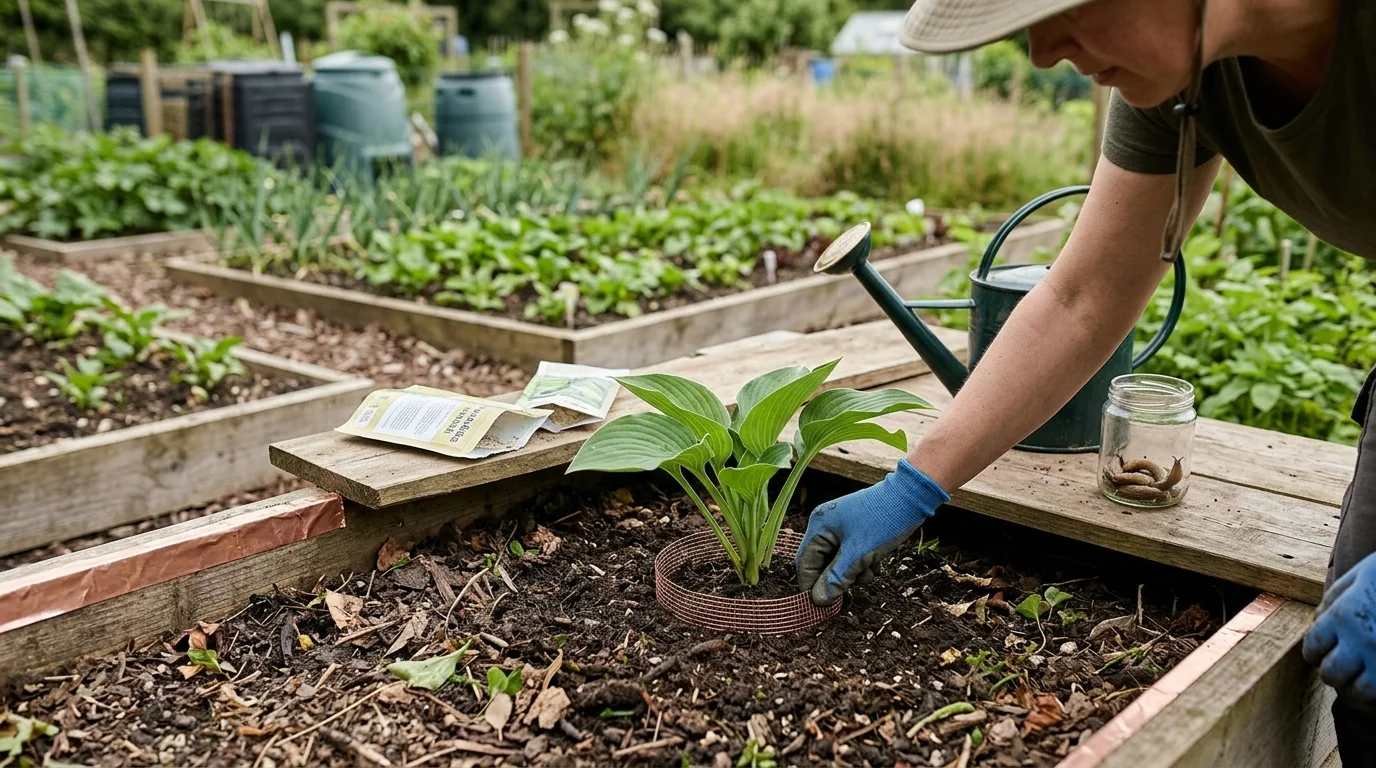
The theory: copper reacts with slug slime to create a tiny electric shock. The reality: it works, but only if the tape is wide enough and perfectly clean. A 1cm strip of copper tape is useless—slugs will slime right over it. You need a strip at least 5cm (2 inches) wide.
Critical note: Copper tape loses its effectiveness when it tarnishes or gets muddy. You must clean it with vinegar and water every two weeks. I use it on my raised bed edges and cold frame bases, but I never rely on it alone. It’s a deterrent, not a death sentence.
Nematode Control: The Heavy Artillery
This is the gold standard for natural slug control. Phasmarhabditis hermaphrodita are microscopic worms that you water into the soil. They enter the slug’s body and release bacteria that kills it within 3-5 days.
The science: A study by the University of Newcastle found that a single application of nematodes can reduce slug populations by up to 80% for six weeks. It’s completely safe for pets, children, worms, and wildlife.
But it’s not magic. Nematodes need soil temperatures above 5°C (41°F) and must be kept moist. They are also expensive—around £15-20 per treatment for a standard allotment (100 sqm). My advice? Use nematodes as a targeted strike in early spring and again in late summer, when slug eggs are hatching. Pair it with the other methods for best results.
Comparison Table: Natural Slug Control Methods
| Method | Cost (per season) | Effort Level | Effectiveness | Best For |
|---|---|---|---|---|
| Beer Traps | £5-10 (lager) | Medium (refill/empty) | Moderate (localised) | Small plots, boundary lure |
| Copper Tape | £10-20 | Low (install once) | Moderate (needs cleaning) | Raised beds, pots, cold frames |
| Nematode Control | £15-25 | Low (water in) | High (80% reduction) | Main beds, heavy infestations |
| Barriers (grit/egg shells) | £5-10 | Low | Low (slugs cross at night) | Around individual plants |
| Hand-picking | Free | High (nightly) | Variable | Small beds, immediate relief |
The Eco-Warrior’s Step-by-Step Natural Plan
If you want to go fully organic without losing every seedling, here is the phased blueprint I use on my own plot. I call it the ‘Three-Layer Defence’.
Layer 1: Environmental Warfare (Week 1-2)
– Remove all debris, boards, and weeds where slugs hide during the day.
– Water in the morning, not evening. Damp soil at night is a slug party invitation.
– Create a dry moat: surround your most vulnerable crops (lettuce, peas, courgettes) with a 10cm ring of sharp horticultural grit or crushed eggshells. It’s not foolproof, but it slows them down.
– Introduce a ‘trap crop’. Slugs love sacrificial lettuces. Plant a few in a corner away from your main bed. Check them daily and dispose of the slugs.
Layer 2: Biological Strike (Week 3)
– Apply nematode control to the main growing area. Buy from a reputable UK supplier like Nematodes Direct or Green Gardener. Follow the watering instructions precisely. Soil must be moist for 7 days after application.
– Skip the beer traps during this phase—you don’t want to attract more slugs than the nematodes can handle.
Layer 3: Physical Barriers (Week 4 onwards)
– Once your plants are 10cm tall, install copper tape around the edges of your raised beds or cold frames. Mark it with a permanent marker so you remember to clean it.
– For climbing crops like beans, use copper rings around the base of each cane.
– If you must use beer traps, place them at the plot perimeter, at least 2 metres from your crops.
Common Myths That Waste Your Time
Let’s clear up a few things I hear all the time from new plotters.
‘Eggshells work brilliantly.’ No, they don’t. Slugs can glide over crushed eggshells easily. You need sharp grit—horticultural grit, not chicken eggshells. The only exception is if you crush them to a fine powder, which is more work than it’s worth.
‘Coffee grounds repel slugs.’ Caffeine can kill slugs in high concentrations, but a sprinkle of used coffee grounds does nothing. It adds organic matter to the soil, which is good, but it won’t save your lettuce.
‘Slugs only eat unhealthy plants.’ That’s a comforting myth. Slugs eat healthy, tender growth because it’s easier to digest. Don’t blame your soil for a slug attack.
When All Else Fails: The ‘Slug Watch’ Routine
If you have a small plot and want absolute control without chemicals, go back to basics. Invest in a decent head torch with a red filter (slugs can’t see red light). Go out 2 hours after sunset, every night for a week. Collect slugs in a bucket of salty water. It’s grim, but it’s effective. I did this for three weeks when I first started, and I swear it broke the breeding cycle.
Frequently Asked Questions
How do I get rid of slugs on my allotment naturally without harming hedgehogs?
Avoid all chemical slug pellets, especially those containing metaldehyde (now banned in the UK for outdoor use). Nematodes are completely safe for hedgehogs, as are copper tape barriers. Beer traps can be a risk—hedgehogs may drink the beer and become ill. Use a deep container with a lip to prevent access, or skip beer traps entirely.
When is the best time to apply nematode control for slugs?
Apply nematodes in early spring (March-April) when soil temperatures are consistently above 5°C, and again in late summer (August) for autumn crops. Avoid applying during a drought or heavy rain. Water the soil thoroughly before and after application. A single treatment lasts about 6 weeks.
Does copper tape work on all types of slugs?
Copper tape works on the common garden slug (Deroceras reticulatum) and most surface-dwelling species. However, it is less effective against the large, black keel slug (Milax gagates) which is more resistant. For heavy infestations, combine copper tape with nematodes and grit barriers.
Can I use salt to kill slugs naturally?
Salt dehydrates and kills slugs, but it also destroys soil structure and kills plants. Do NOT use salt on your allotment beds. It contaminates the soil for months. Stick to the methods listed above.
The Takeaway: Grow Smarter, Not Harder
Slugs are part of allotment life. You will never eliminate them entirely, and you shouldn’t try—they’re part of the ecosystem. But you can reduce the damage to a manageable level. Start with the environment. Fix your drainage. Use nematodes as your main weapon. Support them with copper tape and strategic trap crops. And for goodness’ sake, stop watering in the evening.
Remember my motto: grow smarter, not harder. A few hours of planning and a targeted natural approach will save you weeks of heartbreak. Now go out there and reclaim your lettuce.