You’ve babied those seedlings, watered them religiously, and watched them stretch towards the glass. Then, overnight, brown patches appear. Your heart sinks. Tomato blight has arrived.
Let’s be blunt: nothing makes an allotmenteer feel more powerless than watching a lush greenhouse crop turn to mush. In the UK, where damp weather and cool summers are the norm, late blight (Phytophthora infestans, the same fungus-like pathogen that hits potatoes) is the number one greenhouse killer. But here’s the truth I’ve learned from 15 seasons on Yorkshire clay: you don’t need a full chemical arsenal. You need a strategy. This is your blueprint for preventing tomato blight in UK greenhouses, based on RHS field trials and my own bitter experience losing 40 plants in one wet June.
The Enemy: Why Your Greenhouse Isn’t a Safe Haven
Many new plotters assume a greenhouse offers a sterile fortress. Wrong. The glass creates a humid microclimate—perfect for fungal spores to germinate. Blight spores travel on the wind from infected potato fields, allotments, or even neighbouring gardens. They land on your tomato leaves, and if the humidity stays above 90% for six hours at 10-20°C, you’ve got an infection. The RHS confirms that greenhouse ventilation is your first line of defence, not a luxury.
I’ve seen plots where growers kept doors and vents closed ‘to keep warmth in’ during cool, wet springs. That’s a death sentence. Stagnant air is a spore highway.
Early Signs: Catching Blight Before It Spreads
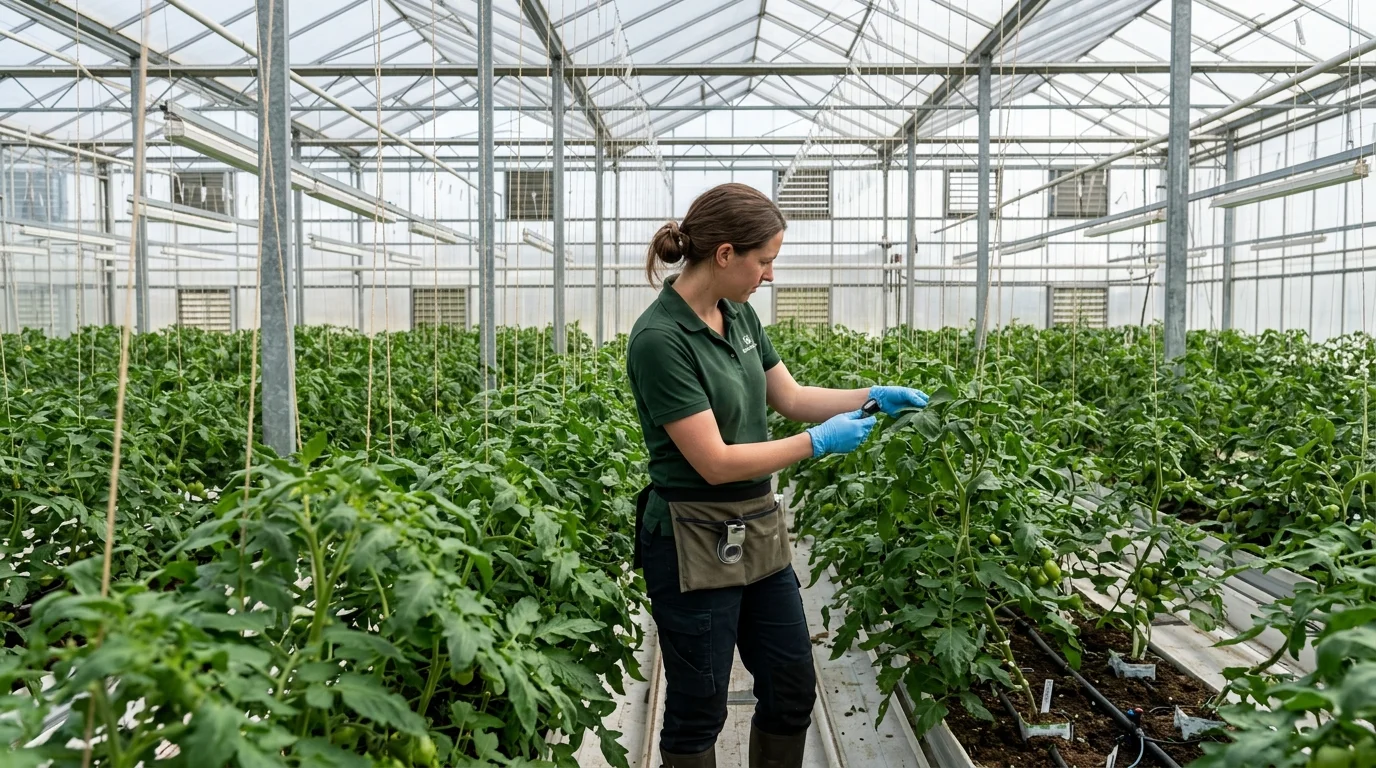
You need to inspect your plants daily from late June onwards. Here’s what to watch for:
- Leaves: Irregular, water-soaked brown patches that expand rapidly. In humid conditions, you’ll see a white, fuzzy mould on the underside (the sporangia).
- Stems: Dark brown or black streaks that girdle the stem. This is a late-stage sign—act immediately.
- Fruit: Firm, greasy-looking brown patches that start on the green fruit. The fruit will rot and often develop white fuzz.
Early detection buys you a week, maybe two. But the real victory is prevention.
Strategy #1: Master Greenhouse Ventilation (The Non-Negotiable)
This is where most plotters fail. You need continuous airflow. Not just when it’s sunny. Here’s my 3-point ventilation system:
| Component | Action | Why It Works |
|---|---|---|
| Side vents & doors | Open both ends of the greenhouse (even in light rain if wind is low). Install automatic vent openers (e.g., Autovents) to avoid daily manual work. | Creates a through-draught that removes humid air and disrupts spore landing. |
| Circulation fan | Fit a small oscillating fan (even a battery-powered one) at plant height. Run it for 4-6 hours daily, especially after watering. | Reduces leaf wetness by 60-70% according to Garden Organic trials. Stops condensation forming overnight. |
| Gutter clearance | Keep gutters and downpipes clean so water doesn’t pool near the greenhouse base. Splashback from soil can carry spores. | Reduces soil moisture around the greenhouse, lowering ambient humidity. |
Pro tip: In August 2023, a wet, cold month, I kept my fan running 24/7. My neighbour lost 80% of his crop. I lost two plants. The difference was air movement.
Strategy #2: Watering Discipline & Mulch
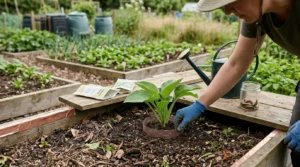
Never wet the leaves. I know every guide says it, but I’ll repeat it because I still see plotters using overhead sprinklers in greenhouses. Use drip irrigation or a watering can at the base. Water early in the morning so any accidental splashes dry by midday. Then apply a 5cm layer of straw mulch around the stem base. This stops soil splash (which can carry blight spores from any nearby infected potato plants) and keeps the root zone cool.
Strategy #3: Choose Blight-Resistant Varieties
No tomato is 100% immune, but UK-bred varieties like ‘Ferline’, ‘Crimson Crush’, and ‘Legend’ carry specific resistance genes. The RHS vegetable trials at Wisley consistently rank these as top performers against late blight. I grow ‘Crimson Crush’ every year in my greenhouse as a hedging bet, alongside heritage cherries. If blight hits, the resistant ones still produce a harvest.
Where to buy: Marshalls Seeds and King’s Seeds stock these. Don’t rely on supermarket seedlings—they rarely specify resistance.
Strategy #4: The Copper Spray Debate (Use It Wisely)
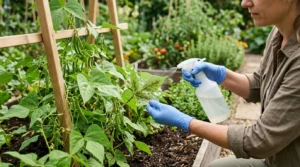
Organic plotters often swear by copper-based fungicides (e.g., Bayer Fungus Fighter or Vitax Bordeaux Mixture). These are preventative, not curative. They create a protective coating on leaves that stops spores germinating. But here’s the catch: copper accumulates in soil, and the UK’s Soil Association limits its use. I recommend spraying only if blight is confirmed in your area (check the BlightWatch map for local alerts). Apply every 10-14 days from flowering, but stop two weeks before harvest.
For a non-copper alternative, try biological control using a product like ‘Blight Stop’ (citrus extracts)—it’s less persistent but safe for bees.
Strategy #5: Remove Infected Plants Immediately (No Mercy)
If you spot blight on one plant, pull it out—roots and all—and bag it. Do not compost it. The spores can survive in plant debris for up to 4 years. I keep a dedicated ‘blight bucket’ next to the greenhouse door. Then, spray the remaining plants with a fungicide as a protective measure. In a UK greenhouse, blight spreads faster than an allotment gossip chain—speed is everything.
Your Month-by-Month Blight Prevention Calendar
- April (planting out): Space plants 60cm apart for airflow. Install fan and automatic vent openers. Mulch bare soil.
- May-June: Begin daily leaf inspections. Water only at base. Apply first copper spray if BlightWatch shows high risk in your region.
- July (peak risk): Run fan daily. Remove lower leaves touching soil. Continue fungicide every 14 days. Check for early spots.
- August-September (harvest): Stop spraying 14 days before harvest. If blight appears, harvest all green fruit immediately and ripen indoors in a single layer (they won’t usually develop blight off the plant).
FAQ: Your Blight Questions Answered
Can I save fruit from a blighted plant?
Yes—if the fruit has no brown spots. Pick them immediately (even green) and wash them in warm water. Ripen them indoors on a windowsill, away from other plants. Check daily for any spots. They’re perfectly safe to eat or cook.
Is blight the same in tomatoes and potatoes?
Identical pathogen (Phytophthora infestans). If you have an allotment, never plant potatoes near your greenhouse. Spores from potato leaves travel up to 2 miles in wind. Keep a 10-metre buffer if possible.
Does removing lower leaves help prevent blight?
Absolutely. It improves airflow and stops soil splash reaching leaves. Remove the first 30cm of leaves as soon as plants are tall enough. Use clean secateurs, and don’t do this in wet weather (you’ll create wounds that can get infected).
Can I reuse compost from a blighted greenhouse next year?
No. Spores survive in soil and compost. Dispose of all growing medium safely (bag it and send to council green waste—don’t home-compost). Start fresh with new compost for next year’s tomatoes.
The Bottom Line: Grow Smarter, Not Harder
I’ve lost entire crops to blight. It’s heartbreaking. But by focusing on greenhouse ventilation, resistant varieties, and ruthless hygiene, you can tip the odds heavily in your favour. Check the RHS blight advice page for the latest science. And remember: blight doesn’t care if you’re a beginner or a veteran. It cares about humidity. Control the air, and you control the disease.
Now go open those vents. Your tomatoes are counting on you.