You Spent a Fortune on Seeds – Now Stop Letting Them Die in a Drawer
It’s a scene I know too well. You’ve just sown your broad beans and summer carrots, and you’re left with half a packet of parsnip, a few spare beetroot seeds, and that fancy heritage tomato variety you bought on a whim. You shove them in a kitchen drawer, or worse, the damp shed. Six months later, you dig them out, sow them with hope, and get a germination rate that looks like a bad hair transplant. Patchy. Embarrassing. A waste.
This isn’t about being a seed hoarder. This is about being smart. With seed prices creeping up every year—and specialist varieties costing a fiver a packet—knowing the best seed storage for allotment gardeners can save you a tenner or more per season. Let’s get your viability rates up and your spending down. No romanticism, just results.
Why Your Seeds Are Dying (It’s Not the Packet)
Seeds are living embryos wrapped in a dormant coat. They respire slowly, waiting for the right trigger to wake up. The enemies of that dormancy are simple: heat, moisture, light, and oxygen. A kitchen drawer fluctuates temperature when the oven’s on. A shed freezes in January and bakes in July. Both are murder on seed viability.
The Royal Horticultural Society (RHS) recommends storing seeds in a cool, dark, dry place. But let’s be specific. The ideal conditions are a temperature between 0–5°C with relative humidity below 50%. That’s the sweet spot. A typical British kitchen cabinet hits 18–22°C with 60–70% humidity in summer. See the problem?
That’s where airtight containers and tin organizers come into play. They create a stable microclimate. You can’t always control the room, but you can control the box the seeds live in.
The Tin Organizer Revolution: Why Metal Beats Plastic
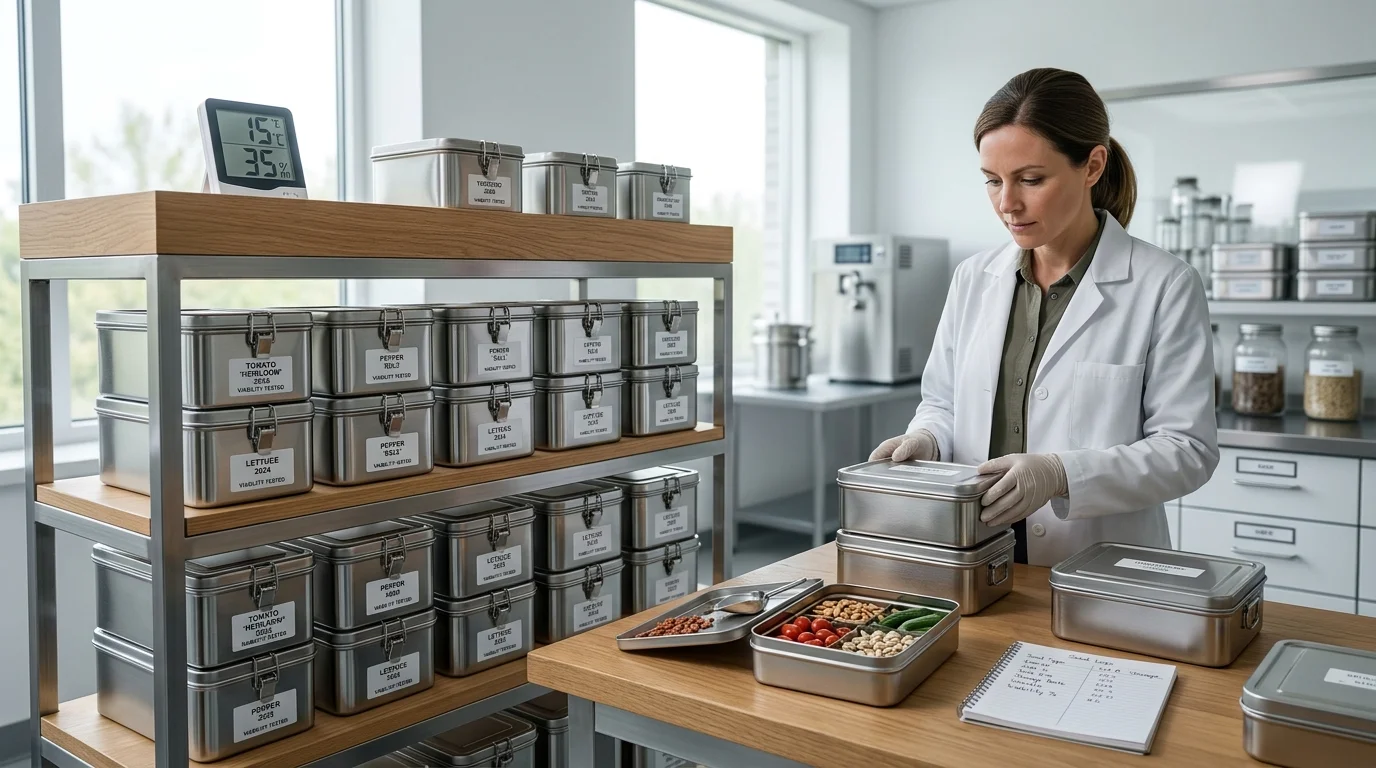
I’ve tested both. Plastic tubs, while airtight, can trap residual moisture inside the seal. Metal tins—like old biscuit tins or dedicated seed tins—are better for two reasons. First, metal conducts temperature away from the seeds more evenly than plastic, helping buffer against short-term heat spikes. Second, metal is opaque. Light is a germination trigger, and even a small crack in a plastic lid can let in enough light to confuse seeds like onions or lettuce.
Tin organizers are also stackable. In a small allotment shed or a kitchen cupboard, you can label each tin by season: Spring Brassicas, Summer Roots, Autumn Greens. I use recycled Quality Street tins for my carrot and parsnip families. They’re free, airtight, and nobody steals a Quality Street tin from a shed.
But here’s the critical step: before you seal seeds in a tin, you must remove any moisture. Pop a silica gel sachet (the kind you get in shoe boxes) into the bottom of the tin. Or use a teaspoon of uncooked rice wrapped in tissue. This acts as a desiccant, pulling out ambient humidity. Change it every season.
Seed Viability: The Real Numbers for UK Growers
Not all seeds last the same. I’ve kept parsnip seeds viable for only one year, while cucumber seeds can stretch to five. Here’s a table based on trials from Garden Organic and my own 15-year data log on Yorkshire clay:
| Vegetable Family | Typical Viability at 5°C in Airtight Tin | Sowing Window After That |
| :— | :— | :— |
| Onions, Leeks, Parsnips | 1–2 years | Sow fresh annually; best results from same-year seed |
| Carrots, Celery, Salsify | 2–3 years | Acceptable at year 2, but germination drops sharply |
| Brassicas (Cabbage, Kale, Sprouts) | 3–4 years | Good at year 3; thin sowing needed at year 4 |
| Legumes (Peas, Beans) | 3–4 years | Check for weevil damage before sowing |
| Cucurbits (Courgette, Pumpkin, Cucumber) | 4–5 years | High viability even at year 5 when stored well |
| Tomatoes, Peppers, Aubergines | 4–6 years | Surprising longevity; I’ve had 80% germination at year 6 |
The key takeaway? Parsnips and onions are the divas of the seed world. They lose viability fast. Always buy fresh packets for those each year. But tomatoes? You can hoard those for half a decade if you store them right.
Freezing Seeds: The Cheat Code for Long-Term Storage
I get asked this a lot: “Can I freeze my leftover seeds?” The answer is yes, but with strict caveats. Freezing at -18°C essentially pauses the seed’s respiration. It’s the method used by the Millennium Seed Bank at Wakehurst. But you cannot just throw packets in the freezer.
Here’s the protocol for freezing seeds at home:
1. Dry them first. Place seeds in an open tray with a silica gel sachet for 48 hours in a warm room. They must be bone-dry. Freezing moist seeds ruptures cell walls.
2. Seal in an airtight glass jar or heavy-duty zip-lock bag. Squeeze out all air. Label with the date and variety.
3. Thaw slowly. When you need them, take the jar out of the freezer and let it sit at room temperature for 24 hours before opening. This prevents condensation from forming on the cold seeds, which kills them instantly.
What seeds freeze best? Tomatoes, peppers, chillies, and cucurbits. What doesn’t? Don’t freeze parsnips or onions—they’re too sensitive to moisture fluctuation. Also, avoid freezing seeds that have been treated with a pesticide coating, as the coating can break down.
Step-by-Step: Building Your Airtight Seed Storage System
For best seed storage for allotment gardeners, here’s my exact system. It costs under £15 and lasts a decade.
What you need:
– 2–3 metal tins (biscuit tins, or buy dedicated metal seed boxes online)
– Silica gel sachets (buy a pack of 50 for £5 on eBay)
– A permanent marker and small labels
– A cool, dark cupboard or a garage that doesn’t freeze in winter (aim for 4–10°C)
The process:
1. After sowing, take leftover seed packets and check the ‘packed for’ year on the back. Discard any seeds older than the viability limits in the table above. Compost them.
2. Place one silica gel sachet in the bottom of each tin.
3. Arrange packets upright, grouped by family (brassicas together, roots together). Do not cram them—airflow inside the tin still matters.
4. Label the tin lid: e.g., “Summer Sowings – 2025” or “Tomato Hoard.”
5. Store the tin in the darkest, coolest spot you have. Under the stairs is ideal. Avoid the top of the fridge (too warm) and the shed (too humid).
6. Every January, open the tin for 10 minutes to air it out, then reseal with a fresh silica sachet.
Common Myths That Cost You Germination
Myth: “Seeds in the fridge are fine.” The fridge is actually a dangerous spot for most seeds because of high humidity from vegetables and constant door-opening. Only use a fridge if you have a dedicated crisper drawer set to 40% humidity and sealed bags.
Myth: “I can just use the packet and fold it shut.” Folded packets are not airtight. They allow moisture in from humid air. Always transfer seeds into an airtight container after opening the packet.
Myth: “Old seeds are dead seeds.” Not true. I’ve germinated 4-year-old tomato seeds at 70% by using the paper towel method first. Old seeds just need a little encouragement. Sow them thicker, pre-soak them for 6 hours, and use a heat mat at 20°C.
Conclusion: Stop Wasting Money, Start Storing Smarter
You don’t need a £50 seed vault. You need a metal tin, a silica sachet, and a cool cupboard. That’s it. The best seed storage for allotment gardeners is the system you actually use. If you organise your tins every January, you’ll never again sow dead seed into precious compost.
Next time you’re tempted to toss that half-used packet of runner beans, think twice. Store it right, and you’ll be eating those beans in two years. Grow smarter, not harder.
FAQs: Seed Storage for UK Allotmenteers
Can I store seeds in the shed over winter?
Only if your shed is dry, insulated, and stays above 0°C. Damp sheds are the number one killer of seed viability. Use a metal tin with desiccant.
How do I test if old seeds are still viable?
Take 10 seeds, place them on a damp paper towel in a plastic bag, and keep them at 20°C for 7 days. Count how many sprout. Multiply by 10 for the percentage. If it’s below 50%, sow the rest thickly or buy fresh.
Is it worth buying vacuum-sealed seed packs?
For parsnips and onions, yes. For tomatoes and beans, no—you can store those perfectly well yourself in a tin.