Why Your Parsnip Seeds Are Taking the Mick (And How to Fix It)
You’ve cleared your plot, prepped the bed, and carefully sown those papery parsnip seeds into the warm April soil. Then you wait. And wait. Two weeks pass. Nothing. Three weeks. A few feeble sprouts. By week four, you’re convinced you’ve sown a variety that’s gone on strike. Sound familiar? Parsnips are the ultimate test of patience for any plotter, but I’ve seen too many new plotters give up on growing parsnips from seed because they assume the seed is dud or the soil is cursed. The truth is simpler: parsnip seeds have a notoriously short viability window (around one year at best) and they’re fussy about moisture and temperature. Let’s fix that.
The Viability Trap: Why Fresh Seed Isn’t Optional
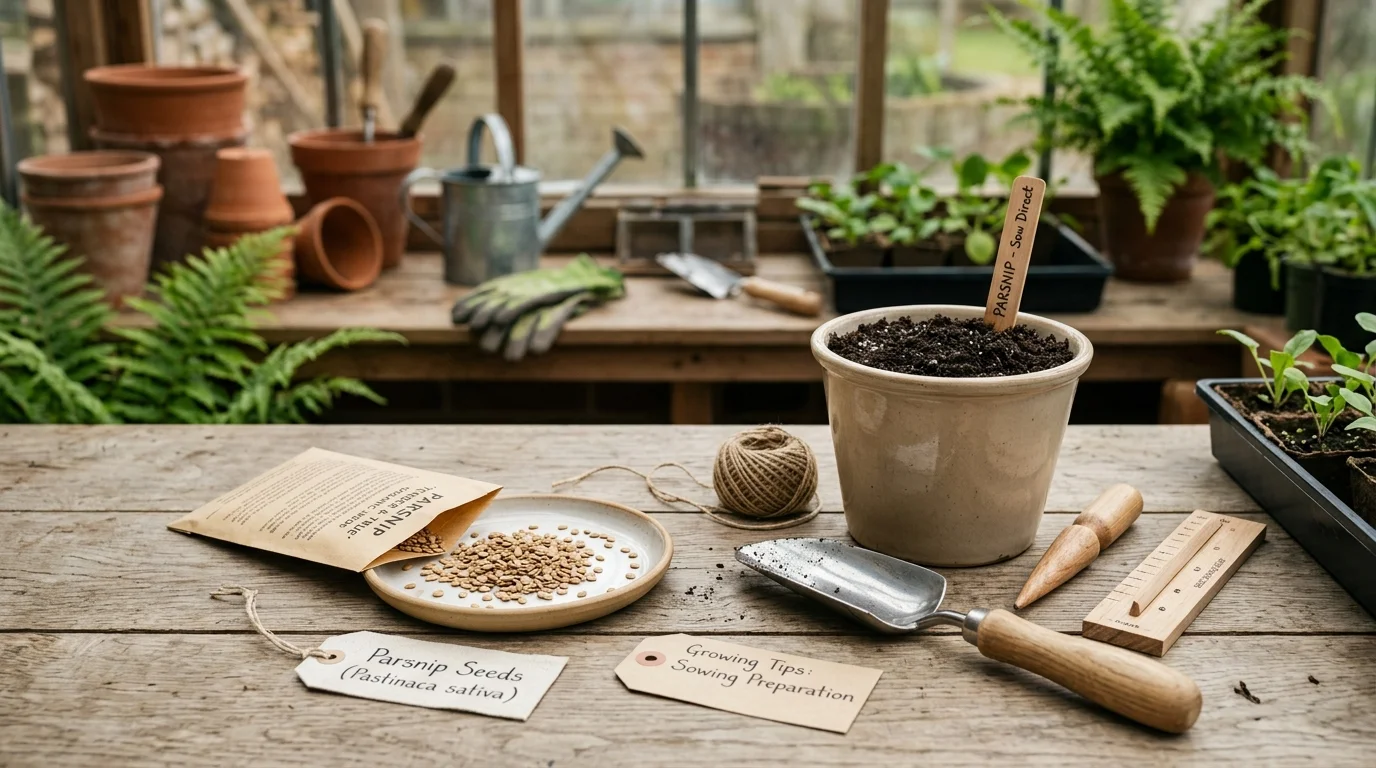
Parsnip seeds lose viability faster than any other common taproot crop. A study from the University of Reading showed that after 12 months of ambient storage, germination rates can drop from 80% to below 30%. That packet you bought on clearance last autumn? Toss it. Always buy fresh seed each season from a reputable UK supplier like Garden Organic or Mr Fothergill’s. I also recommend the ‘Palace’ variety for heavy clay – it’s bred for UK conditions and shows better emergence in cold soils.
For maximum germination, soak your seeds in tepid water for 12 hours before sowing. This softens the outer coat and kick-starts the imbibition process. Don’t soak longer – you’ll rot them.
Soil Preparation for the Long Root
The second biggest mistake I see? Sowing into a bed that’s been roughly dug but not refined. Parsnips need a stone-free, fine tilth to at least 12 inches deep. On my Yorkshire clay, I use a border fork to loosen the subsoil without inverting it (no-dig principle), then rake in a 2cm layer of sharp sand to improve drainage. This prevents the roots from hitting a compacted layer and forking.
Test your soil pH: parsnips prefer 6.5–7.0. If you’re below 6.0, apply lime in autumn before sowing. Acid soil stunts root elongation.
Here’s a quick reference table for pre-sowing prep:
| Task | Timing | Why It Matters |
|---|---|---|
| Soil pH test | 6 weeks before sowing | Prevents forking and poor flavour |
| Remove stones >1cm | Day of sowing | Ensures straight roots |
| Add sharp sand (2cm layer) | Day of sowing | Improves drainage on clay |
| Soak seeds 12hrs | 12hrs before sowing | Increases germination speed by 40% |
The Germination Window: Temperature and Moisture Sweet Spot
Parsnip seeds will not germinate reliably below 7°C soil temperature. In the UK, that means you’re looking at mid-April to early May for most regions. Use a soil thermometer – don’t guess. I’ve trialled sowing in March under cloches and still got spotty germination; it’s not worth the hassle.
Water the drill before sowing, not after. Pouring water onto freshly sown seeds can wash them into clumps or dislodge them. Instead, soak the trench, sow the seeds 1cm deep, then cover with dry soil or vermiculite. This prevents a crust forming on heavy clay that the fragile seedlings can’t push through.
For consistent moisture, lay a plank of wood over the row and water the plank daily. This keeps the soil beneath cool and damp without flooding. Remove the plank once you see the first green hooks emerging (usually 14–21 days).
Thinning: The Painful but Necessary Step
I get it – you’ve waited three weeks for those tiny seedlings, and now you have to pull half of them out. But crowding is the number one cause of stunted parsnips. Thin to 5–7cm apart once the second true leaf appears. If you want exhibition-quality roots, thin to 10cm. Use scissors to snip the unwanted seedlings at soil level rather than pulling them, so you don’t disturb the roots of the ones you’re keeping.
Winter Parsnips: The Sweetness Secret
Here’s where the magic happens. Winter parsnips are not just a storage crop – they’re a flavour transformation. Parsnips convert starches to sugars when exposed to frost. Leave them in the ground until after the first hard frost (below -2°C) for the sweetest, nuttiest flavour. I’ve harvested mine as late as February in Yorkshire, covered with a layer of straw or horticultural fleece to prevent the ground freezing solid.
If you’re in a very wet area, lift them in November and store in damp sand in a cool shed. But honestly, nothing beats a December-harvested parsnip roasted with honey.
Pest Watch: Carrot Fly and Canker
Carrot fly can attack parsnips too. Erect a 60cm fine-mesh barrier (use Enviromesh or similar) around the bed, not over it. The fly flies low, so a vertical fence is more effective than a net.
Canker (brown lesions on the crown) is worse in heavy, wet soil. Improve drainage with the sand trick above, and choose resistant varieties like ‘Tender and True’ or ‘Gladiator’. Rotate your parsnip bed annually – never grow them in the same spot more than once every three years.
My Month-by-Month Parsnip Plan
- March: Prepare bed, test pH, apply lime if needed. Buy fresh seed.
- Mid-April: Sow when soil temp >7°C. Use the plank method.
- May: Thin to 5–7cm. Water weekly in dry spells.
- June–August: Keep weed-free. Watch for carrot fly.
- September: Remove any cankered roots promptly.
- November–February: Harvest after frost for sweetness. Mulch if leaving in ground.
FAQ: Parsnip Seed Success
Why are my parsnip seeds not germinating?
Most likely old seed (over 1 year) or cold soil below 7°C. Check your packet date and use a soil thermometer. Also, if you’ve overwatered after sowing, you may have caused the seeds to rot – water the drill before sowing, not after.
Can I grow parsnips in containers?
Only if you use a deep pot (at least 30cm) and a sandy loam mix. Even then, you’ll get shorter roots. For best results, go straight into the ground.
How do I store parsnips without them going woody?
Either leave in the ground (covered with fleece) or lift and store in damp sand at 0–2°C. Never wash them before storage – dirt protects the skin.
Final Word from The Plot Doctor
Growing parsnips from seed is a masterclass in patience and precision. But once you nail the basics – fresh seed, warm soil, careful watering, and a frosty finish – you’ll never buy a supermarket parsnip again. That first bite of a December-roasted ‘Gladiator’, caramelised and creamy, is worth every anxious week of waiting. For more peer-reviewed tips on taproot crops, check out the RHS parsnip growing guide. Now stop overthinking and go get your hands dirty.