Why your runner beans are all leaves and no flowers (and the real fix)
You’ve prepped the soil, erected a magnificent structure of bean canes, and lovingly watered every evening. Yet August arrives with a jungle of lush leaves and precisely three beans. The plot next door is dripping with pods. What’s the secret? It’s not magic. It’s understanding that runner beans are temperamental prima donnas that demand specific conditions, especially when it comes to support, moisture, and pollination.
I’ve been there—staring at a 8-foot wigwam of greenery that yielded barely enough for a single Sunday dinner. After 15 years of trialling different varieties, cane spacings, and watering regimes on heavy Yorkshire clay, I’ve cracked the code. Let me save you the wasted seasons.
First, let’s talk about those bean canes
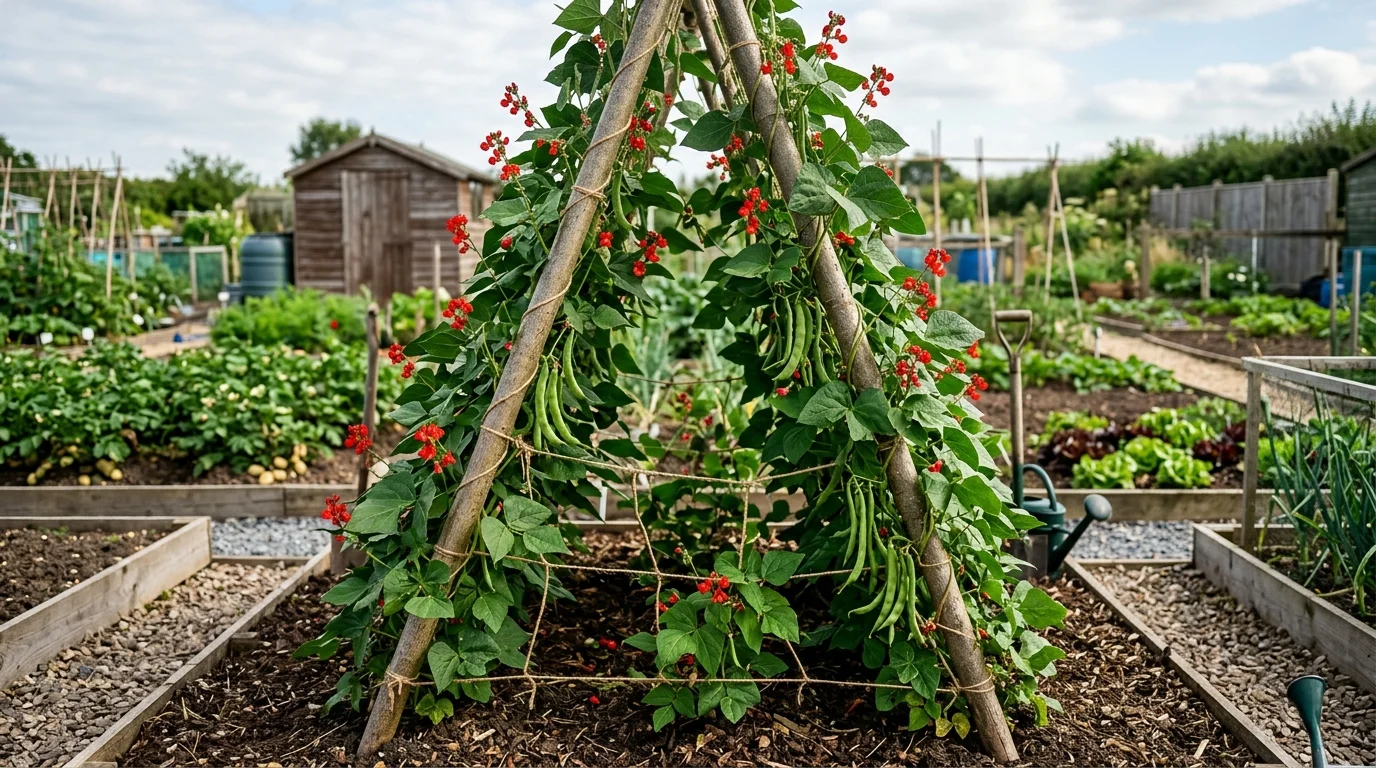
The biggest mistake new plotters make is using supports that are too short or too flimsy. Runner beans need a solid 8-foot (2.4m) framework to scramble up. Anything shorter and you’ll get a tangled mess with pods dragging on the soil, inviting slug damage and rot.
You have two classic options:
- The Wigwam: Tie 6-8 bean canes at the top with garden twine. This is space-efficient, wind-resistant, and looks striking. Perfect for 4-6 plants per wigwam.
- The Double Row (A-Frame): Two parallel rows of canes, crossed and tied at the top. This creates a tunnel effect. Better for large-scale growing—you can walk down the middle to harvest.
Pro tip from the clay trenches: Push your bean canes at least 12 inches (30cm) into the soil. Our clay gets rock-hard in summer, and a shallow wigwam will topple in the first August thunderstorm. If you’re on very heavy clay, use a hammer and a wooden block to gently tap them in—don’t split the cane.
The science of spacing: why cramming fails
I see plotters plant five seeds around each cane, thinking they’ll get five times the yield. They get five times the competition. Runner beans are surprisingly greedy for a legume. Each plant needs a circle of roughly 12 inches (30cm) diameter of undisturbed root zone.
Here’s the RHS-backed spacing I use:
| Structure | Spacing between plants | Plants per 6ft (1.8m) row | Seed depth |
|---|---|---|---|
| Wigwam (6 canes) | 15cm (6in) between seeds | 6-8 per wigwam | 5cm (2in) |
| Double Row | 23cm (9in) between seeds | 8-10 per row | 5cm (2in) |
| Single Row (against fence) | 30cm (12in) between seeds | 6 per 6ft row | 5cm (2in) |
Plant two seeds per station, then snip the weaker seedling. This is called ‘insurance sowing’ and it saves you from bare patches when mice or slugs get the first seed.
Soil preparation: the real secret to a massive harvest
Forget the manure. Yes, I said it. Runner beans are legumes—they fix their own nitrogen. Adding fresh manure in spring does two bad things: it encourages massive leaf growth at the expense of flowers, and it can burn tender roots.
What they actually need is potassium and phosphorus for flower and pod formation. My go-to pre-planting feed is a handful of sulphate of potash per square metre, raked in a week before sowing. If you’re organic, use wood ash or comfrey tea.
Watering: the make-or-break habit
This is the killer. Runner beans have a desert-origin ancestor (the scarlet runner from Central America), but our modern cultivars are thirsty. Inconsistent watering causes flowers to drop off without setting pods.
Your target: Keep the soil consistently moist, not waterlogged. In a dry Yorkshire summer, that means a deep soak every 2-3 days. A shallow sprinkle daily just encourages roots to stay near the surface, where they’ll be stressed by heat.
The real hack: Mulch around the base with 3-4 inches (7-10cm) of well-rotted compost or cardboard. This keeps the soil cool and moist, and it suppresses weeds. I use old wool carpet offcuts—they retain moisture brilliantly and break down slowly.
Pollination: why you might need to play cupid
Runner beans are insect-pollinated, primarily by bumblebees. But here’s a problem: our modern runner bean flowers are often closed too tightly for honeybees to access. If you see flowers dropping off without any swelling behind the petals, you’ve got a pollination failure.
The fix: On still, overcast days, take a soft paintbrush or a cotton bud and gently transfer pollen from one flower to another. Sounds fiddly? It takes ten minutes per wigwam and doubles your set.
Or, better yet, plant companion flowers that attract bumblebees: borage, phacelia, and lavender. Put them at the base of your wigwams.
When to harvest—and how to keep them coming
Pick them young. The ideal bean is 15-20cm (6-8 inches) long, before the seeds inside swell visibly. If you see bumps along the pod, you’ve waited too long. Those beans will be tough and stringy.
Why picking triggers more production: The plant thinks ‘I haven’t reproduced yet!’ and sends up more flowers. Miss a week of harvesting, and the plant goes: ‘Job done, seeds are safe, time to shut down.’ Pick every other day once cropping starts. I take a trug to the plot, pick everything that looks ready, and blanch/freeze within hours.
Why your beans might be bitter (and how to fix it)
Runner beans contain a compound called phasin, which is destroyed by proper cooking. But bitterness often comes from drought stress or over-mature pods. If you’ve had a dry spell, the beans concentrate flavours. Solution: Water consistently, and never eat beans raw. Boil for 3 minutes, then drain—that’s enough to kill the toxins and soften the texture.
The variety selection that changed my yields
I’ve trialled 12 varieties over the years. Here’s my shortlist for UK allotments:
- ‘Lady Di’ – Reliable, stringless, heavy cropper. RHS Award of Garden Merit. Good for clay.
- ‘Czar’ – Very early, great for cool, wet summers. Bushy habit, needs less height.
- ‘Red Rum’ – Fast-growing, deep red flowers, good for pollinators. High yields.
- ‘St. George’ – Best for taste, but slightly later cropping. Worth the wait.
Avoid: ‘Enorma’ in Northern England—it hates cold winds and produces lots of leaf, few pods.
Your month-by-month runner bean calendar
April: Harden off seedlings (if started indoors) or direct sow after last frost (mid-May for most of UK). Protect with cloches if cold.
May: Plant out, install supports immediately. If you wait, the seedlings get tangled and break.
June: Water deeply, mulch, watch for blackfly. Pinch out the growing tip once the plant reaches the top of the cane—this forces side shoots and more flowers.
July: Harvest begins. Keep picking. Feed weekly with liquid comfrey tea (high potassium).
August: Peak harvest. If you go on holiday, arrange a picker or you’ll lose the second flush. Water daily in heatwaves.
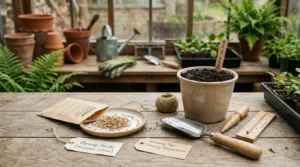
September: Slow down watering. Leave some pods to dry on the plant for next year’s seed.
Pests: the usual suspects
– Blackfly: Pinch out infested tips, or spray with a weak soap solution (1 tbsp castile soap per litre of water). Attract ladybirds by planting dill nearby.
– Slugs: The nemesis of young seedlings. Use Vitax Slug Gone (wool pellets) around each stem—they hate the texture. Avoid slug pellets near bee-friendly flowers.
– Mice: They dig up and eat the seeds. Sow indoors in loo roll tubes, then transplant—that protects the seed from being dug up.
Storage: beyond the freezer
Freezing is the standard route—blanch for 2 minutes, plunge in ice water, bag up. But here’s a technique most plotters miss: salt-bottling. Layer blanched beans with coarse sea salt in a Kilner jar, store in a cool dark place. They’ll keep for 6 months and taste fresher than frozen.
Or make runner bean chutney with your glut. Chop 1kg beans, 500g onions, simmer with 500ml malt vinegar, 400g brown sugar, and spices. It’s a Christmas gift that actually gets eaten.
When to pull the plants
After the first frost, the leaves blacken. Cut the stems at soil level, leave the roots in the ground. Those roots are full of nitrogen-fixing nodules—they’ll rot down and feed next year’s brassicas. Compost the stems (chop them first, they take ages to rot whole).
Frequently Asked Questions
Q: Can I grow runner beans in a container on my patio?
A: Yes, but use a 30-litre pot minimum, with a 6ft wigwam of canes. Water daily in summer. Varieties like ‘Hestia’ are bred for pots.
Q: Why are my runner beans all flowers and no pods?
A: Usually lack of pollinators, or heat stress causing flower drop. Hand-pollinate, and mulch to cool the roots.
Q: How long do runner beans take to grow from seed?
A: 10-14 days to germinate, 8-10 weeks to first harvest from sowing.
Q: Should I remove the stringy sides of the pods?
A: Only with older varieties. Modern stringless types like ‘Lady Di’ don’t need it. If you’re growing heritage varieties, top and tail and pull the string.
Q: Can I save seed from my own beans?
A: Yes, but only from plants that are healthy and true to type. Leave 3-4 pods on the plant until they go papery and brown. Store in a paper envelope in a cool, dark place. Viability lasts about 2 years.
Final word from the Plot Doctor
Runner beans are one of the most rewarding crops you can grow on an allotment—if you respect their needs. Give them tall, sturdy bean canes, consistent moisture, and a hand with pollination, and they’ll repay you with kilos of pods from July through September. Skip any one of those steps, and you’ll be buying beans at the farm shop while wondering where you went wrong.
Now get that wigwam up, and let’s prove that Yorkshire clay can produce the best beans in Britain.