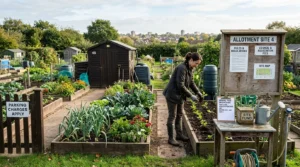
Let’s Talk About the Small Print That Could Save Your Plot
You’ve spent weeks digging out couch grass, barrowing in compost, and planting your first seed potatoes. Then a letter arrives from the allotment secretary: ‘Bonfires prohibited, no permanent structures, and your shed is 2 inches over the height limit.’ Sound familiar? It happens more often than you think.
Understanding UK allotment rules and regulations isn’t just about avoiding a telling-off. It’s about protecting your investment of time, money, and sweat. Most tenancy agreements are rooted in the Allotment Acts of 1908 and 1922, but each council or association adds its own layer of local bylaws. I’ve seen plotters lose their plots over a single unauthorised chicken coop or an unapproved polytunnel. Let’s break down the three biggest flashpoints: livestock, structures, and bonfires.
The Livestock Question: Can You Keep Chickens on an Allotment?
This is probably the most common question I get from new plotters. The short answer: it depends entirely on your tenancy agreement. UK allotment rules and regulations are not uniform on this.
Many council-run sites still follow the traditional ‘no livestock’ rule, allowing only bees. But more progressive associations now permit hens (and sometimes ducks) under strict conditions. Here’s what you’ll typically find in a modern agreement:
- Hens only, no cockerels: No one wants a 4am wake-up call. This is universal.
- Maximum flock size: Usually 4-6 hens per plot. Some sites limit it to 3.
- Housing specifications: The coop must be predator-proof, movable (for hygiene), and positioned at least 5 metres from any dwelling or other plot holder’s shed.
- Registration required: You may need to register your flock with DEFRA (if you have 50+ birds) or your local environmental health officer for smaller numbers.
- No sale of eggs: Most agreements forbid commercial activity. You can give eggs to friends, but selling them at the gate is a grey area that often gets flagged.
If you’re an Eco-Warrior, chickens can be brilliant for pest control and manure. But be warned: they will scratch up your no-dig beds and eat your prize strawberries. I’ve seen it happen.
Structures: Sheds, Polytunnels, and the ‘Permanent’ Problem
Here’s where The New Plotter often trips up. You want a nice shed to store tools and make a brew. But your tenancy agreement likely says something like: ‘No permanent structures without prior written consent.’
What counts as ‘permanent’? In most UK allotment rules and regulations, it’s anything that requires foundations, concrete, or is fixed to the ground for more than a season. This includes:
| Structure Type | Typical Rule | Why It Exists |
|---|---|---|
| Sheds | Max size 6×4 ft (1.8×1.2m), must be wooden and movable. No concrete base. | Prevents ‘plot abandonment’ where a permanent structure becomes a storage unit. Also stops disputes over boundaries. |
| Polytunnels / Greenhouses | Often allowed, but must be temporary (e.g., metal hoops with plastic covering). Glass greenhouses may require permission. | Safety (wind loading, broken glass) and visual impact on the site. |
| Water Butts | Almost always allowed, but must be covered to prevent mosquitoes and child safety. | Health & safety and water conservation. |
| Compost Bins | Permitted, but must be managed to avoid smells and rodents. | Neighbourly relations and hygiene. |
| Fences / Hedges | Often prohibited on boundaries. Open-plan plots are the norm. | Encourages community, prevents ‘fortress plots’, and allows access for mowing. |
My advice? Always write to your allotment secretary before you buy or build. A simple email explaining what you want and where it will go is usually enough. The RHS has a good template for this on their website. Remember: if you build it without permission, the committee has the right to demand its removal at your cost. That’s a painful lesson I learned the hard way with a too-large shed back in 2012.
Bonfires: When Are They Actually Allowed?
Ah, the bonfire debate. It divides allotment sites faster than slug pellets. Many new plotters see burning weeds as a quick clean-up. But UK allotment rules and regulations around bonfires are tightening, and for good reason.
The general rule: Bonfires are banned on most urban and suburban sites. On rural sites, they may be permitted on designated days or with prior notice. Here’s the logic:
- Air quality: In built-up areas, smoke can blow into houses, schools, or hospitals. Local councils have received complaints and now enforce the Environmental Protection Act 1990, which classifies ‘nuisance smoke’ as a legal issue.
- Fire risk: Especially in dry summers, a bonfire can spread to neighbouring plots or hedgerows.
- Neighbourly relations: Nothing starts a feud faster than smoke in someone’s washing or children’s bedroom windows.
If your tenancy agreement allows bonfires (read the small print carefully), there will usually be strict conditions:
- Burn only dry, woody material – no plastic, treated wood, or household waste. That’s illegal under waste regulations.
- No burning on windy days – to prevent embers spreading.
- Inform neighbours 24 hours in advance – common courtesy, sometimes a rule.
- Only between October and March – some sites ban summer bonfires entirely.
Honestly? For the Thrifty Grower and Eco-Warrior, bonfires are a waste of nutrients. Woody material can be chipped for paths or used in a ‘hugelkultur’ bed (Google it – German mound gardening). Weeds and soft green waste go into your compost bin. The only thing I ever burn is diseased material like blighted potato haulms or brassica roots infected with clubroot. Even then, I check local rules first.
Other Common Rules You Should Know
Beyond the big three, your tenancy agreement will include a stack of other clauses. Here are the ones that catch people out:
- Cultivation requirement: Most agreements say you must cultivate at least 50-75% of the plot within the first year. Failure to do so can lead to eviction. I’ve seen it happen to overambitious new plotters who took on a full plot and then got overwhelmed.
- No subletting: You can’t rent out part of your plot to someone else. If you’re struggling, ask the committee about a half-plot or a ‘shared plot’ arrangement.
- Path maintenance: You are usually responsible for keeping the paths around your plot clear of weeds and rubbish. It’s a common cause of complaints.
- Water use: On metered sites, you may have restrictions during hosepipe bans. Some sites now have rainwater harvesting requirements.
- Vehicle access: Most sites ban cars on paths except for disabled access or heavy deliveries (e.g., manure).
- Pests and disease: You must control weeds (especially invasive ones like horsetail and bindweed) and prevent pests from spreading. Failure to do so can get you a formal warning.
How to Handle a Rule Dispute (Without Losing Your Plot)
Disagreements happen. Maybe your neighbour’s shed is too close to your plot, or the committee says your compost bin is ‘unsightly’. Here’s my step-by-step approach, based on 15 years of committee work:
- Read your tenancy agreement cover to cover. I’m serious. Most disputes arise from people not knowing the rules they signed.
- Speak to the person directly. 90% of issues are solved with a polite chat. ‘I noticed your bonfire smoke comes into my shed – could you burn on the other side?’ works wonders.
- Email the committee. If that fails, write a calm, factual email to the secretary. Stick to the rules, not personalities.
- Attend a committee meeting. You have a right to be heard. Most sites have monthly meetings where you can raise concerns.
- Last resort: written complaint to the council. If your site is council-run, you can appeal to the allotment officer. But this can poison relationships, so use it sparingly.
What About Keeping Bees, Rabbits, or Goats?
I’ll keep this brief because it’s rare. Bees are allowed on many sites, but you need to register the hive with the local bee inspector and follow good practice (e.g., providing a water source, siting the hive away from paths). Rabbits are usually a no-go unless you have a special dispensation (some sites allow them as ‘weed control’ in a penned area). Goats, pigs, or sheep? Almost never. They require heavy fencing, attract flies, and are classed as agricultural livestock. Stick to chickens if you want animals.
Quick Checklist: What to Do When You Get Your Tenancy Agreement
Click here for your action plan
- Highlight any clauses about structures, fires, and livestock.
- Check the cultivation deadline – mark it on your calendar.
- Find out if your site has a plot handbook (many do, available online).
- Identify your site warden or secretary – introduce yourself.
- Take photos of your plot when you start – it’s your evidence if disputes arise over condition.
The Bottom Line: Rules Keep the Site Running for Everyone
I know reading a tenancy agreement feels like homework when all you want to do is plant shallots. But UK allotment rules and regulations aren’t designed to be petty. They’re the reason a site can survive for 100 years without descending into chaos. The best plotters I know are the ones who read the rules, ask questions early, and then quietly get on with growing.
So before you buy that shed or light that fire, take 20 minutes with your agreement. It’ll save you months of stress. And if in doubt, ask. We’re all here to grow – not to police each other.