You’ve signed the tenancy, you’ve got the key, and you’re staring at a jungle of brambles, nettles, and rusting debris. Let’s fix that.
I’ve seen it a hundred times. A new plotter inherits a patch that looks like it’s been abandoned since the 1970s, and they panic. They start yanking at six-foot-high thistles, get scratched to bits, and burn out before they’ve cleared a square metre. But here’s the truth: clearing an overgrown allotment isn’t about brute force; it’s about a phased, strategic attack. You don’t need to conquer it all in a weekend. You need to work smart, with the soil’s long-term health in mind. This is how to clear an overgrown allotment fast, without sacrificing your back or your sanity.
Step one: The triage survey (15 minutes, not a day)
Before you touch a single weed, walk the plot with a notebook. You need a quick visual assessment to categorise the mess into three tiers:
- Red zone: Perennial weeds with deep roots (couch grass, bindweed, dock, brambles) and any large rubbish (bottles, metal, plastic sheeting).
- Amber zone: Dense annual weeds (chickweed, groundsel, fat hen) that are shallow-rooted but thick.
- Green zone: Bare soil or light weed cover that you can turn quickly.
Most new plotters waste energy on the amber zone first because it looks easier. Wrong move. Always tackle the red zone first – those perennials will regrow from a fragment of root if you leave them. A study from Garden Organic found that a single metre of couch grass rhizome can produce 200 new shoots in a season. That’s the enemy.
Step two: The bramble blitz (cut, dig, or smother)
Brambles are the classic allotment nightmare. They’re tough, thorny, and everyone tries to pull them out by hand, which is a recipe for blood and frustration. Here’s the science-backed approach:
For small patches (under 2 square metres): Use a long-handled lopper (not secateurs) to cut all canes back to ground level. Then, use a border fork (not a spade) to gently lever out the root crown. The key is to remove the woody crown – that’s where the energy is stored. Wear thick leather gauntlets (I swear by Showa Atlas gloves for grip and protection).
For large areas (over 2 square metres): Cutting and digging is too slow. Use the ‘smother and starve’ method. In April or May, cut the brambles as low as possible. Cover the area with heavy-duty black polythene (at least 500 gauge) or woven landscape fabric. Weigh it down with bricks or spare soil. Leave it for a full growing season. Without light, the brambles exhaust their carbohydrate reserves and die. I’ve cleared a 10-metre bramble thicket this way – no digging required. Just be patient. It’s faster than digging a trench.
| Method | Time to clear | Best for | Effort level |
|---|---|---|---|
| Hand digging crown | 1-2 hours per plant | Small patches | High |
| Smother with polythene | 6-12 months | Large infestations | Low |
| Chemical (glyphosate) | 2-4 weeks | Extreme cases (not organic) | Low |
Note: Glyphosate is effective but controversial. Many UK council allotment tenancies ban it. Always check your rules first.
Step three: The weed seed bank (don’t let it explode)
Once you’ve cleared the top growth, you’ll disturb the soil – and that brings up thousands of weed seeds. UK research from the RHS shows that a single square metre of allotment soil can contain over 10,000 viable weed seeds. When you dig, you’re basically planting a new weed crop.
Here’s the fix: After clearing the red zone, do not dig the whole plot immediately. Instead, cover the cleared area with cardboard (remove tape and staples) layered 2-3 sheets thick. Wet it thoroughly, then top with a 5cm layer of compost or soil. This is the ‘cardboard sheet mulch’ method. It suppresses the seed bank by blocking light, while the cardboard breaks down over 6 months, feeding worms. You can plant into holes cut in the cardboard straight away – ideal for squash, potatoes, or brassicas. It’s a core tactic for allotment weeding without back-breaking labour.
Step four: The rubbish removal strategy (safety first)
Neglected plots often hide horrors: broken glass, rusty nails, old carpet, and sometimes chemical containers. Never handle unknown containers – report them to your site secretary. For general rubbish, follow this sequence:
- Scan for hazards first. Wear boots with thick soles and heavy-duty gloves.
- Use a strong builder’s bag (or rubble sack) for glass and metal. Do not mix with green waste.
- Separate organic debris (old wood, rotting canes) – this can go to your council green waste or be chipped for paths.
- Check for hidden treasures. I once found a set of vintage spades under a heap of nettles. Don’t throw away usable tools.
A pro tip for plot clearance speed: Don’t try to remove everything in one trip. Start with a single 1-metre-wide path from the gate to the centre of the plot. That gives you a workspace. Clear a 2×2 metre bed right next to the path, and plant it with something quick (like radishes or a green manure like mustard). Seeing a productive patch early keeps morale high.
Step five: The no-dig shortcut (for the impatient)
If your plot is covered in annual weeds (not brambles or couch), you can skip most of the digging. The no-dig method is brilliant for clearing an overgrown allotment fast because it uses soil biology to do the work for you. Here’s how:
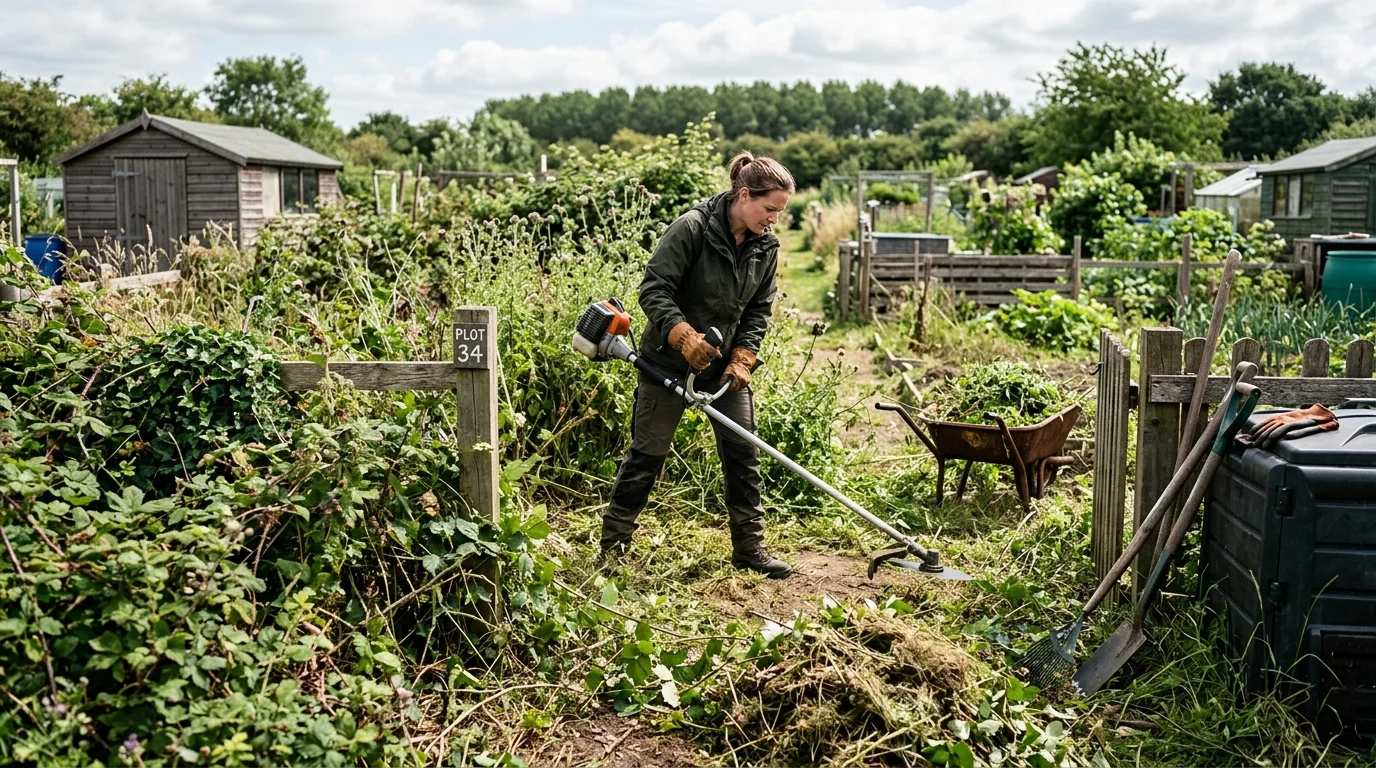
- Mow or strim all weeds down to ground level. Leave the clippings on the soil.
- Cover the area with a 3cm layer of well-rotted manure or compost (from a local farm or council supplier).
- Top with a 5cm layer of wood chip, straw, or leaf mould. This smothers regrowth.
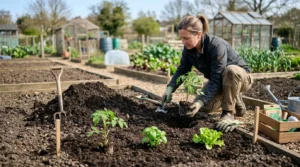
- Plant directly into the mulch. Use a trowel to push aside the mulch, drop in a seedling, and cover.
This works because earthworms and microbes break down the weeds into organic matter. You don’t expose new weed seeds to light. I’ve cleared a 50-square-metre plot this way in two weekends – no digging, no back pain. But this only works if you don’t have deep-rooted perennials like bindweed or dock. Those need to be hand-dug first.
Step six: The post-clearance soil test (don’t skip this)
Once the plot looks clean, it’s tempting to plant everything. Stop. Take a soil test. Overgrown plots often have poor soil structure – compacted, acidic, or lacking nutrients. The Garden Organic charity recommends testing three things:
- pH level – Most veg prefers 6.0-7.0. Use a cheap test kit from a garden centre. If below 6.0, add lime in autumn.
- Organic matter content – Squeeze a handful of moist soil. If it crumbles, you’re good. If it forms a hard ball, you need compost.
- Texture – Is it heavy clay (sticky when wet) or sandy (drains fast)? Adjust your planting plan accordingly.
I’ve seen plotters spend weeks clearing a plot, only to plant potatoes in compacted clay that waterlogs. That’s a season wasted. Test first, then choose your crops. For heavy clay, plant maincrop potatoes – they break up the soil naturally. For sandy soil, focus on root veg like carrots and parsnips.
Common mistakes that slow you down
Mistake 1: Digging when the soil is wet – This destroys soil structure and creates clods that bake hard in summer. Wait until the soil is dry enough to crumble in your hand.
Mistake 2: Using a rotavator on couch grass – Rotavators chop up rhizomes and spread them everywhere. You’ll end up with a lawn of couch. Hand fork or smother only.
Mistake 3: Burning everything – Many allotment sites ban bonfires. Even if yours allows it, burning destroys organic matter that could improve your soil. Compost soft weeds (not perennial roots), and take woody debris to the tip.
Mistake 4: Trying to clear the whole plot before planting – You don’t need to clear 100%. Clear a third, plant it, then move on. Growing crops is the best motivation to keep going.
FAQ: Clearing an overgrown allotment
How long does it take to clear an overgrown allotment?
For a standard 250-square-metre UK plot, expect 2-4 weekends for the initial clear, plus a full growing season to smother persistent weeds. The first year is about damage control; the second year is when you see real progress.
Can I use vinegar to kill weeds on my allotment?
Household vinegar (5% acetic acid) kills top growth of annual weeds but does not affect roots of perennials. It also acidifies soil. For long-term allotment weeding, it’s better to use physical methods (mulching, hand-weeding) or biological controls (nematodes for vine weevil).
What’s the best tool for clearing brambles?
A long-handled lopper (by Wolf-Garten or Fiskars) and a border fork. Avoid using a spade – it snaps the crown and leaves fragments. For really thick brambles, a billhook is a traditional, effective choice.
Should I cover the plot with plastic for winter?
Yes, if you’ve cleared it late in the year. Use clear polythene to solarise the soil (kills weed seeds in summer), or black polythene to smother regrowth over winter. Remove it before spring planting.
The final word: Your first harvest is the clearing itself
I remember my first allotment – a bramble-choked, rubbish-strewn nightmare in Wakefield. I rushed it, dug too deep, and spent the next two years fighting couch grass. The second time, I followed the smother method, tested my soil, and planted into cardboard sheets. That plot produced enough potatoes to feed three families by August.
Clearing an overgrown allotment fast isn’t about speed; it’s about sequence. Triage the weeds, smother the brambles, protect the soil biology, and plant as you go. You’ll have a productive plot in one season, not three. Now go get your hands dirty – but smart dirty.