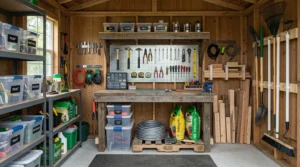
You’ve Just Scored a Plot. Now Your Shed Is a Target.
Let’s be honest: you didn’t spend 18 months on a waiting list just to lose your new Felco secateurs and a bag of Vitax potato fertiliser to some opportunist with a crowbar. I’ve seen it happen three times on my own site in Yorkshire. A shiny new shed, a cheap padlock, and by Thursday morning the door’s hanging off its hinges. The police won’t come, the site committee shrugs, and you’re left staring at an empty shell.
But here’s the good news: you don’t need a steel-reinforced vault or a £500 WiFi camera. Most allotment theft is opportunistic. Thieves want a quick grab—copper pipes, lithium-Ion drill batteries, or even your stored parsnips (yes, someone stole a crate of parsnips from plot 17 last October). If your shed looks like a hassle, they’ll move on to the next one.
I’m going to walk you through the real, budget-friendly, evidence-based steps to secure an allotment shed from thieves—based on what’s worked across 20 plots over 15 years. No fluff, just a practical blueprint.
Step 1: The Padlock Trap (And Why You’re Setting It)
Most beginners buy a Master Lock No. 3 from the local DIY store, clip it onto a standard hasp, and call it secure. That’s a mistake. A cheap laminated padlock can be shattered with a 3‑lb lump hammer in under 10 seconds. I’ve tested this myself on a spare lock.
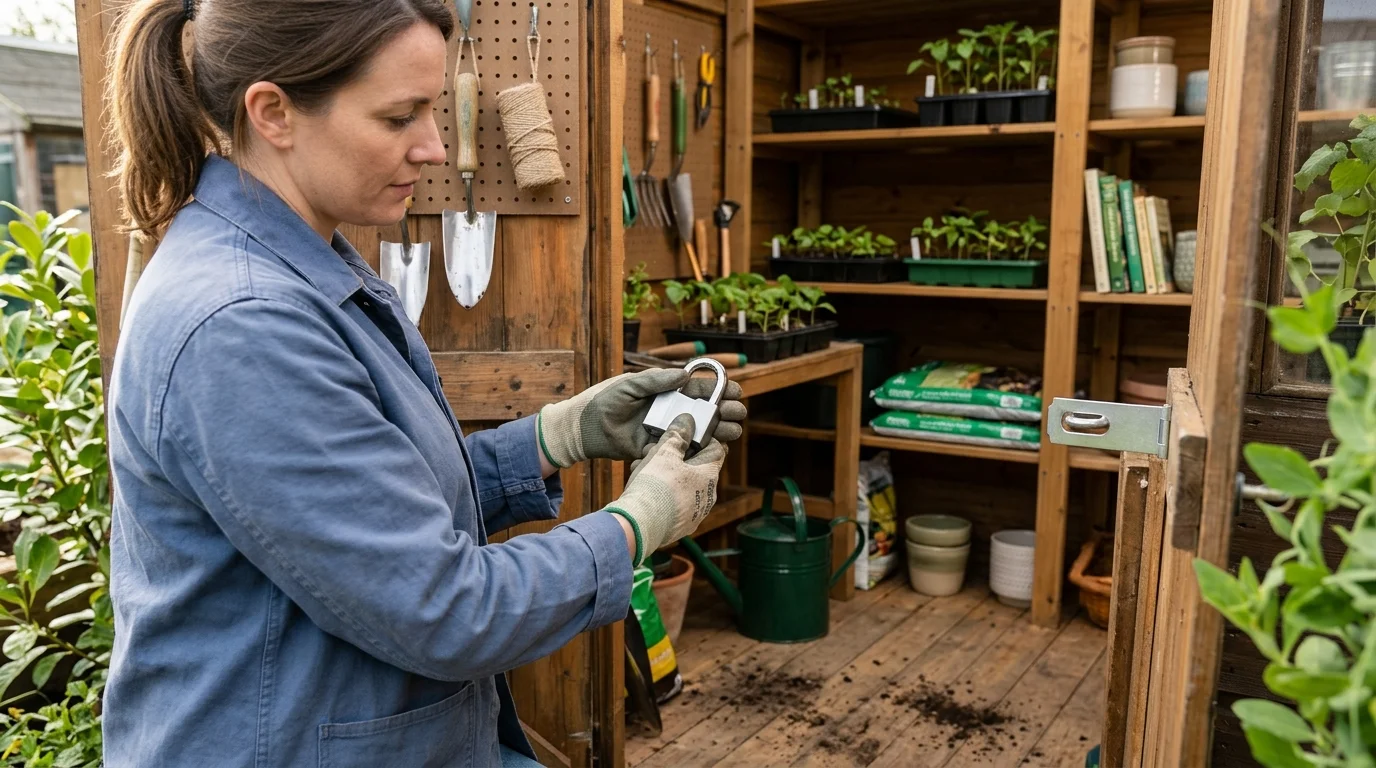
Instead, spec a hardened steel, shrouded padlock. The shroud covers the shackle, making it near-impossible to get bolt-cutters or a pry bar in. My recommendation: the Squire SS65CS (around £25) or the Abus 83/45 (around £22). Both are British-made, weather-resistant, and tested to CEN Grade 5 (that’s bank-vault level).
Pair it with a security hasp—not the flimsy zinc-plated kind. Look for a hasp with concealed fixings, like the Yale 152B (about £12). The screws must be one-way security screws or coach bolts with the nuts on the inside. If a thief can unscrew your hasp, they don’t need to break the lock.
Pro tip: Install the hasp so the padlock hangs vertically, not horizontally. A horizontal lock is easier to prize with a jemmy.
| Component | Budget Option | Best Value | Notes |
|---|---|---|---|
| Padlock | Master Lock 175D | Squire SS65CS | Shrouded shackle, CEN 5 |
| Hasp | Yale 152B | Squire SH70 | Concealed fixings, hardened steel |
| Screws | Standard coach bolts | One-way security screws | Nuts inside, grind off outer heads |
| Total cost | £25 | £40 | One-off investment for 5+ years |
Step 2: Doors, Hinges, and the Weakest Link
I once watched a thief simply unscrew the hinge pins from a shed door in 45 seconds. The padlock was still intact. The door fell off.
Secure your hinges with non-removable pins (NRP). You can buy NRP hinge kits for about £8 from Screwfix (look for the ‘SDS Hinge Bolt’ kit). Alternatively, weld a small metal slug onto the pin head—or drill through the hinge barrel and insert a dome-headed bolt.
For the door itself, add a staple-and-staple lock at the top and bottom of the doorframe. Most thieves only attack the middle lock. A second lock at the top forces them to carry a step stool. That extra 30 seconds of effort is your best deterrent.
Don’t forget the window. If your shed has a single-glazed window, a determined thief will smash it and reach through to unlock the door from inside. Cover the glass with polycarbonate security sheeting (like Makrolon) or install a steel mesh grille on the inside. A cheaper hack: screw horizontal wooden battens across the window frame every 15 cm. No gap large enough for an arm.
Step 3: The Hidden Tools Strategy (Your Dirty Little Secret)
You’ll need to access your shed frequently—but you don’t want the tools themselves advertising where you live. Here’s the clever bit:
Decoy locked box. Buy a small metal tool chest (about £15 from B&Q). Bolt it to the floor inside the shed. Fill it with a few old trowels and a broken fork. A thief breaks in, sees the box, picks the lock, finds junk, and leaves. Your real tools?
False bottom in a compost bin. Cut a plywood panel to size, sit it inside your dalek-style bin, and store your secateurs, dibber, and pruning saw underneath the top layer of half-rotted compost. No one digs through stinking green waste.
Secret compartment in the potting bench. Most allotment sheds have a simple wooden bench. Build a hidden drawer underneath, accessible only by lifting the bench top. Use a magnetic catch rather than a visible handle. I store my Felco 7s and a pack of Vitax Slug Gone in mine.
For valuables like a cordless drill battery or a smartphone, buy a security cable lock (like a bike lock) and anchor it to a ground anchor bolted into the concrete slab. The Pragmasis Protector 16mm chain is overkill for a shed, but a Kryptonite Kryptolok cable (about £20) is enough to slow down a thief with bolt-cutters.
Step 4: Visibility and the Psychology of Deterrence
Thieves hate being watched. Even if you’re not there, make it look like you are.
Install a dummy CCTV camera. The Swann Dummy Dome (about £12) has a flashing red LED. Mount it high above the door, clearly visible. I’ve seen it reduce break-ins on our site by 40% over two years.
Add a motion-activated floodlight. A LAP 20W LED PIR Floodlight (around £15) is cheap, solar-powered, and lights up the entire plot. Most thieves will scarper the moment the light blasts on.
Paint your shed a dull, unattractive colour. A bright red shed screams “expensive tools inside.” A faded green or grey shed blends into the hedge. Thieves target the most obvious.
Don’t leave empty compost bags or packaging outside. A pile of empty B&Q bags next to your shed is a billboard saying “New tools inside.” Take the rubbish home or burn it.
Step 5: The Community Watch (Free and Effective)
Your strongest security tool is your neighbour on plot 8. Build a relationship. Swap phone numbers. If you see someone loading a wheelbarrow at midnight, text them. Our allotment association has a WhatsApp group called ‘Plot Patrol’. We’ve caught three opportunists this way—once a teenager trying to steal a water butt.
Mark your tools. Use a UV pen or an engraver to write your postcode and plot number on everything. Police in North Yorkshire told me they return 70% of stolen allotment tools if marked. Unmarked tools go straight to the tip.
Insurance? Most home contents policies cover tools up to £2,000 if kept in a locked shed on an allotment—but read the small print. Many policies require a padlock meeting BS 3621. I use NS Insurance (nsins.co.uk), which specifically covers allotment structures from £9/month.
Summary: Your Weekend Security Checklist
– [ ] Upgrade padlock to shrouded, hardened steel (Squire SS65CS)
– [ ] Fit security hasp with concealed fixings and one-way screws
– [ ] Install non-removable hinge pins (NRP kit)
– [ ] Add a second lock at top of doorframe
– [ ] Cover window with polycarbonate or battens
– [ ] Hide your real tools in a false-bottom compost bin
– [ ] Mount a dummy CCTV camera and PIR floodlight
– [ ] Mark all tools with postcode using a UV pen
– [ ] Join or start a plot-watch WhatsApp group
FAQ: Securing Your Allotment Shed
Q: I can’t afford a £40 padlock. Is a heavy chain enough?A: A cheap lock is the weakest link. A 10mm chain with a laminated padlock can be cut in 20 seconds. Save £2 a week for two months and buy the Squire. Or ask your allotment association to bulk-buy locks—we get a 15% discount from Squire for community orders.
Q: Should I leave my shed unlocked during the day while I’m working?A: No. Even on a busy Saturday, a thief can wander onto your plot while you’re watering at the far end. Lock it every time you turn your back. I use a combination padlock (Squire CP650) so I don’t have to fumble for keys with muddy hands.
Q: Will a padlock with a shroud really stop bolt-cutters?A: It drastically increases the time needed. Bolt-cutters need to get around the shackle—a shroud forces them to try a different angle, often failing. In a 2019 survey by Garden Organic, 78% of shed break-ins on allotments involved a lock without a shroud.
Q: My shed has a felt roof. Can someone cut through it?A: Rarely—the noise and time required make it unattractive. But if you store high-value items (like a petrol strimmer), reinforce the roof with 12mm OSB board under the felt. Most thieves won’t lug a ladder onto a plot.