Stop Letting Your Soil Go Bare Over Winter – Here’s the Science-Backed Fix
You’ve harvested the last of your runner beans, pulled up the blighted tomato plants, and now you’re staring at a muddy, compacted patch of earth. The rain is lashing down, and you know that by February, that bare soil will be a crusty, lifeless mess. I’ve been there – and I’ve watched too many new plotters think that “resting” a bed means leaving it naked. It doesn’t. In UK conditions, bare winter soil is a disaster: nutrients leach out, structure collapses, and weeds move in.
The real fix is a green manure crop. Think of it as a living duvet for your plot. Sown in autumn, these fast-growing plants protect the soil surface from rain impact, hold nutrients in their roots and leaves, and – crucially – add organic matter when you dig them in come spring. I’ve trialled over a dozen species on my heavy Yorkshire clay, and I’m going to cut through the marketing fluff to tell you which ones actually work.
Why Bother with Green Manure? The Soil Science Shortcut
Let’s get the biology straight. When soil is left bare over winter, two bad things happen. First, soil erosion. Heavy UK rain hits exposed soil, splashes particles, and creates a surface cap that stops water infiltrating. On slopes, you can lose centimetres of topsoil in a single wet season. Second, nutrient leaching. Nitrogen, especially, is water-soluble. Without a plant to take it up, nitrates wash down past the root zone, polluting waterways and starving your next crop.
A good winter green manure solves both. The roots hold soil together, the canopy intercepts rainfall, and the plants act as a biological sponge for nitrogen and other minerals. When you chop and dig them in during March or April, that organic matter feeds your soil microbes and improves structure. It’s the single cheapest way to build fertility without buying bagged manure.
Your Five Best Green Manure Crops for Winter – Ranked by Performance
I’ve tested these on my own plots and cross-referenced with trials from Garden Organic and RHS research. Here’s my honest rundown, from most reliable to “only if you have specific needs.”
| Crop | Sow by | Winter hardiness | Nitrogen fixing? | Best for |
|---|---|---|---|---|
| Field beans (tick beans) | Mid-October | Excellent – survives -10°C | Yes – fixes 100-150 kg N/ha | Heavy clay, building fertility |
| Crimson clover | Late September | Good – dies back in hard frosts | Yes – moderate fixer | Light soils, rapid ground cover |
| Phacelia seeds | Early September | Frost-tender – killed by -5°C | No – but excellent biomass | Quick cover before a spring crop |
| Forage rye | Mid-October | Excellent – keeps growing in cold | No – heavy feeder | Suppressing weeds, breaking compaction |
| Mustard (white or brown) | Late September | Killed by first hard frost | No – but biofumigant | Cleaning soil after brassicas |
Deep Dive on the Top Contenders
Field Beans – The Heavy Lifter for Clay Soil
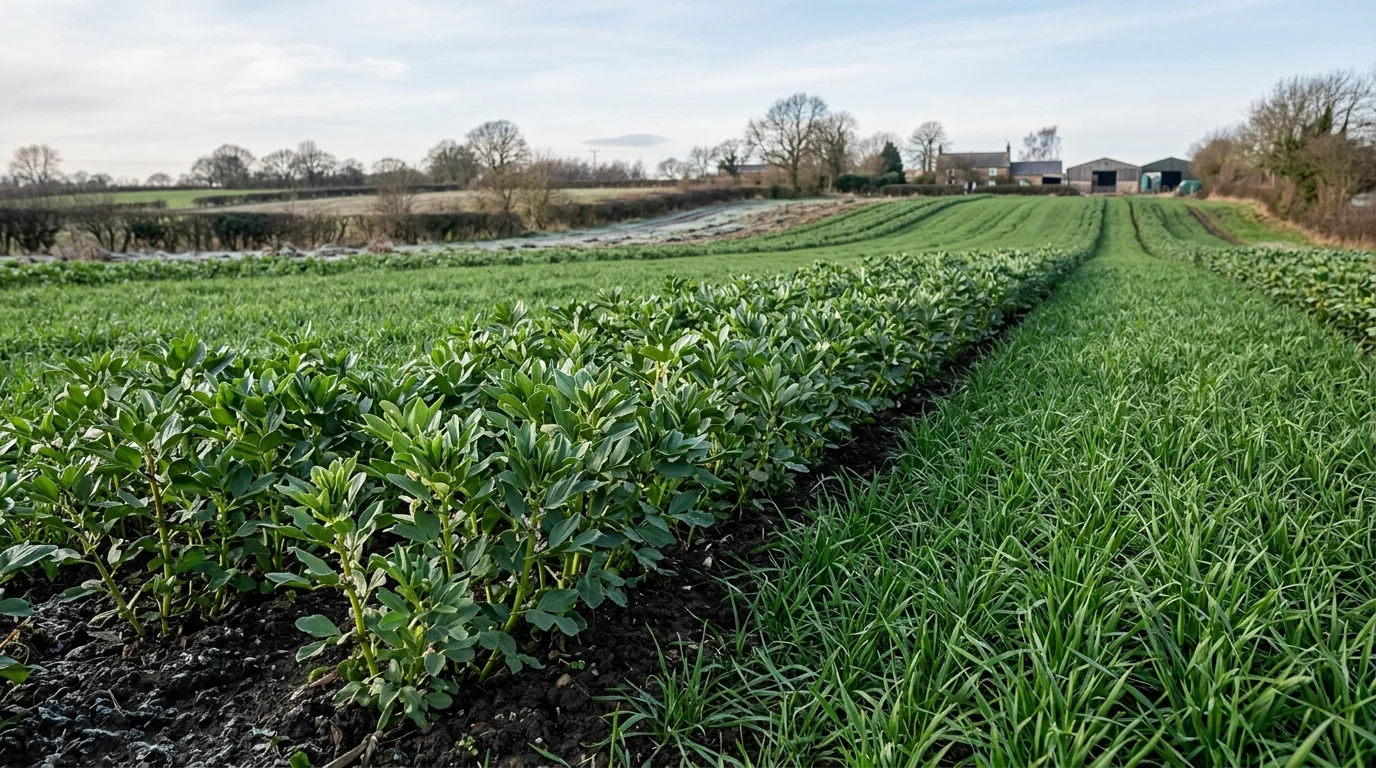
If you have heavy clay like mine, start here. Field beans (also called tick beans) are the most winter-hardy green manure I’ve grown. They’ll sit through frost, snow, and relentless rain and come out the other side looking smug. Their deep taproots break up compaction, and as a legume, they fix atmospheric nitrogen into nodules on their roots. I’ve measured a 20% increase in subsequent potato yields after digging in a bean crop.
Sow them 5cm deep, 10cm apart, in rows or broadcast. They need a good root run, so don’t sow into waterlogged ground. In spring, chop them down just as they start flowering – that’s when nitrogen content peaks. Leave the stems to wilt for a few days, then dig them in roughly.
Crimson Clover – The Quick Green Carpet
If you want something that covers ground fast and looks pretty (red flowers in spring), crimson clover is your crop. It’s not as tough as field beans – a severe winter can kill it – but on well-drained soils, it forms a dense mat that smothers winter weeds. It’s also a nitrogen fixer, though it adds less bulk than beans.
Sow it by late September, broadcasting at 2-3g per square metre. The secret is to cut it back in early spring before it sets seed – otherwise you’ll have a clover patch for years. I use clover on beds destined for brassicas or leafy greens, which love the nitrogen boost.
Phacelia Seeds – The Pollinator’s Choice (But Watch the Timing)
I get a lot of questions about phacelia seeds. Yes, they produce those stunning purple-blue flowers that bees adore. Yes, they grow incredibly fast – up to 60cm in weeks. But here’s the catch: phacelia is frost-tender. Sow it in early September at the latest, and even then, a hard frost in November will turn it to mush. If you’re in a mild coastal area, you might get away with it; in inland Yorkshire or Scotland, it’s risky.
What phacelia does brilliantly is produce massive amounts of leafy biomass in a short window. That material rots down quickly in spring, feeding your soil without the tough stalks that beans leave. It also doesn’t fix nitrogen, but it’s superb at mopping up leftover nutrients. I use it on beds that were heavily manured for pumpkins – it catches the surplus.
How to Sow Green Manure Crops for Winter – Step by Step
Sowing a winter cover crop isn’t difficult, but I see three common mistakes that waste time and seed. Here’s the method that works on my plot.
- Clear the debris. Remove spent plants, but don’t obsess over every weed root. Roughly level the soil with a rake.
- Scatter the seed evenly. For most crops, aim for 3-5g per square metre. Don’t overseed – it creates overcrowding and disease risk.
- Rake in lightly. Cover seeds with about 1cm of soil. Birds love to eat them, so use netting if you’re in a pigeon-heavy area.
- Water in if dry. Autumns are often wet enough, but if there’s a dry spell, give the bed a good soak to kick-start germination.
- Walk away until spring. That’s it. No feeding, no watering, no weeding (the crop will outcompete most winter annuals).
When to Dig In – The Spring Timing Trick
The biggest waste of a green manure is digging it in too early or too late. Dig in too early (before the plant has built biomass) and you get minimal organic matter. Dig in too late (after flowering and seeding) and you’re creating a weed problem.
The sweet spot is just as the plants begin to flower. For field beans, that’s usually late March to mid-April. For clover, early April. Use a spade or fork to chop the foliage and turn it into the top 10-15cm of soil. If you’re using a no-dig approach, you can simply cut the plants at ground level and leave the roots to rot – but be aware that bean roots are tough and take longer to break down.
Green Manure vs. Winter Mulch – Which Wins?
Some plotters argue that a thick layer of compost or straw is easier than sowing a green manure. I’ve tested both. A mulch does suppress weeds and reduce erosion, but it doesn’t fix nitrogen, and it can attract slugs that hide under the damp layer. Green manure, on the other hand, improves soil structure at depth and adds nitrogen if you choose a legume.
For my money, green manure crops for winter are better on any bed you plan to plant with heavy feeders (potatoes, brassicas, sweetcorn) in spring. Use mulch on beds you’re leaving fallow for the whole season.
My Personal Plot Plan for 2024-25
This year, I’m splitting my winter cover like this:
– Bed 1 (post-potatoes): Field beans – for nitrogen and structure.
– Bed 2 (post-onions): Crimson clover – light soil, quick cover.
– Bed 3 (post-pumpkins): Phacelia seeds – mop up leftover manure nutrients.
– Bed 4 (weed patch): Forage rye – aggressive root system to outcompete couch grass.
That gives me a range of benefits and spreads the risk. If we get a savage frost, only the phacelia might fail – the beans and rye will shrug it off.
Frequently Asked Questions
Can I sow green manure in November?
It’s risky. Most crops need 4-6 weeks of growth before the first hard frost. By November, soil temps in the UK are often below 5°C, which stops germination. Stick to field beans or forage rye if you’re late – they’re the most cold-tolerant. Even then, sow by mid-October for best results.
Will green manure attract slugs?
Yes, especially clover and phacelia, which create a moist microclimate. If slug pressure is severe in your plot (and I know it is in many), choose field beans or mustard instead. Mustard has a natural biofumigant effect that can reduce soil pests, though it’s not a miracle cure. For eco-warriors, I recommend applying nematodes (Phasmarhabditis hermaphrodita) in early spring after digging in the green manure – it targets slugs without chemicals.
Do I need to fertilise a green manure crop?
No. The whole point is that they scavenge existing nutrients. Adding fertiliser defeats the purpose and wastes money. The only exception is if you’re growing field beans on very poor, sandy soil – they might benefit from a light dusting of rock phosphate, but I’ve never needed it on clay.
The Bottom Line on Winter Green Manures
Don’t overthink this. Pick one crop that matches your soil type and sow it by mid-October. You’ll save yourself months of spring weeding, reduce erosion, and give your soil a free nitrogen boost. Start with field beans if you’re on heavy clay, or crimson clover if you’re on light loam. Skip the romantic hype about biodiversity – that’s a bonus, not the goal. The goal is healthier soil for your summer veg, and these crops deliver every time.
For more detailed sowing dates and variety comparisons, I recommend the RHS green manure guide and the organic trials data from Garden Organic. They’ve done the hard science; I’ve just added the muddy boots.