You’ve cleared your first allotment, the soil is a bit heavy, and you dream of pulling up a perfect, straight, sweet carrot. But reality hits: forked roots, pale flavour, and the dreaded carrot fly. Let’s fix that.
Carrots are the gateway vegetable for many new plotters, yet they’re also the crop that humbles seasoned growers. I’ve seen it all – from split roots in August to entire rows decimated by rust fly larvae. But with the right science-backed approach, you can consistently harvest beautiful, sweet carrots from a UK allotment, even on clay. This guide is your blueprint.
Why UK Clay Makes Carrots a Challenge (And How to Beat It)
Carrots are root vegetables that evolved in loose, sandy loam. The problem with most UK allotments – especially new plots – is the soil profile. Heavy clay compacts easily, creating a barrier that stunts root development. If a carrot hits a clod of clay or a stone, it forks. If the soil is too wet, the roots rot. If it’s too dry after a rain, they split.
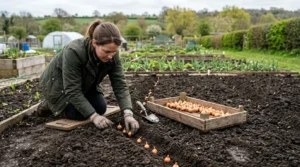
The fix isn’t digging deeper; it’s building structure. You can’t change your underlying geology, but you can create a perfect seedbed in the top 30cm. Here’s the step-by-step for any UK allotment:
1. Test your soil pH: Carrots prefer a pH of 6.0-6.8. If yours is below 6.0, apply lime in autumn (never in spring – it causes forking). A simple test kit from a garden centre costs under £10.
2. Remove every stone larger than a pea: This is tedious, but non-negotiable. Use a riddle or sieve. For a 4m x 1m bed, allow 30 minutes. Your back will thank you at harvest.
3. Incorporate sand or sharp grit: For heavy clay, mix in a 50:50 ratio of well-rotted leaf mould (not manure – too rich) and horticultural sand. This improves drainage and root penetration. I swear by Melcourt Sylvagrow as a peat-free top-dressing option.
When and How to Sow Carrots in the UK (Timing is Everything)
Sowing carrots too early is the number one mistake new plotters make. The soil temperature must be above 7°C for germination, but ideally 10-12°C. In most UK regions, that’s mid-April to early June.
| Sowing Window | Variety Type | Harvest | Notes |
|---|---|---|---|
| Mid-April to May | Early / Nantes (e.g., ‘Early Nantes 5’) | July | Best for sweet, straight roots. Sow in shallow drills, 1cm deep. |
| Late May to June | Maincrop / Chantenay (e.g., ‘Chantenay Red Cored’) | September-October | Short, stubby roots – ideal for heavy soil. Stores well. |
| July to August | Autumn King (e.g., ‘Autumn King 2’) | November-December | Late sowing for winter storage. Needs protection from frost. |
Sowing technique for straight carrots:
– Don’t use fresh manure or compost: It causes forked roots. Use year-old leaf mould or a low-nitrogen fertiliser like seaweed meal.
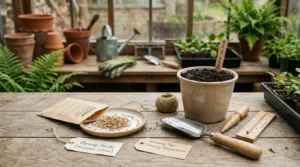
– Make a V-shaped drill: Use a dibber or the edge of a hoe to create a 1cm deep trench. Water the trench before sowing.
– Space seeds carefully: Carrot seeds are tiny. Mix them with dry sand (1:10 ratio) to sow evenly. Aim for 2-3 seeds per 2.5cm, then thin to 5cm apart once seedlings are 5cm tall.
– Cover with fine vermiculite or sieved soil: This prevents crusting, which stops germination. Water gently with a rose – a heavy hose will wash seeds away.
The Ultimate Carrot Fly Protection (Scientifically Proven)
Let’s tackle the elephant in the allotment: carrot fly. The female fly is low-flying (under 60cm) and attracted by the smell of crushed carrot leaves. You can’t defeat carrot fly with sprays alone. You need a physical barrier.
The RHS and Garden Organic research is clear: Enviromesh or horticultural fleece (12g or 17g micron) reduces infestation by over 90% when properly installed.
My proven protocol:
1. Erect a permanent cage: Build a simple wooden frame (90cm high) over your carrot bed. Cover with Enviromesh and weigh down the edges with soil or bricks. This blocks the fly completely.
2. Sow thinly and thug early: The scent of crushed leaves attracts flies. Thin on a damp, windless evening, and water the bed immediately after to wash away the scent.
3. Companion planting is a myth (mostly): RHS trials show that onions or leeks next to carrots do not significantly repel carrot flies. Distance and barriers work; smell does not. Save your onion space for another bed.
4. Rotate your carrot patch every year: Carrot fly pupae overwinter in the soil. Moving your plot by at least 10 metres each year breaks the cycle. A four-year rotation is ideal.
If you don’t use mesh, consider a late-sown crop (July). The first generation of carrot flies usually peaks in May-June. Sowing later avoids their peak activity, though you must still monitor.
Growing Sweet Carrots: The Sugar Science
Sweetness in carrots is not just about variety; it’s about stress management. Carrots produce sugars (sucrose, glucose, fructose) as a natural response to mild temperature fluctuations. Here’s how to bottle that:
– Water consistently: Irregular watering causes bitter, woody roots. Aim for 2.5cm of water per week. Use a rain gauge. On heavy clay, water less often but deeper to encourage roots to grow straight down.
– Don’t over-fertilise: Excess nitrogen makes roots rough, hairy, and less sweet. Use a potash-rich feed (like comfrey tea or sulphate of potash) from mid-summer to boost sugar content.
– Harvest after a light frost: A cold snap (0-5°C) triggers the conversion of starches to sugars for winter survival. If you can, leave maincrop carrots in the ground until late October or November. Cover with a 30cm layer of straw to prevent freezing solid.
– Choose sweet varieties: RHS taste trials consistently rate these as top performers:
– ‘Maestro’ (F1) – very sweet, blight-resistant.
– ‘Sweet Candle’ (F1) – slender, sugary, excellent for sandy soil.
– ‘Purple Haze’ (F1) – high anthocyanin, mild sweetness.
Harvesting and Storing for Winter Gluts
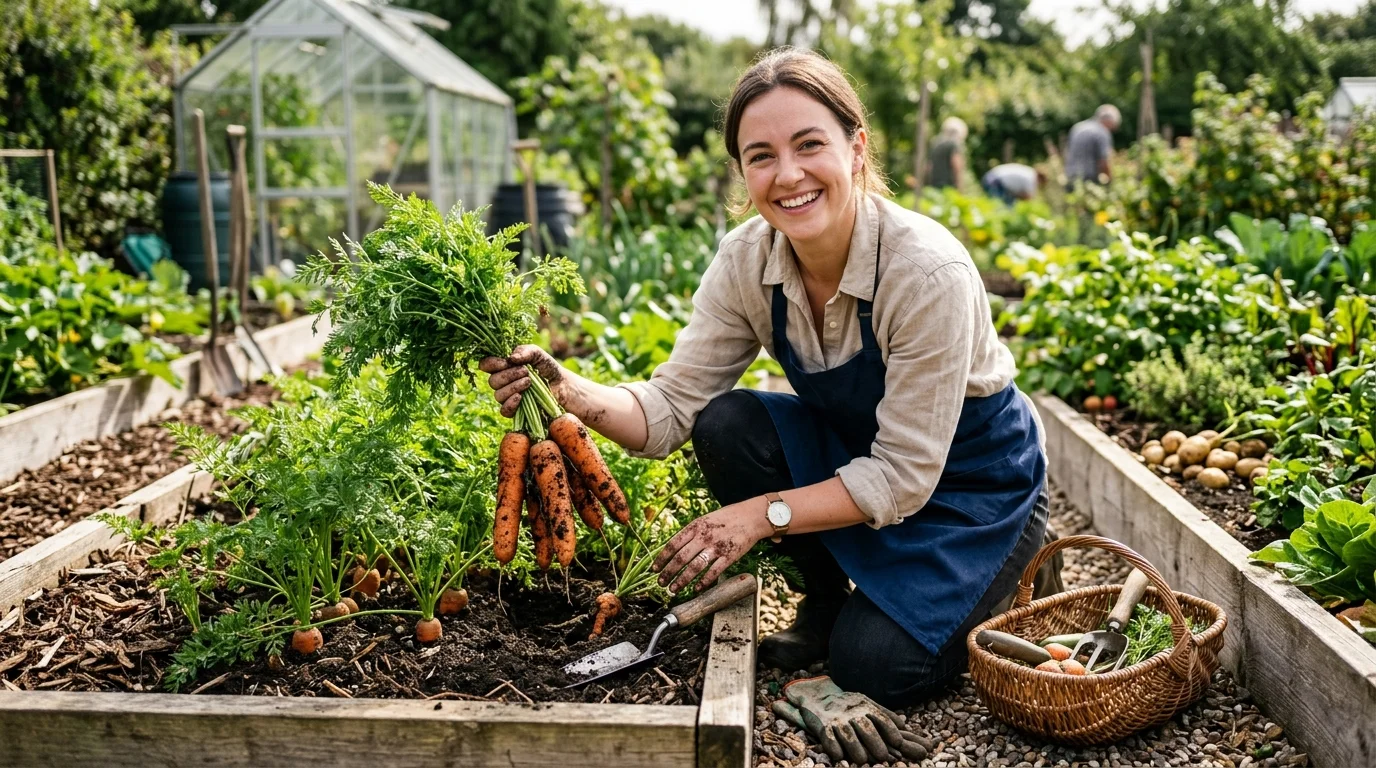
Don’t pull carrots when the soil is bone-dry or soaking wet. Water the bed 12 hours before harvest. Use a garden fork to gently loosen the soil, then pull by the tops. If roots break, dig them out carefully – a broken carrot left in the ground rots and attracts pests.
For winter storage (maincrop varieties):
– Twist off the leafy tops (leave 1cm of crown). Do not wash – just brush off excess soil.
– Layer in boxes of damp sand (builders’ sand works fine) in a cool, dark, frost-free shed (0-4°C is ideal).
– Check monthly. Remove any that show soft spots. Properly stored, they last until March.
For freezing: Slice or dice, blanch for 3 minutes, plunge into ice water, drain, then freeze in bags. Don’t freeze whole carrots – they become watery and mushy.
Common Carrot Problems Solved
- Forked roots: Stones, compacted clay, or too much manure. Riddle the soil, add sand, and use leaf mould only.
- Pale, bitter carrots: Too much nitrogen or too few hours of sunlight (carrots need 6+ hours). Move your plot to a sunnier spot.
- Split carrots: Irregular watering – heavy rain after drought. Mulch with straw to even out moisture.
- Green shoulders: The top of the root is exposed to light. Earth up the soil around the shoulders as they grow.
- Carrot fly damage (rusty tunnels): Your mesh isn’t sealed at the base. Check for gaps. Also, remove all carrot family weeds (wild carrot, cow parsley) nearby.
Final Word: Grow Smarter, Not Harder
You don’t need a PhD to grow perfect carrots. You need the right preparation, the right timing, and an unbreakable physical barrier against carrot fly. Invest in a roll of Enviromesh and a bag of horticultural sand – it’s cheaper than a year of failures. And remember: every forked carrot is a lesson, not a disaster. Next year, you’ll know exactly what to fix.
For deeper reading on carrot fly ecology, I recommend the Garden Organic Factsheet on Carrot Fly (available free online) and the RHS Vegetable Garden Trials Results for variety performance. Now get sowing – your sweet, straight harvest awaits.
FAQ: Quick Answers for New Plotters
Can I grow carrots in a raised bed?
Absolutely. Raised beds filled with a 50:50 mix of topsoil and sand are ideal. Ensure the bed is at least 30cm deep.
Do I need to thin carrots?
Yes. Thinning is critical for straight roots. Thin to 5cm apart. Use scissors to snip the extras at soil level to avoid disturbing the roots of the carrots you keep.
What’s the best carrot for beginners?
‘Chantenay Red Cored’ – it’s short, blunt, and forgiving of heavy soil. It’s also very sweet.
Can I grow carrots in pots?
Yes, but choose a round variety like ‘Paris Market’ or ‘Roundel’. Use a pot at least 30cm deep filled with sandy compost.
Why are my carrots hairy?
Usually caused by too much nitrogen or waterlogged soil. Reduce feeding and improve drainage.